
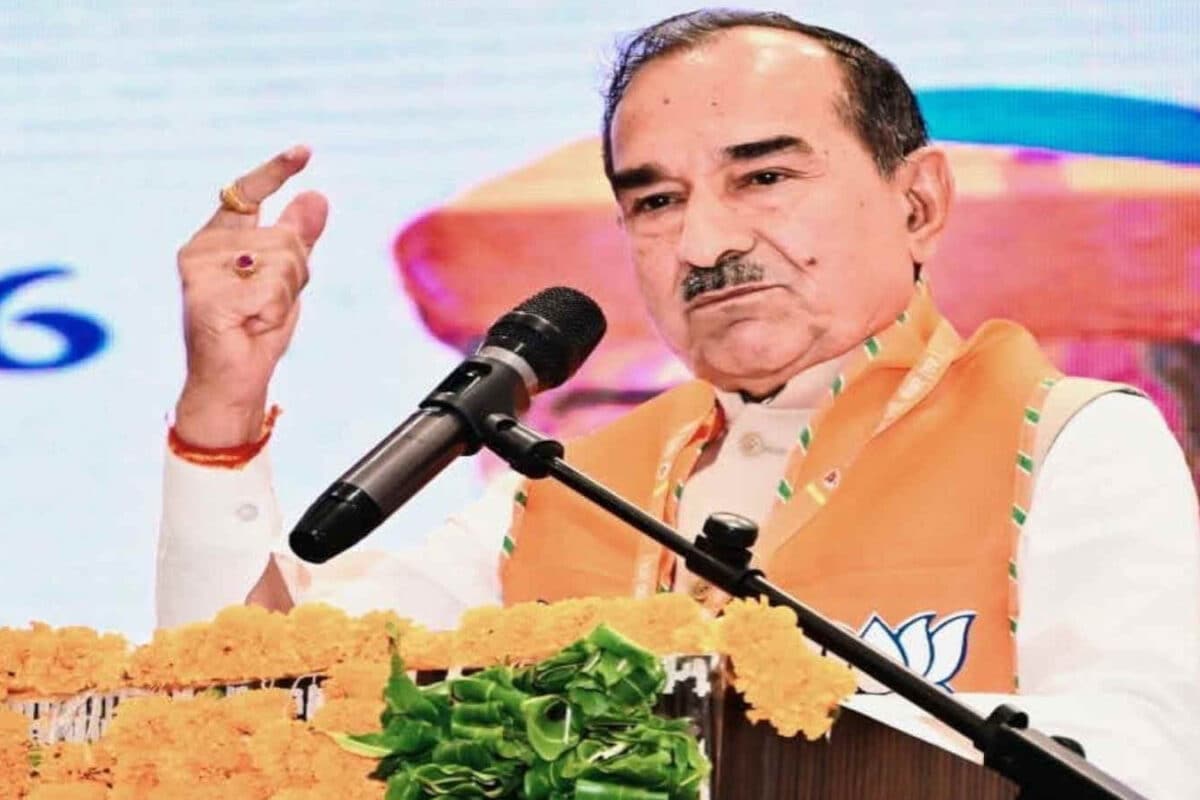
In a significant political development originating from the state capital of Jaipur, Rajasthan Bharatiya Janata Party President Madan Rathore delivered a striking statement regarding international relations and foreign policy, focusing specifically on neighboring nations. During a public address, Rathore articulated his views on geopolitical dynamics, drawing attention to the diplomatic obligations that bind sovereign states in times of crisis.
The core of the discussion centered around global superpowers and regional adversaries, particularly the hypothetical scenario of a military conflict between the United States and Pakistan. Such discourse on international affairs by a senior political functionary of the ruling party in Rajasthan immediately drew the attention of political analysts, diplomats, and observers across the country.
Elaborating on his viewpoint during the official program, the Rajasthan BJP leader explicitly remarked, 'If there is a war between America and Pakistan, we are with Pakistan.' He grounded this assertion on the fundamental principle of neighborly duty, arguing that geographic proximity dictates a specific ethical and diplomatic stance regardless of historical bilateral tensions.
According to Madan Rathore, Pakistan occupies the status of a neighboring country to India, and therefore, international neighborly ethics would compel India to stand alongside Pakistan in the event of an armed conflict involving an external global power like the United States. This perspective introduces a nuanced, albeit debated, angle to South Asian regional diplomacy and foreign relations theory.
The statements made in Jaipur quickly reverberated through various administrative and political circles, prompting discussions on how regional leaders perceive India's broader diplomatic framework. While India's official national foreign policy is meticulously managed by the Union Ministry of External Affairs, statements from prominent state-level figures often become subjects of intense public and media scrutiny.
As political observers analyze the implications of these remarks, the focus remains on how international relations are interpreted through the lens of traditional moral philosophies such as neighborly duty. The discourse underscores the complexities of foreign policy debates within domestic political platforms in Rajasthan.
Moving forward, this statement by Madan Rathore is expected to remain a focal point of discussion among political commentators and analysts tracking Rajasthan's political landscape, reflecting the intricate interplay between domestic political rhetoric and global diplomatic positioning.
