
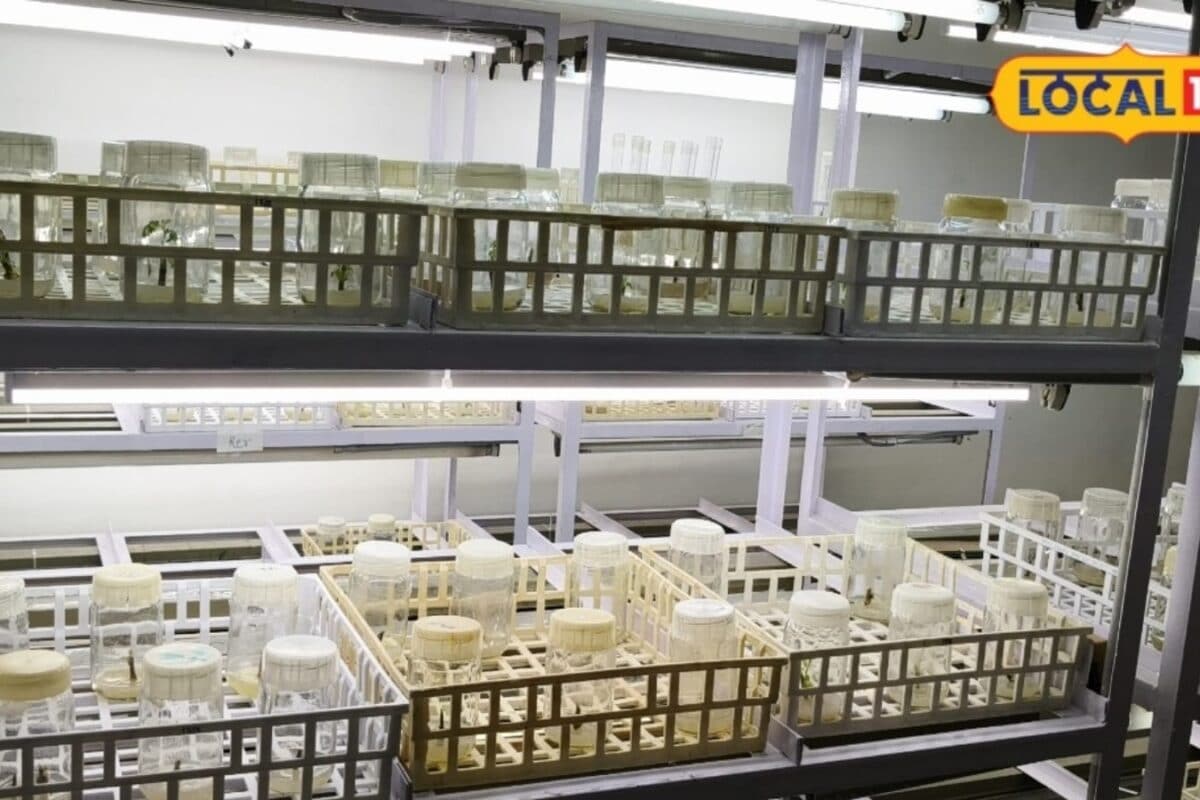
In a groundbreaking advancement for agricultural science in Rajasthan, Swami Keshwanand Rajasthan Agricultural University has successfully initiated a pioneering method to cultivate plants in desert conditions without relying on traditional weather patterns. This scientific breakthrough represents a major milestone for agricultural research in the region, offering a sustainable alternative to conventional farming methods that are heavily constrained by unpredictable climatic conditions, scorching temperatures, and scarce water resources.
Historically, agricultural development across the desert landscapes of Rajasthan has faced severe impediments due to erratic monsoons, extreme thermal variations, and prolonged droughts. Traditional propagation methods often fail to guarantee disease-free yields, leaving farmers vulnerable to crop failures and financial distress. Recognizing these structural challenges, agricultural scientists and researchers at the university dedicated extensive efforts to developing a reliable indoor methodology that circumvents these geographical and meteorological barriers entirely.
At the heart of this agricultural innovation is the specialized tissue culture laboratory established at the university campus. Within this meticulously controlled environment, scientists utilize explants placed inside artificial nutrient mediums enclosed within glass jars to stimulate cellular growth. This sophisticated process enables the simultaneous cultivation of 500 to 700 disease-free saplings under strictly regulated temperature, humidity, and lighting parameters, ensuring consistent productivity regardless of external weather extremities.
The successful laboratory propagation has currently yielded high-quality, disease-free mulberry and lemon plants, demonstrating the commercial and ecological viability of the technique. Furthermore, academic experiments concerning the propagation of roses and locally significant flora such as peelu are currently underway, opening up new avenues for ornamental and indigenous plant cultivation across the state. These rigorous experiments reflect the dedication of university professors and students working collaboratively to solve regional agricultural bottlenecks.
Once the initial tissue culture phase produces sufficient root structures within the laboratory jars, the saplings undergo a crucial hardening process. This mandatory acclimatization phase prepares the tender laboratory-grown plants to withstand natural environmental stresses before they are safely transplanted into open fields or commercial nurseries. This seamless transition from a sterile laboratory setting to actual agricultural soil ensures high survival rates and robust long-term growth for the flora.
Building upon these encouraging scientific milestones, the administration at Swami Keshwanand Rajasthan Agricultural University is actively coordinating with government bodies to expand the scope of this initiative. The primary administrative objective is to utilize this advanced tissue culture framework to protect, propagate, and conserve special and endangered plant species that are indigenous to the arid terrain of western Rajasthan, thereby safeguarding regional biodiversity from ecological degradation.
Looking toward the future, the university envisions a broader regional implementation of this technology, which could potentially transform agricultural practices and forestry management throughout the state. By reducing dependence on seasonal variations and establishing a dependable year-round supply of resilient saplings, this scientific endeavor promises to empower local nurseries, support ecological restoration efforts, and secure a more sustainable agricultural future for the people of Rajasthan.