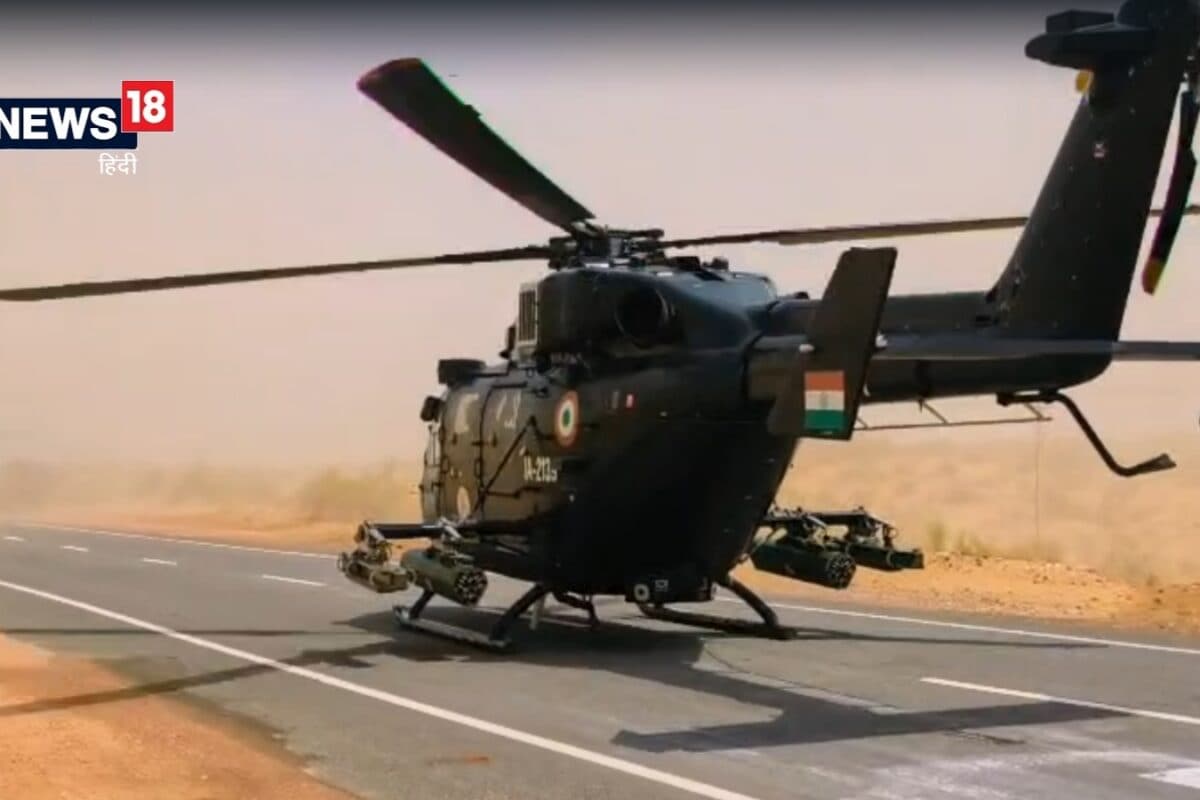
In a significant demonstration of tactical preparedness and operational versatility, the Indian Army successfully executed a comprehensive helicopter landing and takeoff drill on National Highway 911 located in Bikaner. Situated merely 80 kilometers from the international border with Pakistan, this high-stakes military exercise was designed to test the rapid response capabilities of frontline defense units under simulated emergency conditions.
Military exercises along critical infrastructure arteries carry profound historical and strategic significance in border districts. The choice of National Highway 911 underscores the evolving doctrine of utilizing civilian infrastructure for military contingencies, ensuring that armed forces can maintain absolute mobility and supply line continuity even when conventional airbases are compromised or inaccessible during conflicts.
The meticulously planned drill featured a formidable fleet of advanced military aircraft, prominently including the Rudra attack helicopters, Dhruv utility helicopters, and reliable Chetak helicopters. Operating in close proximity to a sensitive international boundary, the ground and air units executed complex maneuvers, demanding absolute precision from pilots and ground crews alike to ensure seamless integration.
Defense analysts and military observers emphasize that the success of such highway-based landing drills hinges entirely upon flawless air-ground coordination. This operational synergy involves establishing secure perimeters, guiding incoming aircraft using portable communication systems, and orchestrating rapid turnaround operations on narrow asphalt strips that were originally engineered strictly for commercial civilian vehicular transit.
Although the exercise directly unfolded in the western sector of Bikaner, its operational ramifications resonate strongly across neighboring regions, including logistical hubs like Kotputli-Behror. Regional transportation networks and administrative planning agencies closely monitor these defense drills to understand the broader implications for civil-military cooperation, emergency preparedness, and the dual-use capacity of national highways.
Local administrative authorities and law enforcement agencies coordinated extensively with defense planners to implement temporary traffic diversions and secure the designated stretch of National Highway 911. These statutory oversight measures ensured that the military drill was conducted with maximum safety for the civilian population while maintaining absolute operational secrecy and adherence to protocol.
Looking forward, the successful completion of these rigorous helicopter landing and takeoff drills reinforces the defensive posture and rapid deployment capabilities of the Indian Army in the western sector. Future protocols will likely incorporate more frequent inter-service coordination exercises, further solidifying the nation's readiness to address emerging strategic contingencies along sensitive international frontiers with absolute efficiency.