
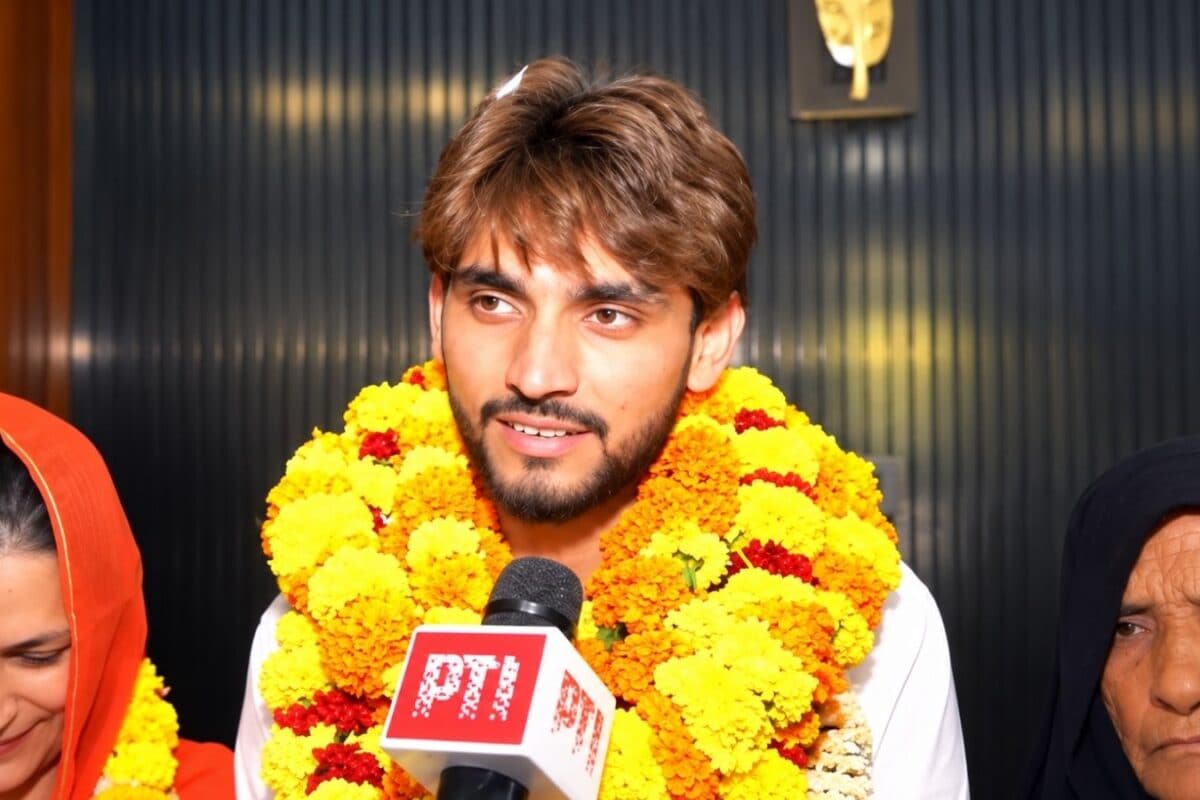
In an evolving political landscape that increasingly values youth engagement, twenty-one-year-old Faiz Hasan has emerged as a formidable political figure by winning a crucial seat in the Rajasthan civic elections. This remarkable electoral triumph follows closely on the heels of Mohammad Irfan, another young leader who previously gained widespread public prominence and viral media attention due to his articulate and measured public statements during demonstrations held at Jantar Mantar in Delhi under the banner of Gen-Z and the Cockroach Janata Party.
The trajectory of youth-led political mobilization in India has witnessed notable shifts over recent years, moving from institutional campus politics to direct public engagement at national protest hubs like Jantar Mantar in Delhi. The emergence of figures such as Mohammad Irfan and now Faiz Hasan in Rajasthan highlights an underlying frustration and dynamic ambition among the Generation-Z demographic, who are eager to challenge conventional political norms and assert their presence in democratic governance.
While exact financial expenditures and logistical campaign metrics remain closely guarded within local party machineries, the sheer sociological impact of Hasan securing a civic victory at the age of twenty-one cannot be understated. Observers monitoring the Rajasthan municipal landscape note that youth-centric campaigns in the region frequently encounter significant resource constraints, making Hasan's electoral breakthrough a notable achievement against established political heavyweights.
Local constituents, community elders, and regional political stakeholders have expressed mixed yet largely optimistic reactions to the electoral outcome. Supporters view Hasan as a breath of fresh air whose legislative and administrative focus is firmly aligned with contemporary grassroots issues rather than traditional dynastic or factional politics, thereby restoring a measure of faith in participatory democracy among skeptical voters.
The broader regional impact of this political emergence is anticipated to resonate deeply across the Kotputli-Behror district and surrounding parts of Rajasthan, where youth mobilization remains a critical determinant of socio-political dynamics. Community leaders suggest that the ripple effects of Hasan's victory could inspire a new wave of politically conscious young citizens to actively participate in upcoming local body consultations and civic policy formulations.
Administrative authorities and local governance institutions have acknowledged the shifting demographics within municipal bodies, noting that an influx of younger representatives often leads to renewed demands for transparent urban planning and modernized public amenities. Officials are currently preparing standard induction procedures to integrate newly elected members like Hasan into formal municipal functioning and statutory oversight committees.
Looking ahead, the political future of Faiz Hasan within the state apparatus depends heavily on his ability to translate his anti-drugs campaign promises into tangible legislative and social outcomes. Political pundits within the Rajasthan Congress are closely watching whether national figures will formally endorse his grassroots initiatives, potentially signaling a broader organizational shift toward accommodating Gen-Z leadership in future electoral strategies.