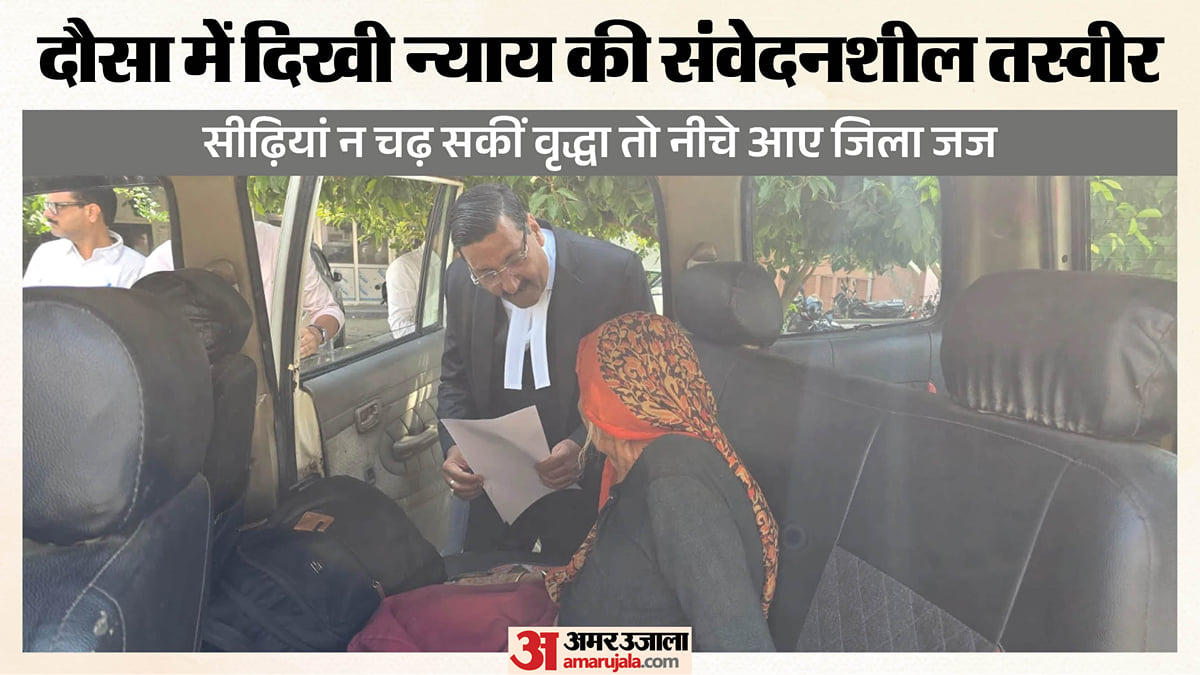
In a profound manifestation of judicial sensitivity and human compassion within the Rajasthan judicial system, a remarkable event unfolded at the Dausa District Court. District and Sessions Judge Keshav Kaushik personally intervened to ensure that justice and relief reached a frail litigant without subjecting her to physical distress. This compassionate gesture has resonated deeply across the legal fraternity and the general public, redefining the conventional boundaries of courtroom protocol and institutional accessibility.
The central figure of this significant legal proceeding is Sampat Devi Sharma, a 96-year-old elderly woman whose advanced age and physical frailties rendered her completely incapable of navigating the complex and exhausting architectural barriers of the court premises. Specifically, the designated courtroom was situated on the first floor of the building, posing an insurmountable physical challenge for a nonagenarian citizen seeking the culmination of her long-standing legal battle and rightful financial entitlement.
Navigating the complex maze of judicial resolutions often places immense physical and mental burdens on elderly litigants who have spent years awaiting justice. For Sampat Devi Sharma, reaching the first floor to complete the procedural formalities for receiving her awarded compensation appeared to be an impossible feat. The physical infrastructure of many regional judicial buildings historically presents accessibility challenges for senior citizens, making administrative adaptability an absolute necessity for ensuring unhindered access to justice.
Recognizing the immense gravity of the situation and refusing to let bureaucratic hurdles impede the delivery of relief, District and Sessions Judge Keshav Kaushik took an unprecedented and proactive decision. Rather than insisting on the mandatory physical presence of the elderly litigant inside the courtroom on the first floor, Judge Kaushik chose to bridge the physical gap himself. Demonstrating exemplary administrative empathy, he stepped out of his judicial chambers and walked down from the first floor to the vehicle parking area where Sampat Devi Sharma was seated.
At the vehicle stationed within the court premises, the district judge formally handed over the crucial financial instrument to the 96-year-old recipient. The total compensation amount disbursed through this special administrative intervention stood precisely at 8,21,067 rupees. This substantial financial award represented the culmination of dedicated legal proceedings, providing much-needed financial restitution and closure to the elderly citizen after a prolonged period of anticipation.
The administrative response and the proactive measures undertaken by the judiciary in this instance highlight a growing institutional commitment to inclusive governance and accessible justice. Across various district headquarters in the region, including discussions within legal circles in Kotputli-Behror, the incident has sparked widespread appreciation for judicial officers who prioritize human dignity over rigid procedural formalities. Such acts reinforce public faith in the judiciary as an empathetic institution dedicated to serving every stratum of society fairly.
Looking ahead, this inspirational event at the Dausa District Court serves as a compelling precedent for administrative bodies and judicial officers across the state regarding the treatment of senior citizens and differently-abled litigants. Legal experts and community leaders have emphasized the necessity of incorporating permanent accessibility infrastructure, such as dedicated ramps and senior citizen assistance desks, in all regional courts. As public expectations rise for more humane institutional frameworks, actions like those of Judge Keshav Kaushik illuminate a bright path forward for responsive judicial administration.