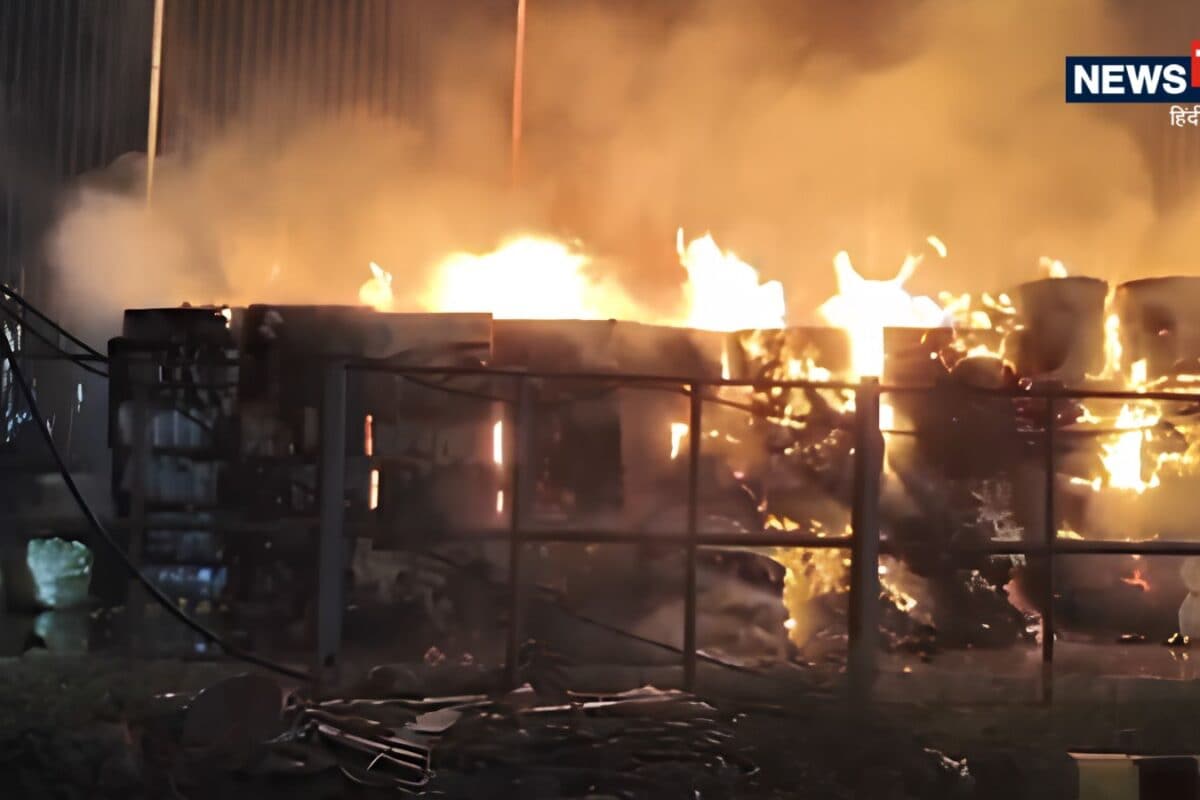
A devastating industrial fire has struck the industrial landscape of Bhilwara district, creating widespread panic and concern among local authorities and residents alike. The catastrophic incident occurred at the recycle plant of Sangam India Limited Unit-2, situated in the Sareri area under the jurisdiction of the Raila region. The sudden outbreak of flames engulfed the manufacturing facility in a massive inferno late at night, turning the premises into a zone of intense destruction and immediate emergency response.
The affected facility forms an integral part of the regional industrial infrastructure, housing heavy machinery, processed materials, and extensive raw inventories within its expansive premises. Industrial units of this magnitude operate under continuous production cycles, managing large volumes of recyclable textile and material components. The rapid escalation of the flames indicates the highly combustible nature of the materials stored within the recycle plant, which quickly fueled the intensity of the disaster and challenged initial containment strategies.
More than 12 hours have elapsed since the fire first erupted, yet relentless firefighting operations continue as emergency responders battle stubborn pockets of flames and massive plumes of thick black smoke. Financial assessments from industry insiders and preliminary administrative estimates point toward monumental economic losses, with preliminary evaluations projecting damages running into crores of rupees. The destruction of physical infrastructure, machinery, and stored materials represents a staggering financial setback for the management and the local industrial sector.
Amid the chaos and devastation, a major humanitarian crisis was averted due to the prompt and decisive action taken by facility supervisors and safety personnel. As soon as the flames began to spread across the plant floor, an immediate evacuation protocol was initiated, ensuring that all workers present on duty were safely ushered out of the danger zone. Local trade associations, labor representatives, and industry stakeholders have expressed deep relief over the zero-casualty outcome while voicing serious concerns regarding industrial safety protocols.
The repercussions of this massive industrial accident extend far beyond the immediate boundaries of the plant, sending shockwaves through the local economy and the broader regional community. Bhilwara district, renowned for its extensive textile manufacturing and industrial footprint, relies heavily on uninterrupted production cycles to sustain employment and commercial momentum. Disruptions at a prominent facility like Sangam India Limited Unit-2 invariably trigger anxieties concerning supply chains, worker livelihoods, and regional economic stability.
In the wake of the disaster, local administrative authorities, disaster management teams, and emergency services rushed to the scene to coordinate containment efforts and secure the perimeter. Fire tenders from multiple jurisdictions were mobilized to combat the raging inferno, deploying specialized equipment to tackle the difficult conditions inside the sprawling industrial complex. Senior district officials have maintained a constant presence at the site, monitoring the ongoing operations and coordinating logistical support for the exhaustive firefighting measures.
Looking ahead, the primary focus remains on extinguishing the final remnants of the fire completely and initiating a comprehensive safety and structural audit of the damaged plant. Once the area is certified safe by specialized technical committees, detailed forensic investigations will commence to determine the precise root cause of the blaze. Stakeholders, administrative bodies, and industrial leaders are expected to review comprehensive safety compliance frameworks to prevent such catastrophic incidents from recurring in the future.