
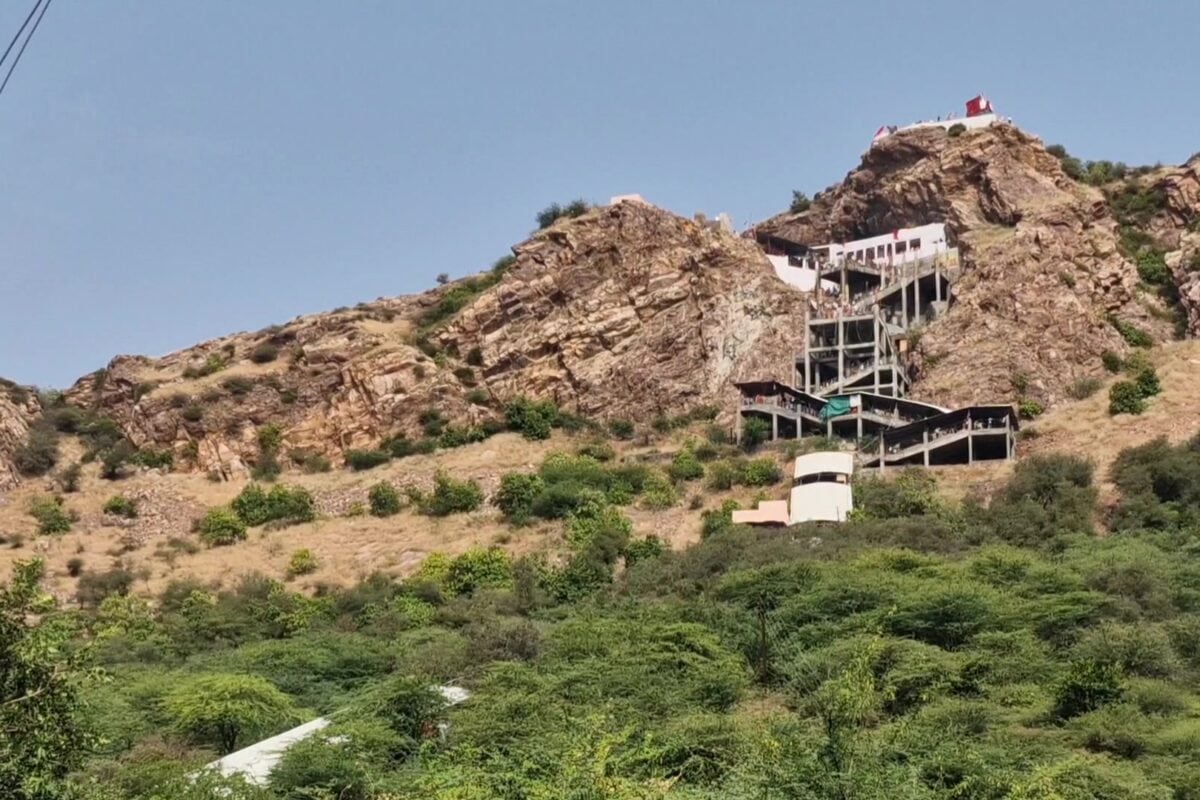
During the auspicious and spiritually significant festival of Navratri, an unprecedented wave of faith and devotion has swept across the historic Bijasan Mata Temple, located in Indragarh within the Bundi district of Rajasthan. Thousands of pilgrims and devotees from various regions are converging upon this revered shrine daily, transforming the surroundings into a vibrant hub of religious fervor and cultural celebration. The atmosphere is deeply charged with devotional chants and traditional rituals as worshippers queue up to seek the divine blessings of Goddess Bijasan.
Steeped in rich antiquity, the Bijasan Mata Temple boasts a historical lineage that spans approximately 1000 years, making it one of the most venerated and ancient spiritual landmarks in the region. Generations of devotees have maintained an unwavering belief in the divine grace of the presiding deity, considering the shrine to be a powerful center of protection and wish-fulfillment. The architectural style and structural endurance of the temple stand as a testament to the rich heritage and religious devotion of past eras, preserving traditions that continue to inspire reverence among modern generations.
A defining physical characteristic of the pilgrimage to the Bijasan Mata Temple is the rigorous ascent required to reach the sanctum sanctorum. Devotees must fervently climb a challenging flight of 750 steps, carved along the rugged terrain, to complete their sacred journey. Despite the physical exertion involved, pilgrims of all age groups, ranging from enthusiastic youths to elderly worshippers, display remarkable resilience and spiritual dedication as they traverse these steps, echoing traditional hymns and prayers every step of the way.
Local community members, temple committee organizers, and regular visitors emphasize that the annual Navratri gathering at the Bijasan Mata Temple fosters a deep sense of social unity and collective spirituality. Traders, local vendors, and community leaders note that the influx of pilgrims significantly invigorates the local economy, creating temporary livelihoods and commercial vibrancy in Indragarh. The shared commitment to observing age-old customs reinforces community bonds and preserves the rich cultural identity of the region.
While the temple is located in the Bundi district, the cultural and spiritual resonance of the celebrations extends far beyond its immediate boundaries, drawing spiritual seekers from neighboring regions and administrative districts. The widespread participation highlights the enduring appeal of ancient shrines in contemporary society, demonstrating how deep-rooted traditions continue to unite diverse populations in shared devotion and cultural pride during major religious festivals.
In response to the massive influx of devotees during the Navratri celebrations, local administrative bodies, security personnel, and temple authorities have coordinated comprehensive arrangements to manage crowd flow and ensure public safety. Measures include crowd control barricades, medical assistance booths, and enhanced sanitation facilities along the 750-step pathway to accommodate the thousands of visitors ascending the shrine daily without compromising safety or order.
Looking ahead, temple authorities and local administration anticipate that the remaining days of Navratri will continue to witness high footfall, necessitating sustained vigilance and logistical support. Plans are also under consideration to further improve pilgrim amenities along the historic route, ensuring that the ancient legacy of the Bijasan Mata Temple is preserved while simultaneously providing a safe, accessible, and spiritually fulfilling experience for all future visitors.
