
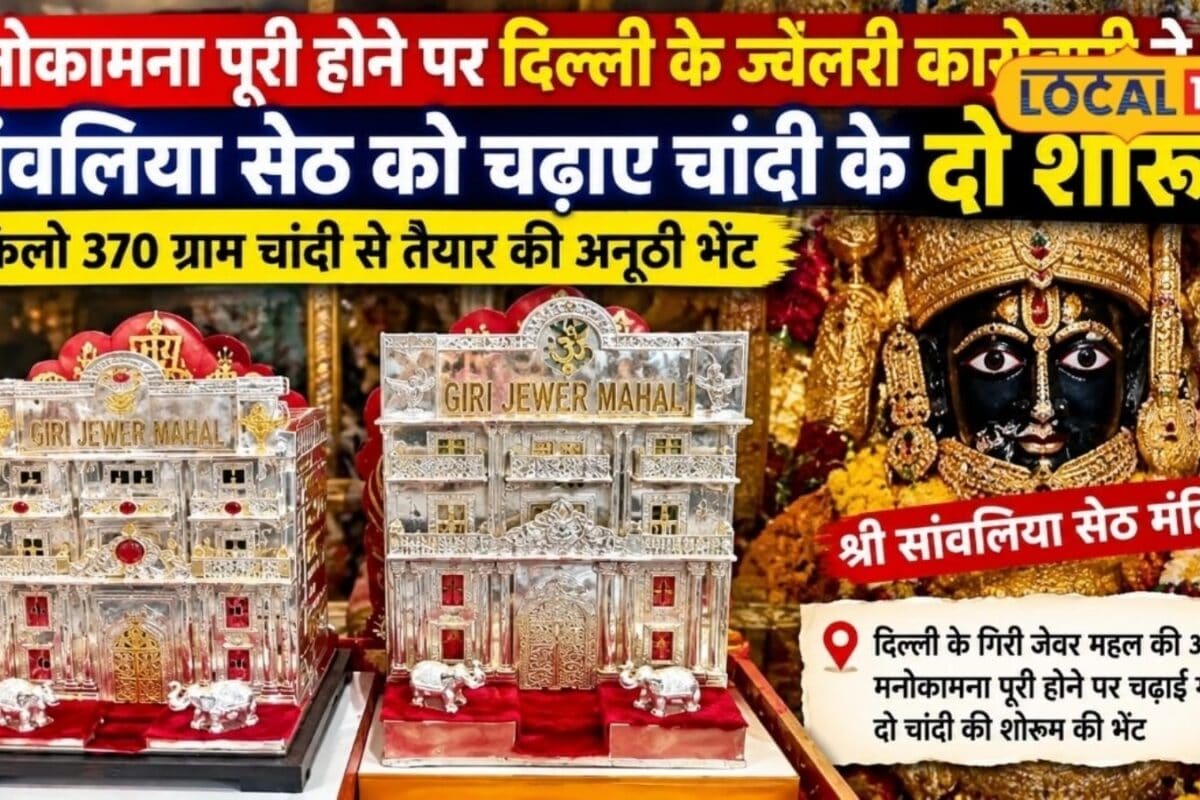
In a striking display of profound devotion and gratitude, a renowned jewelry businessman from Delhi has presented an extraordinary offering at the revered Sri Sanwalia Seth Temple located in Rajasthan. The donation, coming from Giri Jewer Mahal, features two meticulously crafted miniature showrooms made entirely of solid silver. This unique presentation has instantly captured the attention of devotees and temple authorities alike, breaking away from conventional offerings traditionally made at major religious shrines across the nation.
The Sri Sanwalia Seth Temple holds immense religious and cultural significance, drawing millions of pilgrims and traders from various corners of the country, including regions neighboring Kotputli-Behror. Historically, the deity is revered deeply by the business community, who traditionally attribute their commercial successes and prosperity to the divine blessings of Sanwalia Seth. This deep-rooted spiritual connection often prompts entrepreneurs and merchants to return to the sacred seat of faith to offer substantial tokens of appreciation upon the realization of their professional and personal aspirations.
According to the precise records and accounts verified at the temple, the newly received silver showrooms carry a combined gross weight of 3 kilograms and 370 grams. Crafting these miniature commercial establishments required intricate artistic precision, reflecting the donor's profession and personal connection to the jewelry trade. While devotees routinely present traditional metallic items such as decorative umbrellas, ceremonial crowns, and conventional personal ornaments, the inclusion of miniature commercial spaces represents a remarkable evolution in contemporary temple offerings.
Community leaders, temple committee members, and visiting traders have expressed immense admiration for the scale and creativity of the donation from Giri Jewer Mahal. Local market associations view such offerings not merely as material donations, but as powerful symbols of the enduring partnership between commerce, ethics, and faith. Discussions among the merchant community frequently highlight how traditional businesses continue to maintain profound ties with historical pilgrimage centers, reinforcing a shared cultural ethos that transcends modern commercial boundaries.
The resonance of such high-profile offerings extends significantly into the broader regional economy, influencing cultural tourism and commercial dynamics in surrounding districts, including Kotputli-Behror. Pilgrims and business travelers frequenting the region often visit the temple to seek divine blessings, thereby boosting local hospitality, transport, and artisanal sectors. The continuous influx of devoted visitors sustains a vibrant local ecosystem that relies heavily on the spiritual heritage and festival cycles associated with Sanwalia Seth.
In response to the growing volume and variety of high-value offerings, the temple administration maintains a transparent, highly regulated protocol for cataloging, securing, and preserving all presented items. Specialized temple committees oversee the formal documentation of precious metals, artifacts, and financial contributions, ensuring absolute accountability. These administrative measures safeguard the sanctity of the shrine while providing donors with the assurance that their sacred obligations are recorded with utmost diligence.
Looking forward, the temple trust anticipates a further rise in pilgrim footfall and innovative offerings as regional connectivity improves and economic activities expand across northern India. Future administrative plans include enhancing infrastructure to accommodate large gatherings of devotees, ensuring seamless management during peak religious festivals. Ultimately, the gesture by the Delhi-based firm stands as a testament to the enduring faith that continues to define the rich cultural and spiritual landscape of Rajasthan.
