
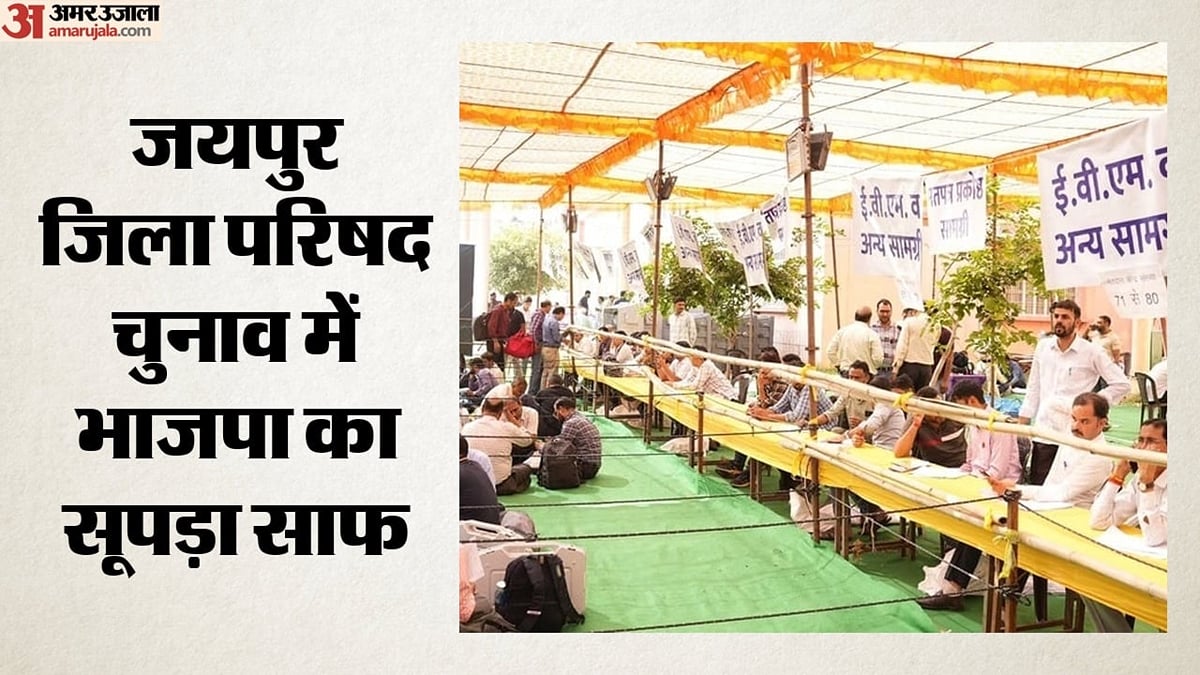
In a significant political development from the desert state, the Congress party has firmly established its supremacy in the Jaipur district panchayat elections. The electoral battle, which witnessed intense competition between the primary political contenders, concluded with a decisive mandate in favor of the Congress. This major political shift has become the focal point of discussions across political circles, particularly because the electoral outcome unfolded decisively in the home regions associated with the Chief Minister and Deputy Chief Minister.
Analyzing the historical context of local body elections in Rajasthan, the rural local governance polls serve as a crucial barometer of grassroots political sentiment. Over successive electoral cycles, the dynamics of district councils and panchayat committees have consistently mirrored the shifting political allegiances of rural populations. The current electoral battle in Jaipur district was heavily anticipated, with both major parties deploying extensive resources and grassroots campaigning to secure dominance over rural administrative bodies.
Delving into the concrete statistical data released by election authorities, the margin of victory underscores the scale of the political shift. The Congress party successfully established an overwhelming lead of 153 seats over the Bharatiya Janata Party across the district. A granular breakdown of the results reveals that out of the total 383 panchayat committee seats contested, the Congress secured a commanding 216 seats. Simultaneously, in the contest for the 46 Zilla Parishad seats, the party triumphed in 34 constituencies, comfortably surpassing the majority threshold at both administrative tiers.
Reflecting on the stakeholder perspectives and grassroots reactions, local political analysts and community leaders have noted that these election results highlight deep-seated public sentiment regarding rural development priorities. While opposition leaders point toward local governance issues and agrarian concerns as primary catalysts for the outcome, ruling party representatives emphasize their commitment to accepting the democratic mandate and refocusing administrative efforts on grassroots welfare and infrastructural enhancement.
Examining the broader regional impact, particularly concerning Kotputli-Behror and surrounding districts, the outcome of the Jaipur local elections carries substantial weight for regional administrative alignment. The consolidation of power in the district council directly influences the execution of various developmental schemes, rural employment guarantees, and infrastructural projects. Local communities and rural residents now look forward to more responsive governance and accelerated implementation of public welfare programs at the village level.
Regarding the administrative framework and statutory oversight, the district election administration and local governance departments have initiated the formal procedures required for the constitution of the new Zilla Parishad and panchayat committees. Officials are currently compiling final gazette notifications, verifying electoral returns, and preparing for the upcoming oath-taking ceremonies of the newly elected members. These formal administrative measures ensure seamless transition and continuity in rural local governance.
Looking toward the forward outlook and future timeline, the newly empowered Congress board is poised to assume office and commence its administrative responsibilities in the coming weeks. The primary focus for the incoming local leadership will involve convening the inaugural board meetings, prioritizing district development budgets, and addressing pressing rural grievances. As public expectations run high, the performance of the newly formed local administration will be closely monitored by citizens and political observers alike.
