
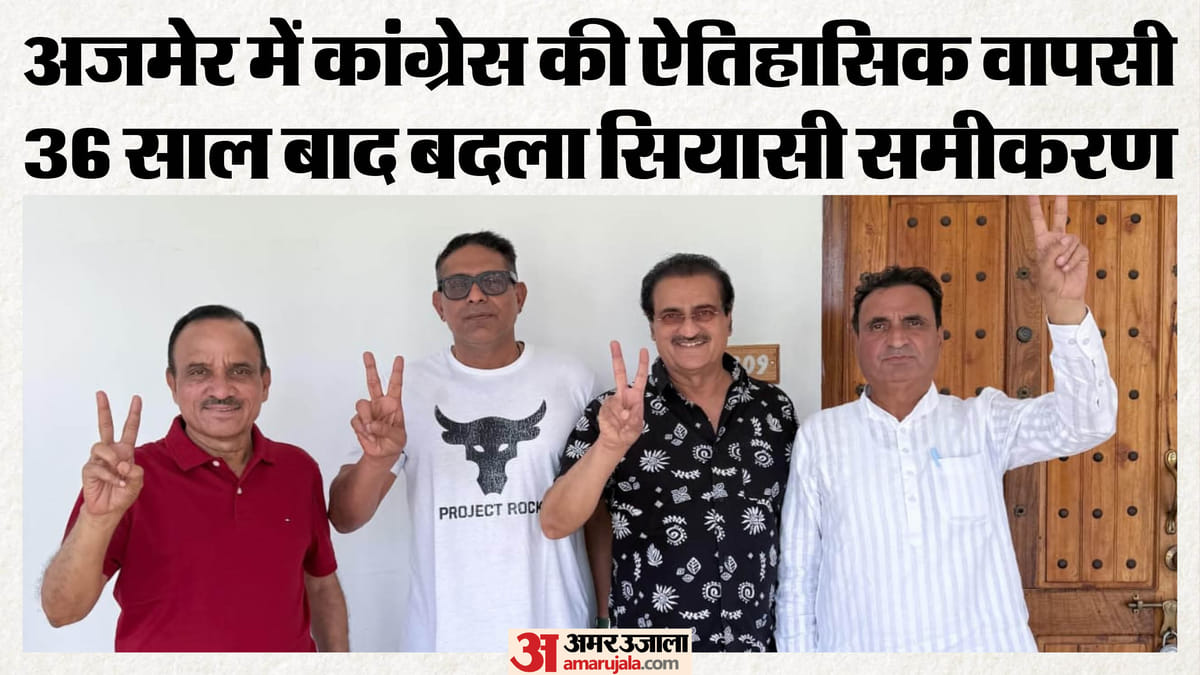
In the recent Ajmer Municipal Corporation election, the Indian National Congress emerged victorious by securing 37 councilor seats, thereby breaking a 36‑year political drought in the city’s municipal governance. The party immediately asserted its intention to constitute a municipal board, emphasizing that it enjoys the backing of most of the 11 independent candidates who also won seats. The moment was marked by a public gesture from local influencer Dotasra‑Juli, who patted the back of the victorious Congress representatives, symbolising solidarity and confidence in the new administration.
The Ajmer municipal landscape has long been dominated by rival parties, with Congress last holding a majority more than three decades ago. Over the intervening years, the city witnessed alternating control between regional outfits and national opposition, leading to a fragmented policy environment. The 2024 election was therefore seen as a litmus test for Congress’s ability to reconnect with urban voters after a prolonged absence from local power structures.
According to the official results, Congress’s 37 seats represent a clear plurality in the 70‑member corporation, while the remaining seats are split among other parties and 11 independents. The party’s claim of support from most independents is crucial, as coalition dynamics will determine whether it can command the simple majority required to appoint a mayor and chair the standing committees. The municipal board controls a budget that funds water supply, sanitation, street lighting, and local infrastructure projects, making the forthcoming power shift financially and administratively significant.
Stakeholder reactions have been swift. A Congress spokesperson stated, “The people of Ajmer have entrusted us with the responsibility to revitalize civic services, and we will work with all elected members to deliver on that promise.” Dotasra‑Juli, addressing a gathering of supporters, remarked that the victory reflects “the collective yearning for transparent and accountable governance.” Local traders expressed optimism, noting that improved municipal management could boost market footfall, while some residents cautioned that promises must translate into tangible improvements in waste management and road maintenance.
The outcome holds particular relevance for the neighbouring Kotputli‑Behror district, which shares economic corridors and commuter flows with Ajmer. Business owners in Kotputli anticipate that a stable municipal board in Ajmer will streamline inter‑city transport permits and enhance regional trade logistics. Moreover, the political shift may influence voter sentiment in upcoming district‑level elections, as parties gauge the impact of Congress’s urban resurgence on rural constituencies.
State authorities, including the Rajasthan State Election Commission, have affirmed that the election process adhered to legal standards and that the formation of the municipal board must follow statutory timelines. The commission has set a 15‑day window for the newly elected councilors to convene, elect a mayor, and approve the board’s composition. Administrative officials have pledged cooperation, emphasizing that the transition will be monitored to ensure compliance with the Rajasthan Municipalities Act.
Looking ahead, Congress plans to convene its councilors within the next week to negotiate the allocation of key committee chairmanships. The party has outlined a roadmap that includes a public hearing on water supply reforms, a task force on solid‑waste management, and a timeline for the inauguration of new street‑lighting projects before the end of the fiscal year. Citizens and civil‑society groups are expected to play an oversight role, demanding regular progress reports and accountability mechanisms as the new board takes shape.