
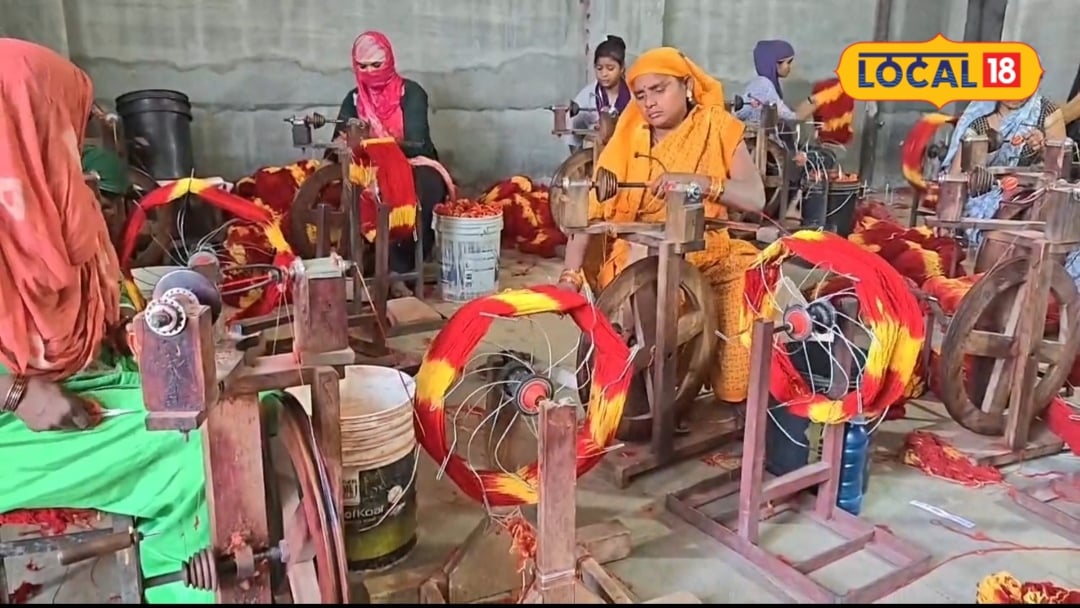
In an inspiring narrative of secular coexistence, shared livelihood, and profound cultural integration emerging from Rajasthan, the sacred mouli thread commonly tied during religious ceremonies is being meticulously crafted by Muslim women in Bikaner. This heartening enterprise, spearheaded by local woman entrepreneur Krishna Khatri, has steadily broken conventional boundaries and woven a strong fabric of communal harmony over the past two decades. What began as a modest economic initiative has now blossomed into a thriving cottage industry that transcends religious lines, uniting diverse communities in collective labor and mutual respect within Bikaner.
Tracing the historical and cultural context of this remarkable manufacturing unit reveals a deep-rooted tradition of artisanal craftsmanship in Bikaner, Rajasthan. For over 20 years, Krishna Khatri has dedicated her professional life to sustaining and expanding the mouli manufacturing sector. Over these two decades, the enterprise has evolved from a localized household activity into a structured manufacturing setup that supplies sacred threads to numerous states across India, ensuring that traditional rituals across the country are honored with threads made through unified community participation.
Examining the ground reality and operational scale highlights the robust economic foundation of this Bikaner-based initiative. Currently, the production unit achieves an impressive output of approximately 400 kilograms of mouli daily, meeting significant commercial demand across multiple regional and interstate markets. This high volume of production directly translates into substantial economic stability for the region, operating continuously to fulfill market requirements while maintaining rigorous quality and traditional specifications demanded by consumers.
At the heart of this enterprise is a workforce that exemplifies true societal integration and grassroots employment generation. The manufacturing unit currently provides steady, reliable employment to approximately 100 individuals, empowering local families through consistent wages. Significantly, the workforce comprises women from diverse backgrounds, including Muslim women who work side by side with their Hindu counterparts to spin, dye, and package the sacred mouli threads, thereby fostering an environment of shared economic prosperity and mutual understanding.
The broader regional impact of this initiative extends well beyond the immediate boundaries of Bikaner, resonating throughout Rajasthan and influencing local perceptions of labor and cooperation. By demonstrating that traditional religious articles can be manufactured through inclusive, cross-community collaboration, the enterprise serves as a beacon of social progress. Local traders, community leaders, and regional observers frequently cite this manufacturing unit as a model for sustainable rural and semi-urban employment generation, where economic necessity and cultural respect harmoniously intersect.
From an administrative and regulatory perspective, the sustained success of enterprises like the one operated by Krishna Khatri underscores the vital importance of supporting small-scale and cottage industries in Rajasthan. Local administrative bodies and trade authorities have increasingly recognized the socio-economic contributions of such decentralized manufacturing units, which require minimal infrastructure yet yield high employment returns. Ensuring institutional encouragement, fair market access, and financial literacy programs for such grassroots initiatives remains a key priority for bolstering community-level enterprise.
Looking toward the forward outlook, the future of mouli manufacturing in Bikaner appears promising as demand for culturally significant traditional items remains steadfast across India. With plans to potentially modernize packaging and streamline interstate logistics, the enterprise aims to scale its operations while preserving its core ethos of inclusive employment. As it enters its third decade of operation, the initiative stands as a enduring testament to the power of unity, enterprise, and shared human dignity in Rajasthan.
