
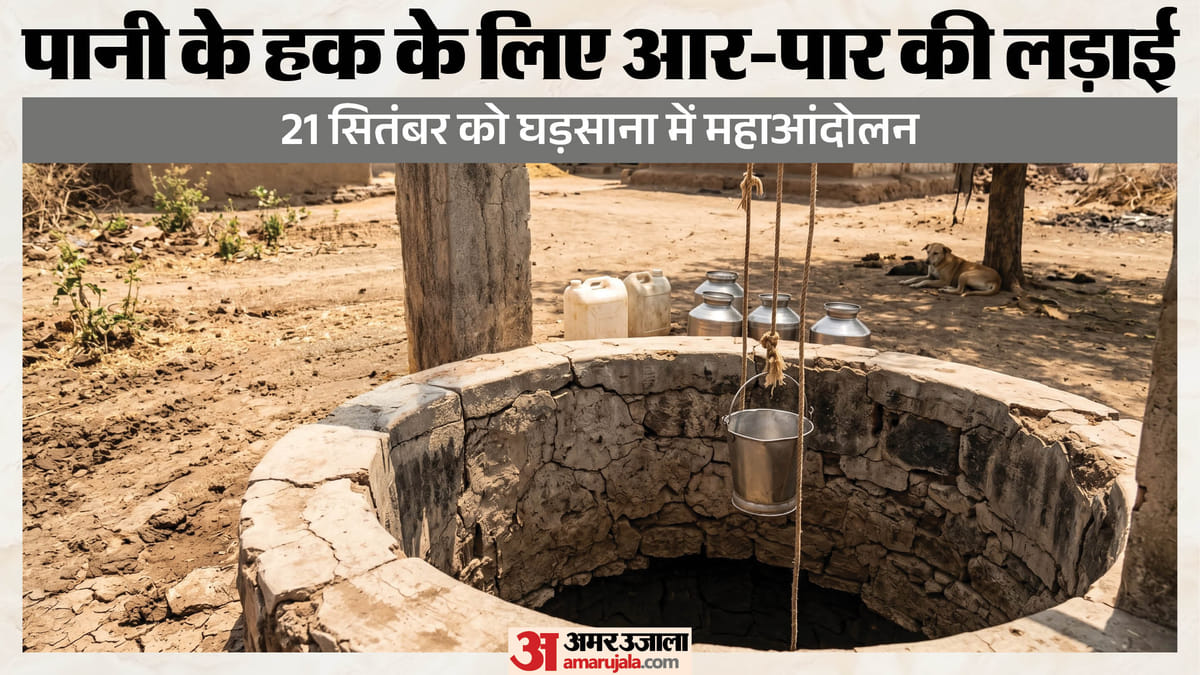
Farmers across the Bikaner region have intensified their agitation regarding the urgent allocation of their rightful share of irrigation water. The core of this intensifying unrest centers around the persistent demand for a 58 percent share of irrigation water, which cultivators state is vital for the survival of their crops and rural livelihoods. Frustrated by recurring water shortages and what they perceive as institutional neglect, agricultural communities have decided to escalate their campaign against the administration.
Historically, water distribution in this arid desert region has remained a contentious issue between agrarian communities and state authorities. Generations of farmers in Bikaner have struggled with erratic canal supplies and inequitable distribution channels. Over the decades, promises made by successive governments regarding adequate water provisioning have frequently fallen short, leading to deep-seated skepticism and recurrent agitations among the rural populace.
The current flashpoint revolves around the critical statistical threshold of the 58 percent water share demanded by local cultivators. According to agricultural representatives, anything less than this stipulated percentage guarantees crop failure, mounting agrarian debt, and economic ruin for thousands of farming families. The logistical stakes are exceptionally high, as the region heavily depends on these canal networks to sustain staple cultivation and livestock feeding operations.
Frustrated by administrative delays, farming unions and local leaders have expressed grave disappointment over the official handling of water distribution grievances. While formal dialogues between community representatives and departmental officials have occurred intermittently, cultivators argue that these meetings yield empty promises rather than concrete resolutions. Consequently, grassroots leaders have chosen to take the path of collective mobilization to ensure their voices echo within the power corridors of the state capital.
Although the immediate epicenter of the agitation lies in Bikaner and surrounding districts, the economic ripples of this water dispute extend far beyond local administrative boundaries. The agricultural output of this region significantly influences broader rural trade, supply chains, and market stability. A prolonged water crisis directly threatens rural employment, agricultural productivity, and the socio-economic fabric of communities that rely fundamentally on uninterrupted irrigation support.
In response to the mounting pressure, the irrigation department and concerned government authorities are reportedly reviewing contingency measures to address the logistical hurdles. However, official statements have thus far failed to satisfy the radical demands put forth by the agitating unions. Administrative officials maintain that water distribution must adhere to pre-determined statutory schedules and overarching regional availability, creating a direct deadlock between state policy and farmer expectations.
As the agitation reaches a critical juncture, all eyes are set on the upcoming mobilization scheduled for September 21 in Ghadsana. This mega-protest is projected to serve as a definitive litmus test for the administrative resolve of the government and the unity of the farming community. Observers and stakeholders anticipate that the outcome of this massive demonstration will profoundly shape agricultural policies and water management strategies across the region for the foreseeable future.