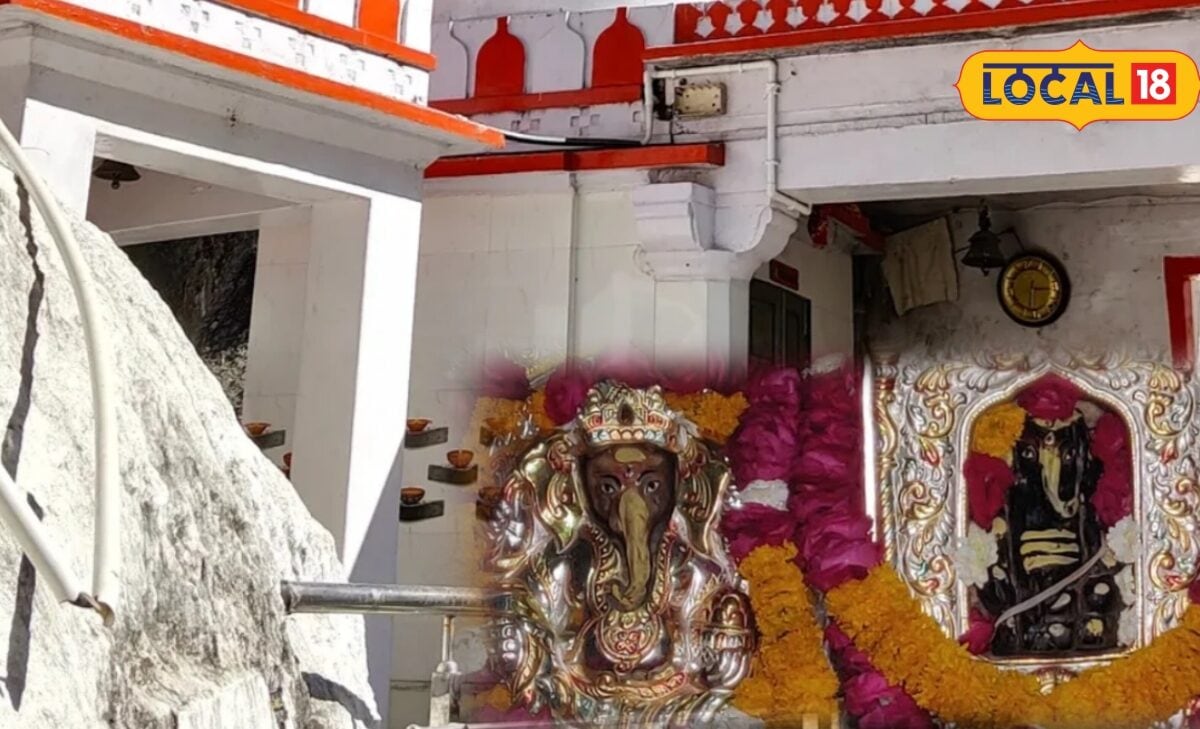
Deep within the ancient and rugged Aravalli hills of Sirohi district in Rajasthan, a remarkable archaeological and spiritual discovery has captured the attention of historians, devotees, and heritage enthusiasts alike. Situated specifically in Radbar village, a unique 3,900-year-old temple dedicated to Lord Ganesha stands as a testament to ancient architectural and religious devotion. This sacred sanctuary preserves deep-rooted cultural traditions that have survived across millennia, serving as a prominent focal point for spiritual seekers and followers of Sanatana Dharma.
The historical context of the temple traces back centuries, with local beliefs strongly associating the sacred site with the legendary Pandavas from the ancient epic era. According to traditional accounts passed down through generations, the sanctum sanctorum holds profound historical weight. The existence of such a deeply revered structure within the dense and rocky terrain of the Aravalli ranges underscores the region's rich heritage, highlighting how ancient builders integrated religious architecture directly into the natural landscape.
Examining the structural layout of the temple reveals extraordinary architectural features that distinguish it from conventional shrines. The temple complex is accessible by navigating more than 100 stone steps carved meticulously into the rugged hillside, leading visitors up to the elevated holy site. Within the primary sanctum, worshippers encounter a rare configuration where two distinct divine manifestations are installed together. Furthermore, the complex houses an ancient stepwell, a traditional water conservation structure characteristic of historic sacred architecture in Rajasthan, which historically served the needs of visiting pilgrims and hermits.
At the very heart of the shrine's religious significance are the two unique idols of Lord Ganesha, revered jointly in the divine forms of Riddhi and Siddhi. Positioned within the singular sanctum sanctorum, the structural arrangement showcases distinct artistic craftsmanship. On the left side stands an idol carved from black stone representing Siddhi Ganesha, while on the right side rests the corresponding form of Riddhi Ganesha. This dual-deity placement within a single sacred space represents auspiciousness, spiritual attainment, and prosperity, drawing profound reverence from visiting worshippers.
The cultural and regional impact of the temple extends far beyond the immediate boundaries of Radbar village, influencing communities across the broader Sirohi district and neighboring regions. The local economy and community life experience a regular influx of spiritual tourism, particularly during significant religious occasions. As devotees travel considerable distances to reach the remote hill shrine, local trade, transport, and community engagement receive a steady boost, fostering a strong sense of shared heritage among the populace.
Administrative oversight and local community stewardship play a crucial role in preserving the sanctity and structural integrity of the ancient temple. Given its archaeological antiquity and association with the Pandavas, custodians and community leaders emphasize the protection of the natural Aravalli environment surrounding the shrine. Efforts are continually directed toward maintaining the historical stone stairway, preserving the ancient stepwell, and ensuring that basic facilities are managed properly for the safety and convenience of arriving pilgrims.
Looking toward the future, the preservation of the Riddhi Siddhi Ganesha temple remains a vital priority for heritage conservationists and local devotees alike. As awareness of its 3,900-year history spreads, public expectations for improved accessibility and historical documentation continue to rise. Every Wednesday and notably during the grand celebrations of Ganesh Chaturthi, the temple witnesses massive gatherings, ensuring that this ancient architectural marvel continues to thrive as a vibrant center of faith and cultural continuity for generations to come.