
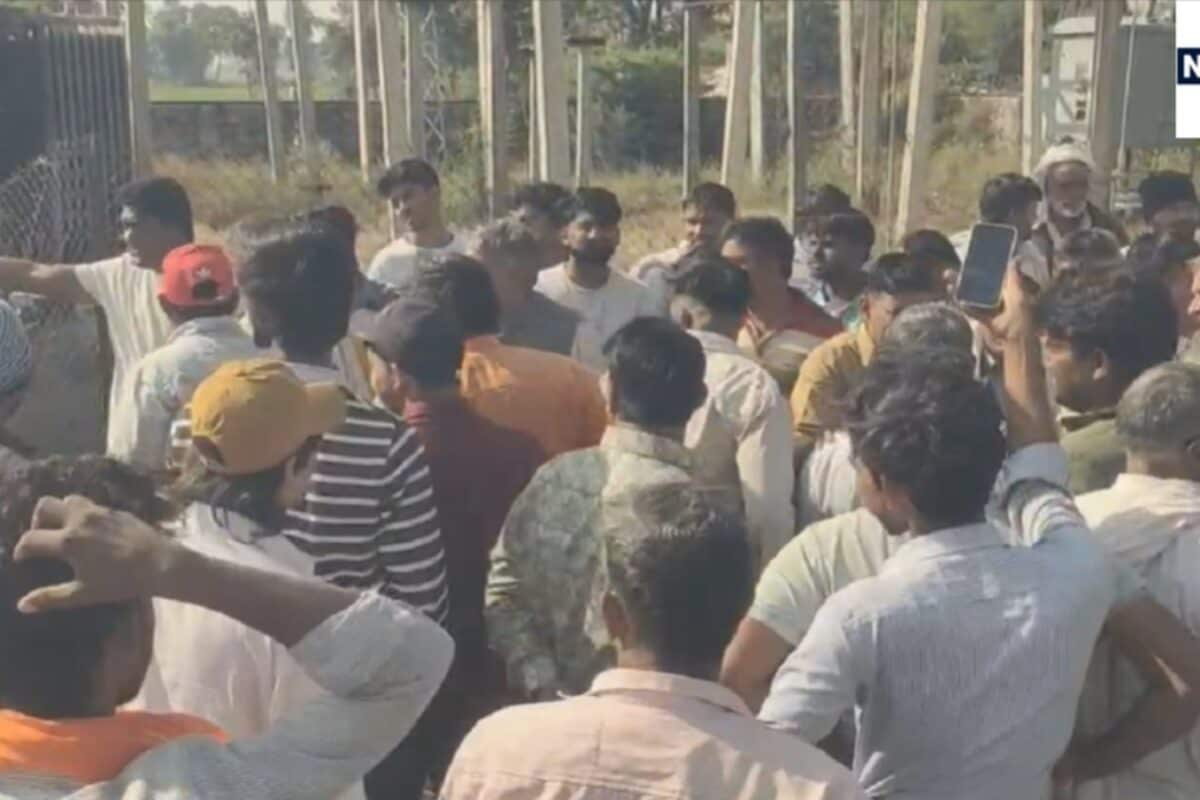
In a sharp manifestation of growing agrarian distress across eastern Rajasthan, scores of frustrated farmers from Chauma village assembled at the Grid Substation (GSS) in Alavada, situated within the Ramgarh region of Alwar district, to launch a vigorous protest against persistent electricity disruptions. The aggrieved cultivators staged a demonstration right at the premises of the power facility, raising slogans against the distribution department for failing to maintain a dependable energy supply. The protest underscores the escalating friction between local agricultural communities and power utilities as farming operations suffer due to unannounced load shedding and operational lapses.
For weeks, agricultural communities across the Alwar belt have been enduring an unprecedented power crisis characterized by arbitrary power cuts and severe infrastructural strain. Farmers reported spending entire nights awake at their tube-well switches, waiting fruitlessly for voltage levels to stabilize, only to face anxiety-ridden days as standing crops face potential damage without adequate irrigation. The chronic neglect of feeder maintenance and grid upgrades in the Alavada area has exacerbated the fragility of the power grid, turning routine farming operations into an unpredictable ordeal for local agrarian families who depend entirely on daily electric supply to pump groundwater.
The core grievance of the protesting farmers centers on the quality and duration of the power being supplied to their agricultural feeders. Demonstrators highlighted that instead of getting a predictable schedule, they suffer from extremely low voltage levels and constant power tripping, which repeatedly trips motor pumps and damages expensive electrical equipment. To resolve these operational hurdles, the farmers explicitly demanded that the electricity department ensure a minimum of six hours of uninterrupted, continuous electricity supply every day. They stressed that piecemeal hourly supply with constant interruptions is virtually useless for efficient field irrigation.
Gathering outside the GSS premises, farmers expressed deep resentment over the perceived apathy of local distribution officials. Representatives from Chauma village voiced their collective frustration, pointing out that despite bringing the issue of frequent voltage fluctuations to the notice of sub-divisional staff multiple times, no remedial measures were implemented. Protesters emphasized that agricultural livelihoods are directly linked to timely irrigation schedules, and the ongoing power instability threatens to destroy their investment in seeds, fertilizers, and field preparation.
The unfolding crisis in the Ramgarh-Alavada sector highlights broader systemic challenges facing the agrarian sector across the regional corridor, including neighboring districts like Kotputli-Behror. Agricultural economies throughout this rural belt are heavily reliant on tubewell-based irrigation, where any disruption in the power distribution infrastructure ripples across local trade, daily wage employment, and grain production. Persistent low voltage not only hampers agricultural yields but also forces rural households into economic vulnerability, magnifying public dissatisfaction against public utility providers across the region.
In a direct escalation of their movement, the protesting farmers issued a strict two-day ultimatum to the electricity distribution department. They warned grid officials and departmental engineers that if regularized six-hour uninterrupted power supply is not restored and voltage stability is not ensured within the specified two-day timeframe, the agricultural community will launch a widespread, indefinite agitation across the sub-division. The protesters threatened to expand their protest measures if the administration fails to provide a concrete resolution.
As the two-day deadline ticks down, tension remains palpable throughout the Alavada grid network, with the public and local leaders watching the department’s response closely. Agricultural bodies expect the regional power utility to initiate immediate technical reviews, balance feeder loads, and deploy maintenance crews to address the low-voltage issues. The upcoming forty-eight hours will be critical in determining whether administrative interventions can de-escalate the situation or if the region will witness an expanded movement by the farming populace demanding basic utility rights.
