
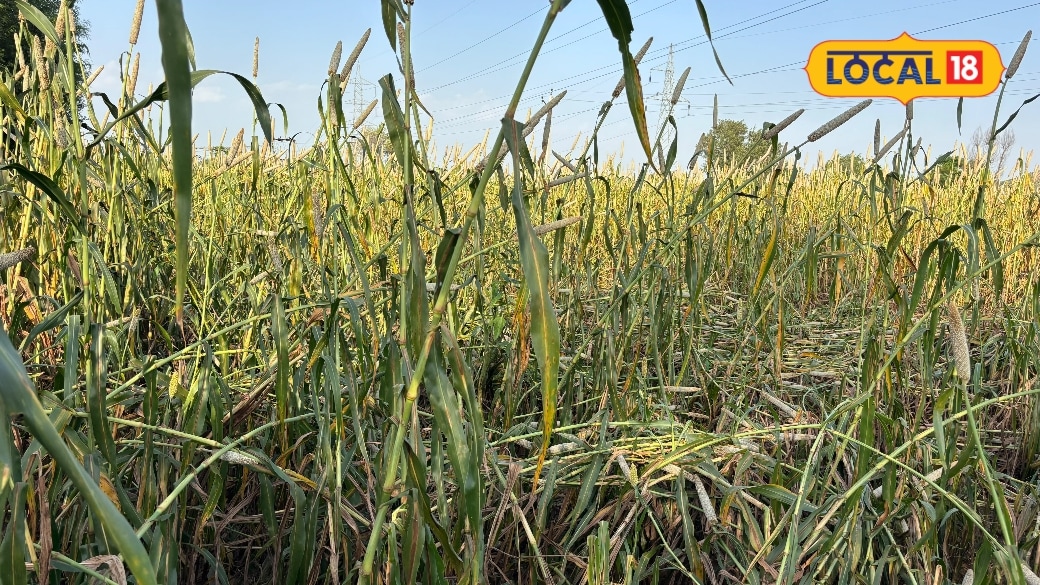
Farmers across the Alwar district and the adjoining Khairthal‑Tijara block are hastening to bring in their bajra (pearl millet) harvest before the onset of the monsoon season. The activity, observed in early September, sees a growing number of harvesters moving through fields, cutting stalks with mechanised equipment that trims both time and manual labour. The urgency stems from a collective desire to secure the crop against the uncertainties of an erratic monsoon, which could either replenish the soil or, if untimely, damage the ripened grain.
Historically, bajra has been a staple cereal in the semi‑arid tracts of Rajasthan, prized for its resilience to drought and its role in the food security of marginal farmers. In Alwar, the crop cycle traditionally begins with sowing in June, followed by a period of vegetative growth that culminates in grain filling during the hot, dry months. Over the past decade, the region has witnessed a gradual shift towards mechanised agriculture, spurred by government subsidies for farm equipment and a rising awareness of labour shortages. This evolution has altered the rhythm of harvest, allowing farmers to compress what once took weeks of manual cutting into a matter of days.
On the ground, the present harvest is characterised by a blend of optimism and caution. Farmers report that the use of combine harvesters is slashing the labour requirement by up to half, a significant relief in an era when rural wage rates have risen sharply. The machines also enable a more uniform cut, reducing post‑harvest losses that were common with hand‑scythes. Yet, despite these efficiencies, the farmers remain wary. The monsoon forecast for the coming weeks is mixed; while a moderate downpour could replenish groundwater and improve the final grain weight, excessive rain could trigger lodging, where the stalks bend and the grain is lost. Consequently, the decision to harvest now reflects a calculated risk management strategy, balancing the benefits of early cutting against the potential upside of a favourable rain.
Voices from the fields echo this dual sentiment. One farmer, who prefers to remain unnamed, explained, “The harvester has saved us many days of hard work, and we can now focus on storing the grain safely.” Another, a younger landowner who recently invested in a rented combine, added, “If the rains are good, the remaining green tops will still add moisture to the soil, but we cannot afford to wait any longer for the grain to mature fully.” Local traders, who purchase the harvested grain for distribution to urban markets, have noted a steady flow of bajra arriving at collection points, praising the timely delivery that helps them meet demand without price spikes. Agricultural extension officers present in the area have reiterated the importance of proper drying and storage to preserve grain quality, especially when the harvest is conducted ahead of the traditional schedule.
The ripple effect of this accelerated harvest extends to the broader Kotputli‑Behror district, where agriculture forms the backbone of the local economy. The early influx of bajra into market channels has provided a short‑term boost to ancillary businesses such as transport, storage, and agro‑processing units. Moreover, the reduced reliance on seasonal labour mitigates the risk of labour shortages that have plagued the region in previous years, thereby stabilising household incomes for many farming families. However, the anticipation of a monsoon that could either enhance or diminish the final yield continues to shape community discussions, with households preparing contingency plans for both scenarios.
Administrative authorities at the district level have responded by coordinating with the state’s agriculture department to monitor weather patterns and provide real‑time advisories to farmers. Extension officers are conducting field visits to demonstrate best practices for post‑harvest handling, including grain drying, cleaning, and storage in moisture‑proof facilities. The district’s disaster management cell has also issued alerts urging farmers to safeguard their harvested grain against unexpected heavy rains, recommending the use of tarpaulins and raised storage platforms where feasible.
Looking ahead, the farming community anticipates that the monsoon, expected to arrive within the next two weeks, will be the decisive factor in determining the ultimate success of this season’s bajra crop. Should the rains be moderate, the early harvest could prove advantageous, allowing farmers to reap a decent yield while preserving soil moisture for the next planting cycle. Conversely, a delayed or excessive downpour may compel farmers to undertake additional post‑harvest measures, such as re‑drying or even re‑planting in marginal plots. In either case, the collective experience underscores a growing trend: the increasing reliance on mechanisation and proactive risk‑management as farmers adapt to a climate that is becoming less predictable.