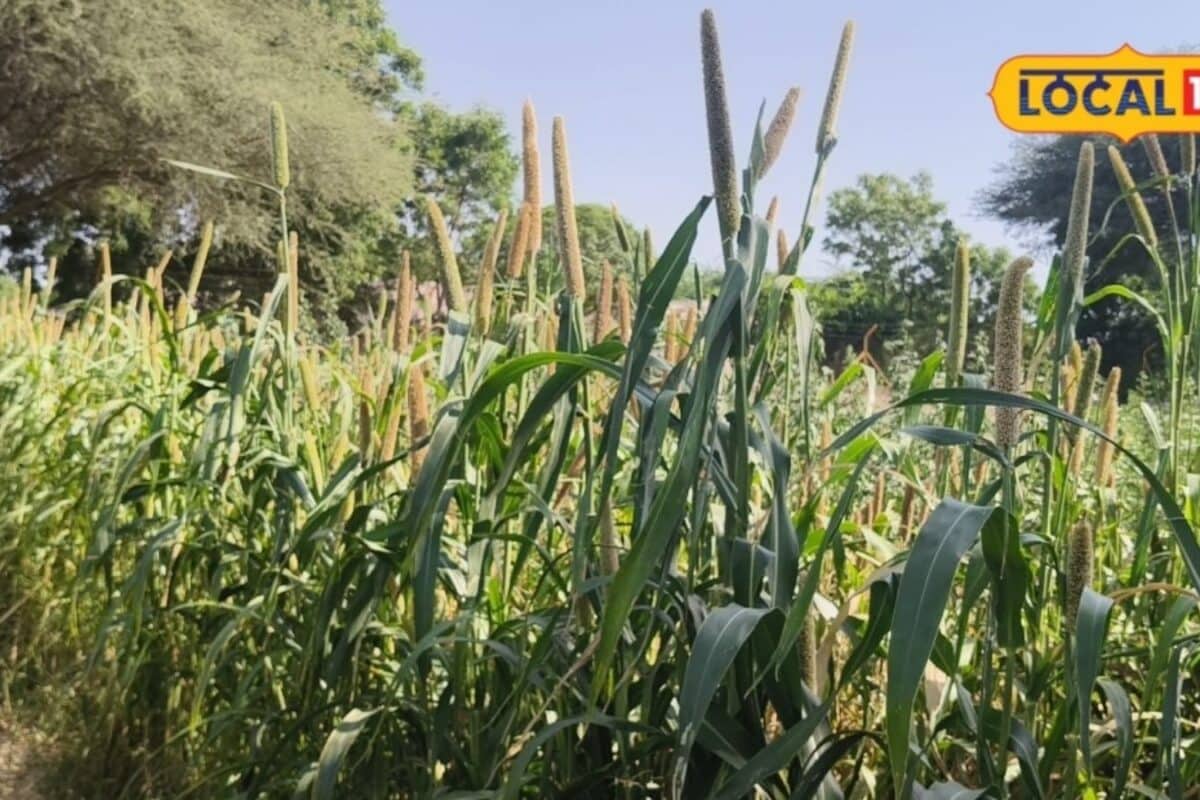
In a significant development for the agrarian sector of western regions, Swami Keshwanand Rajasthan Agricultural University in Bikaner has engineered revolutionary advancements in pearl millet cultivation. Agricultural scientists at the institution have successfully developed two advanced hybrid varieties of Bajra, designated as BHP 1202 and BHP 1602. This scientific breakthrough is specifically tailored to address the persistent agricultural challenges faced by farming communities operating under severe water scarcity and limited soil moisture conditions.
Farming in western regions has historically been fraught with climatic unpredictability, where erratic rainfall and depleting groundwater levels constantly threaten crop survival and financial returns. Pearl millet, universally known as Bajra, remains the paramount staple food grain for these arid ecologies. Recognizing its inherent drought-resilience and capability to yield under minimal moisture availability, researchers have prioritized enhancing its genetic traits to secure regional food security and rural livelihoods.
Under the aegis of the All India Coordinated Research Project on Pearl Millet, the ongoing academic and field research at the Bikaner university has yielded highly encouraging quantitative outcomes. Alongside the newly introduced BHP 1202 and BHP 1602 hybrids, established varieties such as RHB 233 and RHB 234 are also gaining widespread recognition for their robust production capacity. A critical empirical parameter of these newly developed strains is their remarkably compressed maturity cycle, requiring merely 70 to 75 days from sowing to harvest.
Prominent agricultural researcher Dr. N.K. Sharma has emphasized that the strategic focus on developing short-duration crop varieties directly addresses the seasonal vulnerabilities of dryland farming. According to academic evaluations and field observations, these rapid-maturing hybrids allow cultivators to bypass terminal drought phases, thereby safeguarding their agricultural investments against sudden climatic shifts. Stakeholders, including regional farming associations, have welcomed these scientific interventions, noting their potential to optimize meager natural resources.
The broader regional implications of this research extend profoundly across the entire agricultural landscape, influencing cropping patterns and farm economics. As agricultural extension services disseminate these scientific findings, rural communities are being educated on the importance of matching seed selection with specific micro-climatic realities. Economists project that widespread adoption of these high-yielding variants could substantially elevate household incomes across arid districts by mitigating crop failure risks.
Administrative bodies and university authorities have initiated comprehensive outreach programs to ensure that certified seeds of these hybrid varieties reach grassroots cultivators efficiently. Agricultural extension directorates are conducting informational workshops to guide farmers on optimal sowing times, fertilizer application, and moisture conservation techniques. This structured institutional oversight ensures that laboratory innovations translate into tangible on-the-ground prosperity for rural populations.
Looking forward, the research division at Swami Keshwanand Rajasthan Agricultural University plans to continue its iterative breeding programs to tackle emerging phytosanitary challenges and climatic fluctuations. Agricultural experts advise that while these new hybrids offer immense potential, the ultimate success of cultivation depends heavily on localized factors such as rainfall distribution and irrigation water availability. By adhering to scientific recommendations regarding seed selection, farming communities can look toward a more resilient and productive agricultural future.