
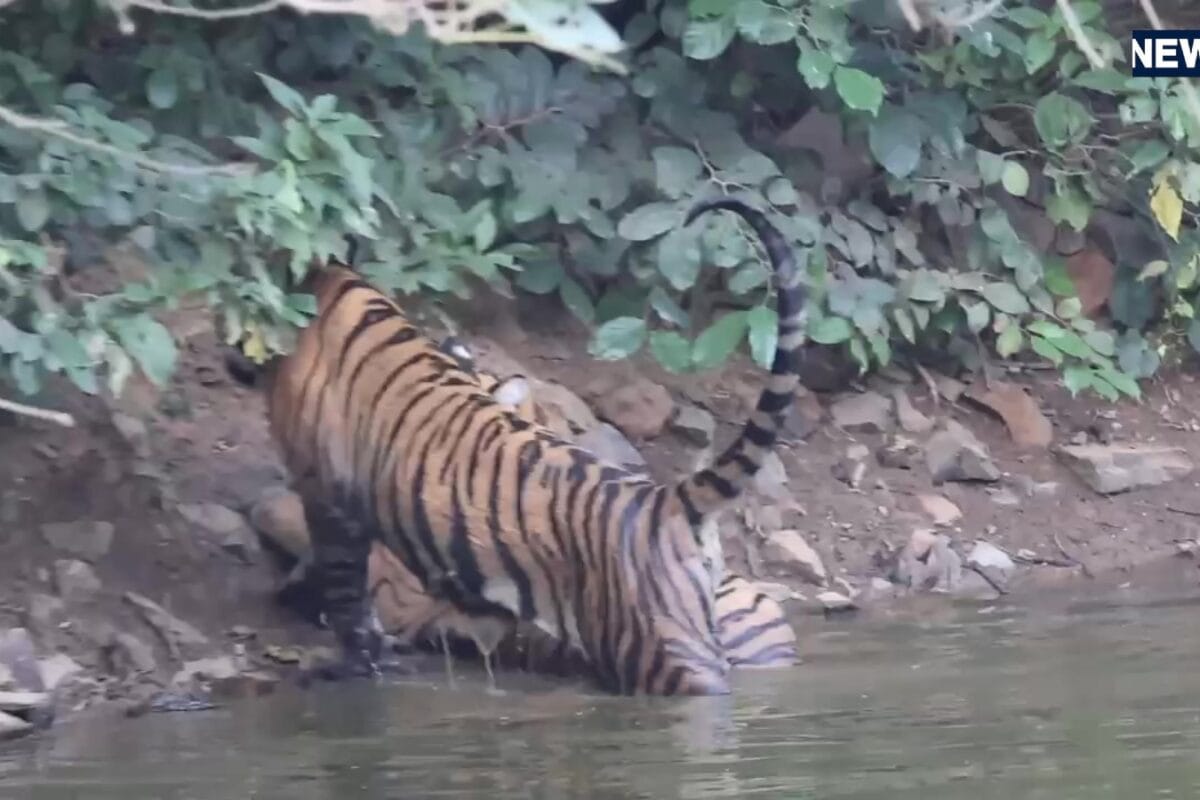
In a remarkable wildlife development that has brought immense joy to conservationists and nature enthusiasts, the 18-month-old twin cubs of tigress ST-2302 were recently spotted engaging in playful activities within the buffer zone of the Alwar Sariska Tiger Reserve. The captivating moment featured the two growing cubs splashing and frolicking in the refreshing waters of a designated water point, demonstrating natural behaviors that reflect a healthy and thriving ecosystem within the protected forest boundaries.
The Alwar Sariska Tiger Reserve holds a monumental status in India's wildlife conservation history, particularly known for its successful tiger translocation and habitat restoration programs. Over the years, the reserve's buffer zones and core areas have transformed into safe sanctuaries where predator populations can reproduce and expand naturally. Tigress ST-2302 represents this biological continuity, nurturing her two offspring through critical developmental stages in an environment heavily monitored by forest authorities and wildlife researchers.
Detailed observations from the field indicate that this enchanting sighting occurred near the prominent Andheri track within the reserve's extensive buffer territory. According to reports shared by forest officials and field naturalists, the region encompasses vital water points that serve as essential lifelines for the local fauna, especially during changing seasonal weather patterns. The presence of both 18-month-old cubs actively interacting near the water source provides tangible statistical and visual proof of successful breeding and maturation within the reserve.
Wildlife photographer Ram Yadav, who successfully documented the rare spectacle, shared his professional perspective on the significance of capturing such pristine natural behaviors. The documentation not only highlights individual animal personalities but also validates the relentless monitoring efforts carried out by conservation staff. Stakeholders, including local nature guides and tourism operators, have noted a substantial surge in visitor enthusiasm following the release of these visual records.
The broader regional impact of such frequent and vibrant wildlife sightings extends significantly toward communities neighboring the Alwar and Kotputli-Behror districts. Increased tourist footfall along the designated safari routes directly benefits local hospitality ventures, guides, and regional service providers. As visitors flock to experience the natural heritage of Sariska, the local economy receives a steady boost, fostering a harmonious coexistence between rural livelihoods and wildlife conservation priorities.
Administrative oversight and forest department measures within the Alwar Sariska Tiger Reserve have intensified correspondingly to manage the rising tourist influx safely. Authorities have deployed dedicated monitoring teams and intensified patrolling along key connectivity corridors, including the Andheri, Bara, and Livari tracks, where tiger family sightings have become increasingly frequent. These precautionary and developmental protocols ensure that tourism activities do not disrupt the natural behavioral patterns of the resident big cats.
Looking toward the forward outlook, conservation planners and forest officials remain optimistic about the long-term ecological stability of the Alwar Sariska Tiger Reserve. The successful upbringing of the two cubs by tigress ST-2302 serves as an encouraging indicator for future population growth surveys. As upcoming tourism seasons approach, the administration plans to maintain rigorous safety standards while welcoming wildlife enthusiasts eager to witness the magnificent natural heritage safeguarded within these protected forests.
