
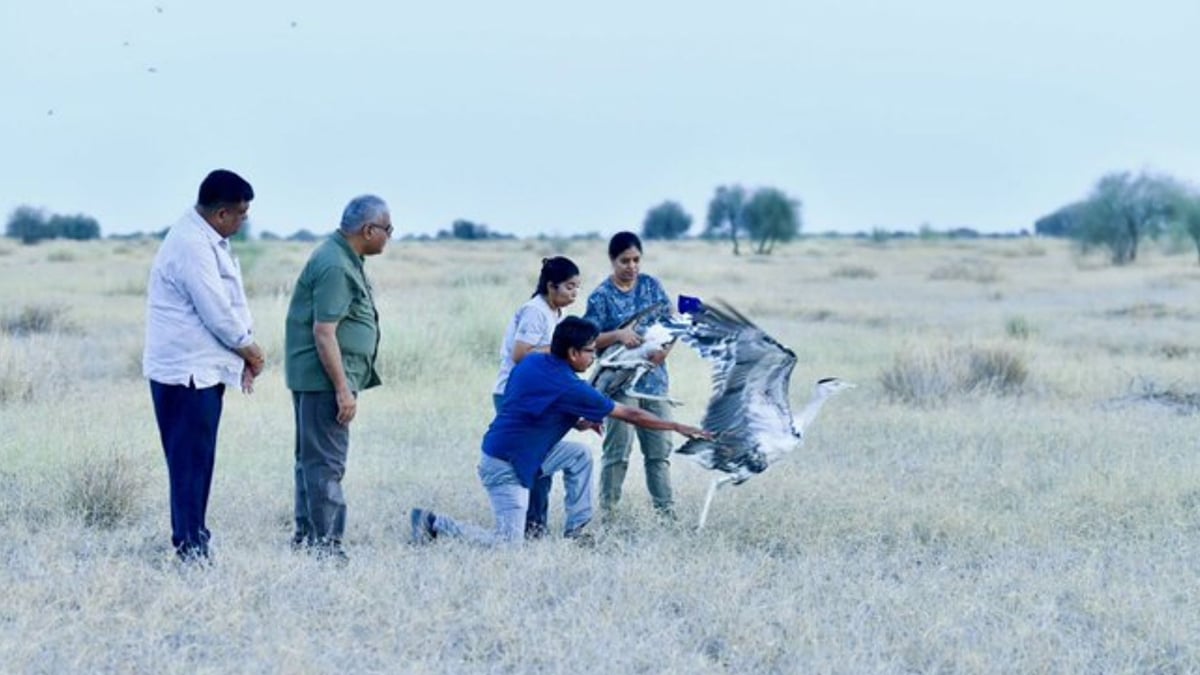
In a significant development concerning wildlife conservation in Rajasthan, authorities have temporarily halted the release of seven critically endangered Great Indian Bustards. This decisive administrative action comes in the wake of a tragic incident inside the Desert National Park located in Jaisalmer, where a six-month-old male bird fell prey to a desert fox. The unfortunate event has sent shockwaves through the conservation community, raising urgent questions about the immediate vulnerability of young birds introduced into their natural habitat.
The Desert National Park has long served as the primary sanctuary for conservation breeding and rehabilitation programs aimed at saving the Great Indian Bustard from the brink of extinction. Historical context reveals that protecting these magnificent birds requires meticulous planning, immense financial resources, and continuous ecological monitoring. Over the past several years, wildlife biologists and conservationists have invested heavily in habitat restoration and captive breeding initiatives to rebuild the declining population within the arid landscapes of western Rajasthan.
According to ground reports and official data from the region, the recent incident specifically involved a young male bird aged only six months. The attack by a native desert fox highlights the harsh realities of the desert ecosystem where predators pose a constant threat to inexperienced or newly released fauna. Following this mortality, wildlife authorities have placed a hold on the scheduled liberation of seven additional birds to ensure their absolute safety and to evaluate the current predator-management strategies in place.
Stakeholders, including senior forest officials and leading researchers from the Wildlife Institute of India, have convened emergency deliberations to analyze how the security breach occurred. Experts emphasize that while predator control is complex in a natural wildlife sanctuary, establishing foolproof pre-release conditioning and impenetrable enclosure perimeters is paramount. Local conservationists have expressed grave concern, urging the administration to enforce more stringent oversight before any future translocations or releases are authorized.
The ecological repercussions of this incident extend well beyond the boundaries of Jaisalmer, resonating deeply across conservation networks throughout the state of Rajasthan and neighboring regions including Kotputli-Behror. Local communities and nature enthusiasts who take immense pride in regional biodiversity are closely monitoring the situation. The well-being of these endangered avian species remains a matter of immense public interest, highlighting the delicate balance required between wild predator populations and endangered prey species.
In response to the growing concerns, the Forest Department alongside the Wildlife Institute of India has formally initiated a comprehensive review protocol. Administrative measures now include enhanced surveillance, intensive tracking of predator movements around release sites, and a rigorous re-evaluation of the standard operating procedures governing the soft-release of captive-reared birds. Senior officials have assured the public that no further releases will take place until every safety parameter has been thoroughly tested and verified.
Looking ahead, the timeline for the eventual release of the remaining seven birds will depend entirely on the findings and recommendations of the ongoing protocol review. Experts suggest that additional monitoring equipment, specialized predator-deterrent barriers, and extended acclimatization periods may be integrated into the revised framework. Public expectations remain high as conservationists and administrators work diligently to secure a safer future for Rajasthan's most iconic feathered inhabitants.
