
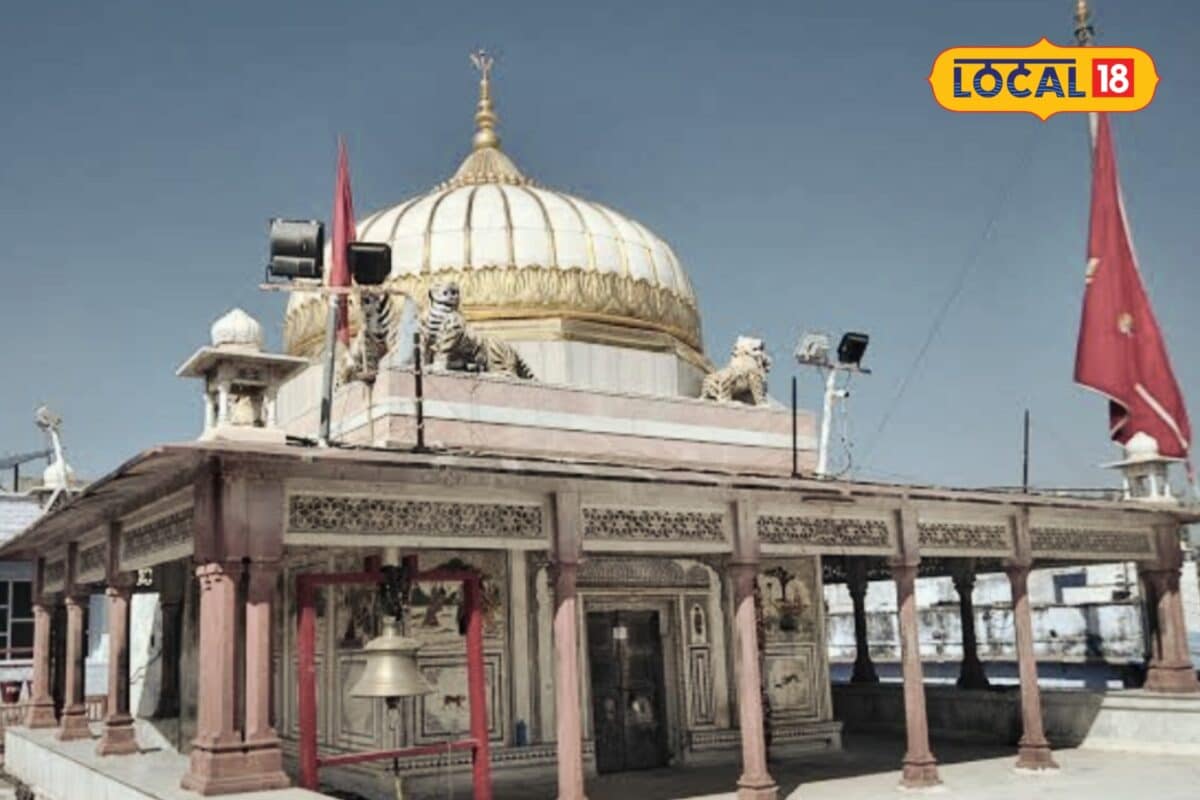
At the revered Kaila Devi Temple located in Karauli, a distinct and age-old tradition is religiously observed during the auspicious period of Shardiya Navratri. Pilgrims and devotees from various regions gather at the shrine to witness this significant ritual, which holds immense religious importance for the followers of the deity. The administration and temple priests meticulously oversee the observance of this custom, maintaining the sanctity of the temple premises throughout the festival.
The core of this tradition dictates that for a continuous duration of 9 days, the presiding deity, Mata Kaila Devi, is neither given a ritualistic bath nor is her divine attire changed. This practice starkly contrasts with the daily routine of temple maintenance and idol care performed during the rest of the year. The continuity of this unvarying routine for nine days has been meticulously preserved by the temple authorities across generations, reflecting deep-rooted devotion.
According to ancient religious beliefs and scriptural interpretations, this unique practice is directly linked to the fierce mythological battle between Goddess Durga and formidable demons. The continuous observance serves as a symbolic remembrance of the divine struggle and perseverance during the celestial war. Devotees firmly believe that adhering strictly to this tradition brings divine protection, prosperity, and spiritual fulfillment to all worshippers who visit the temple.
Local priests and temple caretakers emphasize that every ritual performed during this nine-day window strictly adheres to historical precedents handed down by ancestors. The meticulous care taken in maintaining the deity's appearance without alteration is viewed as an act of supreme dedication. Pilgrims listen to these traditional accounts with profound reverence, enhancing their spiritual experience during the festive season.
The observance of this tradition at the Kaila Devi Temple significantly impacts the regional tourism and economic landscape of Karauli and surrounding areas. Thousands of devotees arrive during the nine days, boosting local trade, hospitality services, and transport networks. The influx of pilgrims fosters a vibrant community atmosphere, uniting people from diverse backgrounds in shared faith and cultural celebration.
Local administrative bodies and temple committees coordinate closely to manage the massive crowds during the nine-day festival. Adequate security measures, crowd control barricades, and basic civic amenities are established to ensure safety and comfort for all visitors. Officials monitor the proceedings continuously to prevent any logistical bottlenecks and maintain public order throughout the pilgrimage.
Looking ahead, temple authorities and local administration expect the observance of this tradition to continue drawing larger numbers of devotees in future years. Preparations for preserving the historical integrity of the rituals while improving visitor infrastructure remain a top priority for the custodians of the Kaila Devi Temple. The enduring legacy of this tradition continues to be a cornerstone of faith in the region.
