
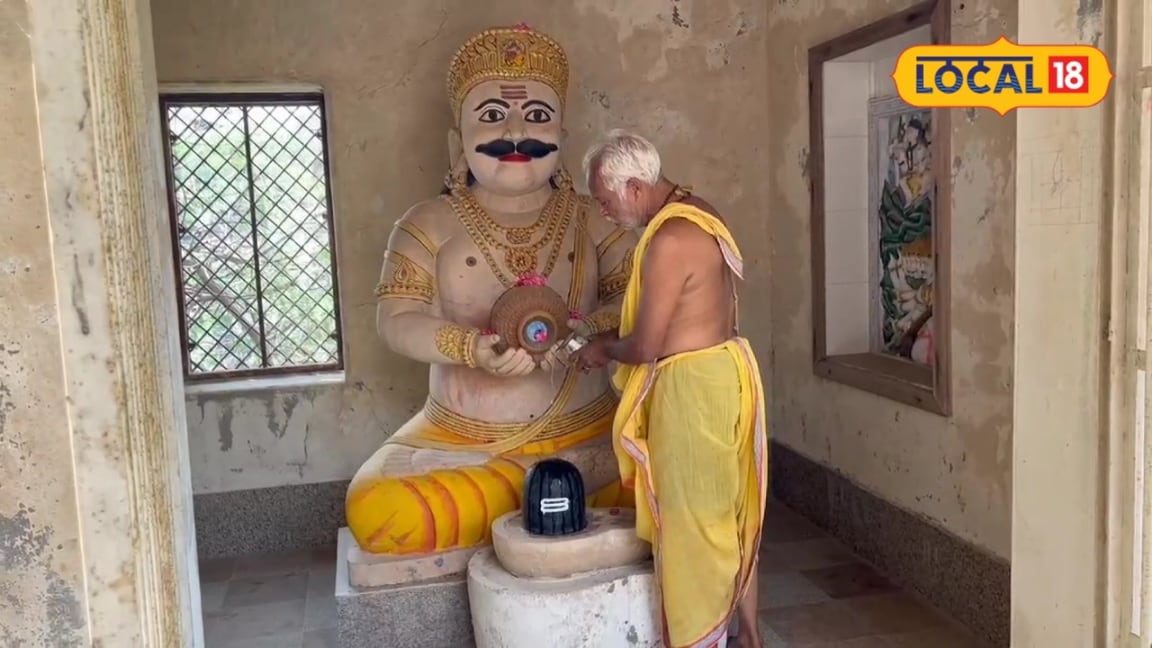
Across the nation, the festival of Vijayadashami is marked by the grand burning of towering effigies of Ravana, symbolizing the triumph of good over evil. However, in stark contrast to these nationwide celebrations, a unique tradition unfolds annually in Jodhpur, Rajasthan. Instead of jubilation, a profound sense of mourning and reverence prevails among a specific segment of the population.
The focal point of this distinct observance is the Godha Srimali Brahmin community residing in Jodhpur. According to their generational beliefs and cultural lineage, this community regards Ravana as their esteemed ancestor. Consequently, rather than participating in festivities that celebrate his downfall, members observe the day of Dussehra with solemnity, considering it an occasion of collective mourning.
Delving into the infrastructural and historical background of this tradition, a dedicated sanctuary for Ravana was established in the year 2008. Situated at a short distance from the historic Mehrangarh Fort, this temple serves as the spiritual epicenter for the community's unique rituals. It stands as a physical testament to their distinct ancestral narrative, drawing descendants and devoted followers who travel to pay their respects.
Examining the ground reality and physical specifics of the shrine, the temple houses a magnificent and imposing sculpture. Crafted meticulously from traditional Jodhpuri stone, the statue stands at an impressive height of 11 feet and weighs a remarkable 2,000 kilograms. These precise architectural and logistical dimensions reflect the profound reverence and scale of devotion held by the community towards their revered ancestor.
The observance draws various stakeholders, including descendants, community elders, and curious onlookers who seek to understand this theological and cultural anomaly. While mainstream society burns effigies to mark the victory of righteousness, the devotees inside the Jodhpur temple engage in traditional prayers, rituals, and reflective contemplation, highlighting the vast diversity of cultural expressions within the country.
Administratively and socially, the temple functions peacefully, receiving local visitors and tourists alike without major controversy, as cultural plurality remains respected in the region. Local authorities maintain standard oversight during the festive season to ensure smooth crowd management around the Mehrangarh Fort vicinity, accommodating both mainstream Dussehra events and this unique community gathering.
Looking forward, the Godha Srimali Brahmin community remains steadfast in preserving their heritage and ancestral customs for future generations. As long-standing traditions continue to be passed down, the Jodhpur Ravana temple stands as a permanent fixture of historical interpretation, offering an alternative perspective on traditional mythology that continues to fascinate researchers and visitors alike.
