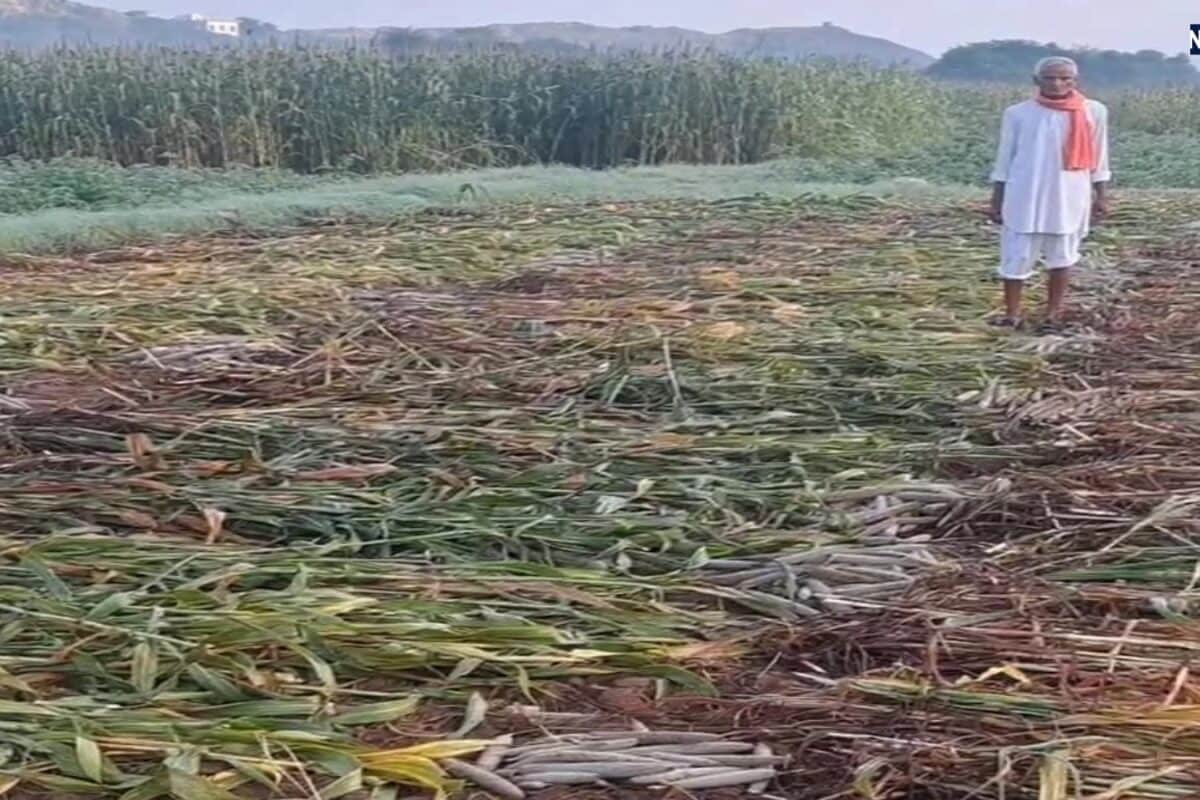
An unexpected and intense spell of overnight rainfall across several parts of Rajasthan has triggered profound anxiety throughout the agrarian community. The sudden weather shift has left newly harvested crops lying exposed in agricultural fields completely drenched, directly threatening the primary livelihood and cumulative seasonal investments of local farmers. The unforeseen meteorological disturbance has caught cultivators off guard right at the critical juncture of their harvest cycle.
This adverse weather development arrives against the backdrop of an increasingly unpredictable climate pattern affecting agricultural belts across the region. Historically, the transition periods between seasonal shifts demand absolute meteorological stability to ensure that mature crops are safely threshed, gathered, and stored. However, unseasonal precipitation events have become a recurrent challenge, disrupting traditional farming calendars and exposing vulnerable yields to environmental hazards.
On the ground, the immediate logistical reality is deeply concerning for agricultural families who have invested months of labor, capital, and resources into their fields. According to field reports, crops that were cut and systematically arranged in the open fields to dry have absorbed significant amounts of rainwater. This prolonged exposure not only diminishes the commercial market value of the grain and produce but also threatens total spoilage if prolonged moisture leads to fungal development or sprouting.
Farming representatives and local cultivators have expressed grave distress over the sudden turn of events, noting that their relentless hard work now stands compromised by forces entirely beyond their control. The psychological and financial toll on rural households is immense, as the harvested yield represents their primary source of annual income and sustenance. Without immediate protective measures or dry storage facilities, the community faces severe economic hardship heading into the upcoming season.
The regional impact of this overnight downpour extends directly into the agrarian economy of districts such as Kotputli-Behror, where rural prosperity is intrinsically tied to timely and secure harvesting. Local markets, agricultural traders, and rural financial cooperatives are bracing for potential repercussions, including reduced market arrivals and compromised crop grades. The interconnected nature of the regional economy means that agricultural distress invariably ripples through local commerce and trade.
In response to the unfolding situation, local agricultural authorities and community leaders are monitoring the field conditions to gauge the exact extent of the weather-induced damage. While preliminary assessments rely on direct observations by farmers, expectations are mounting for administrative oversight, damage surveys, and subsequent guidance to help mitigate the crisis. Farmers are anxiously awaiting formal announcements regarding agricultural support and contingency measures.
Looking forward, the immediate priority for the farming community remains the rapid drying and salvaging of whatever harvest remains unaffected by the moisture. Agricultural experts emphasize the urgent need for expedited threshing operations and secure indoor storage wherever feasible. As the region anticipates further weather updates, the overarching outlook remains tense as cultivators count the cost of nature's sudden intervention.