
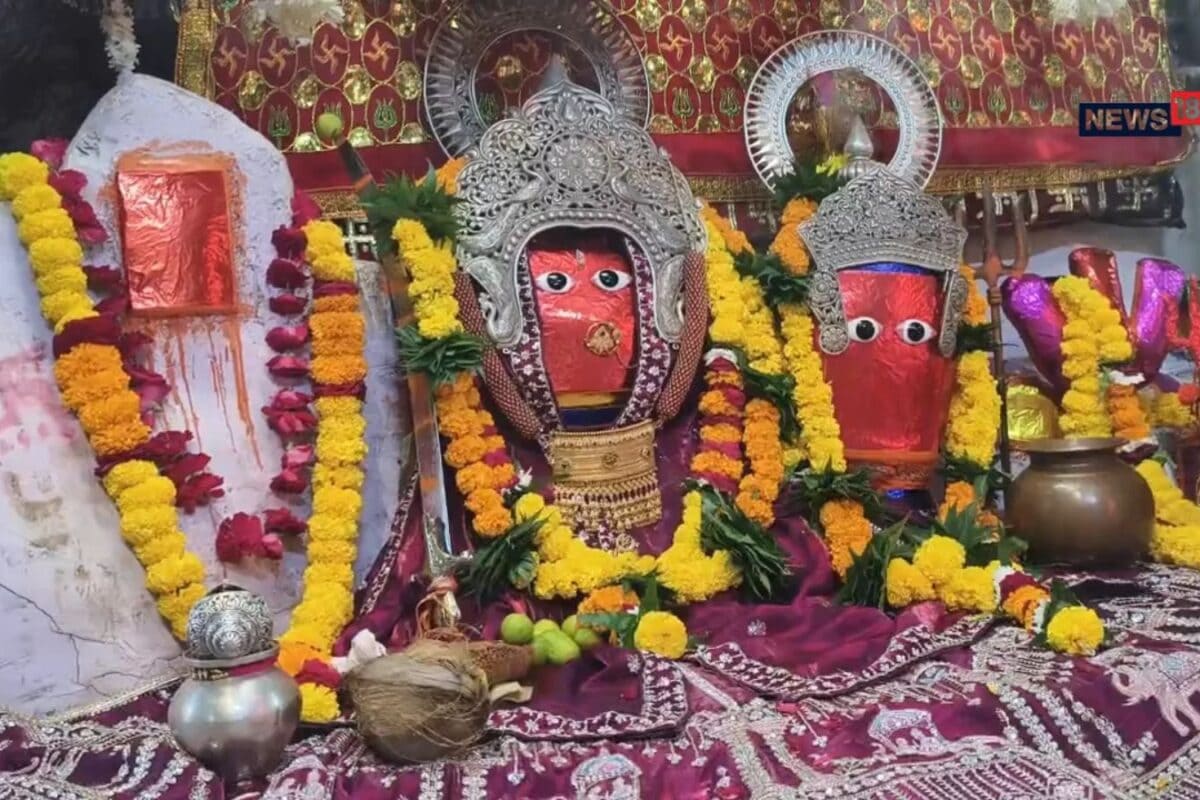
Nestled magnificently on the rugged terrain of the Debari hills in Udaipur, the revered Ghata Wali Mataji Temple represents an enduring beacon of profound folk faith and spiritual heritage in Mewar. As the auspicious days of Sharadiya Navratri unfold, the sacred precinct witnesses an unceasing influx of devoted pilgrims arriving from diverse corners of the nation and international destinations. The spiritual atmosphere is charged with vibrant devotional chants, traditional rituals, and a collective expression of profound reverence for the presiding deity who watches over the rolling landscapes of Udaipur.
The historical tapestry woven around this revered sanctuary is steeped in legendary accounts that have been passed down meticulously through generations within Mewar. Among the most widely narrated oral histories is the miraculous intervention said to have occurred centuries ago when a hostile Mughal army attempted to desecrate the holy grounds. According to local lore, when the invading forces advanced toward the sacred precinct, a fierce swarm of giant hornets and bees mysteriously emerged from the navel of the goddess's divine manifestation, unleashing an overwhelming onslaught that compelled the formidable Mughal army to retreat in absolute disarray.
Over the decades, the physical manifestation of the shrine has undergone a remarkable architectural transformation, evolving from a humble, unpretentious devra situated beneath the shade of a sturdy neem tree into a magnificent, expansive complex. Today, the sanctum features a spacious temple hall, a well-appointed dharamshala to accommodate traveling pilgrims, and a towering, awe-inspiring 35-foot-tall steel-and-stone Trishul that pierces the skyline. This colossal trident stands not only as an emblem of supreme divine power but also as a landmark of immense cultural pride for the entire region of Udaipur and the broader cultural expanse of Mewar.
The resilience of the local community's faith was severely tested and definitively proven during the bustling developmental phase of the 1990s. When government and engineering agencies charted the blueprint for a major national highway passing through the mountainous terrain of Udaipur, the proposed alignment directly threatened the ancient, hallowed site of the temple. Unwilling to compromise their deeply cherished religious heritage, local devotees, community leaders, and custodians united in vehement protest and constructive dialogue with planning authorities, successfully lobbying to reroute the heavy national highway construction away from the sacred precinct.
The successful administrative decision to alter the highway's path stands as a testament to the unyielding devotion of the populace and the profound respect accorded to local cultural institutions by developmental planners. Rather than displacing the historic sanctuary, the highway was engineered to curve around the holy grounds, ensuring that the sanctity of the Debari hills remained utterly uncompromised while modern infrastructural connectivity was simultaneously achieved for the district of Udaipur and the wider region of Mewar.
In contemporary times, the management and upkeep of the Ghata Wali Mataji temple complex are overseen by dedicated temple trusts and local committees who work tirelessly to preserve its pristine condition. These administrative bodies coordinate extensive infrastructural enhancements, crowd management protocols during peak festive seasons like Sharadiya Navratri, and charitable services for visiting pilgrims, ensuring that the profound historical legacy and spiritual serenity of the site are faithfully transmitted to future generations.
Looking toward the forward horizon, local stakeholders and tourism authorities in Udaipur are actively exploring sustainable avenues to highlight the rich historical and mythological heritage of the Ghata Wali Mataji temple on a broader national platform. Plans are underway to improve approach roads, enhance pilgrim facilities around the Debari hills, and document the oral histories surrounding the Mughal encounter and the 1990s highway realignment, ensuring that this unique confluence of faith, history, and modern infrastructure continues to inspire awe and devotion for centuries to come.
