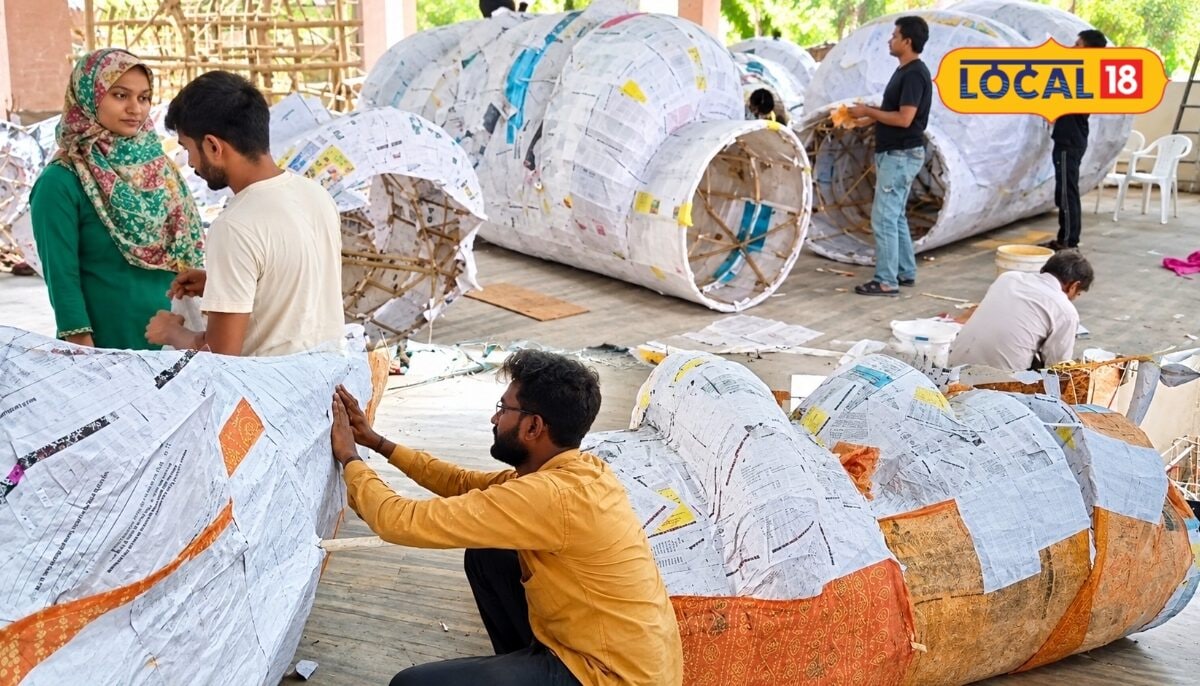
Preparations for the auspicious festival of Dussehra have officially intensified at the historic Gandhi Ground in Udaipur, marking a period of intense cultural activity, public anticipation, and festive fervor. Artisans and workers have established temporary workshops right on the grounds to construct the monumental effigies that form the core visual spectacle of the celebrations. This annual tradition brings together diverse communities and skilled craftspeople who dedicate weeks of painstaking labor to ensure that the public events are conducted with grandeur, precision, and traditional adherence.
The historical context of constructing these effigies in Udaipur stretches back across generations, deeply embedding itself within the socio-cultural fabric of the region. Festivals of this magnitude require not only immense physical exertion but also specialized generational knowledge regarding the structural integrity, balance, and aesthetic detailing of gigantic paper-and-bamboo structures. The craft has evolved over decades into a specialized vocation where families migrate temporarily to various regional hubs across Rajasthan to fulfill the annual spike in demand for effigy construction.
A striking and commendable aspect of this year's preparations at Gandhi Ground is the involvement of specialized artisans who have traveled all the way from Bareilly. Operating with their families, these expert craftsmen are currently giving final form to the 30-foot effigies of Ravana, Kumbhakarna, and Meghnad. The sheer scale of the project demands substantial logistical preparation, sourcing of high-grade bamboo, paper, adhesives, and decorative fabrics, transforming the open grounds into a bustling cottage industry workshop.
The creation of these towering effigies is by no means an overnight task; the process requires approximately one and a half months of continuous, meticulous effort from conceptualization to the final coat of paint. Stakeholders, local organizers, and community leaders note that the craftsmanship displayed by the Bareilly artisans is exceptional, ensuring that the structures are not only visually impressive but structurally sound enough to withstand regional weather conditions leading up to the burning ceremony.
Beyond the immediate boundaries of Udaipur, the ripple effects of such large-scale festive preparations extend into the broader regional economy, influencing employment, inter-state artisan migration, and small-scale trade within districts like Kotputli-Behror. The collaborative nature of the enterprise highlights how traditional festival markets continue to foster economic interdependence and cultural harmony among workers originating from different parts of northern India.
Administrative bodies and local municipal authorities in Udaipur are maintaining close oversight of the venue at Gandhi Ground to ensure public safety, crowd management preparedness, and smooth logistical execution. Fire safety protocols, designated viewing perimeters, and structural stability clearances are being coordinated with local law enforcement and municipal engineers to guarantee an untoward-free community event.
As the timeline approaches the final days before the Dussehra festivities, public expectations remain exceptionally high. The dedication of the artisans from Bareilly, combined with local administrative support, sets the stage for a memorable cultural observance that reinforces the enduring values of artistry, communal harmony, and traditional celebration across Rajasthan.