
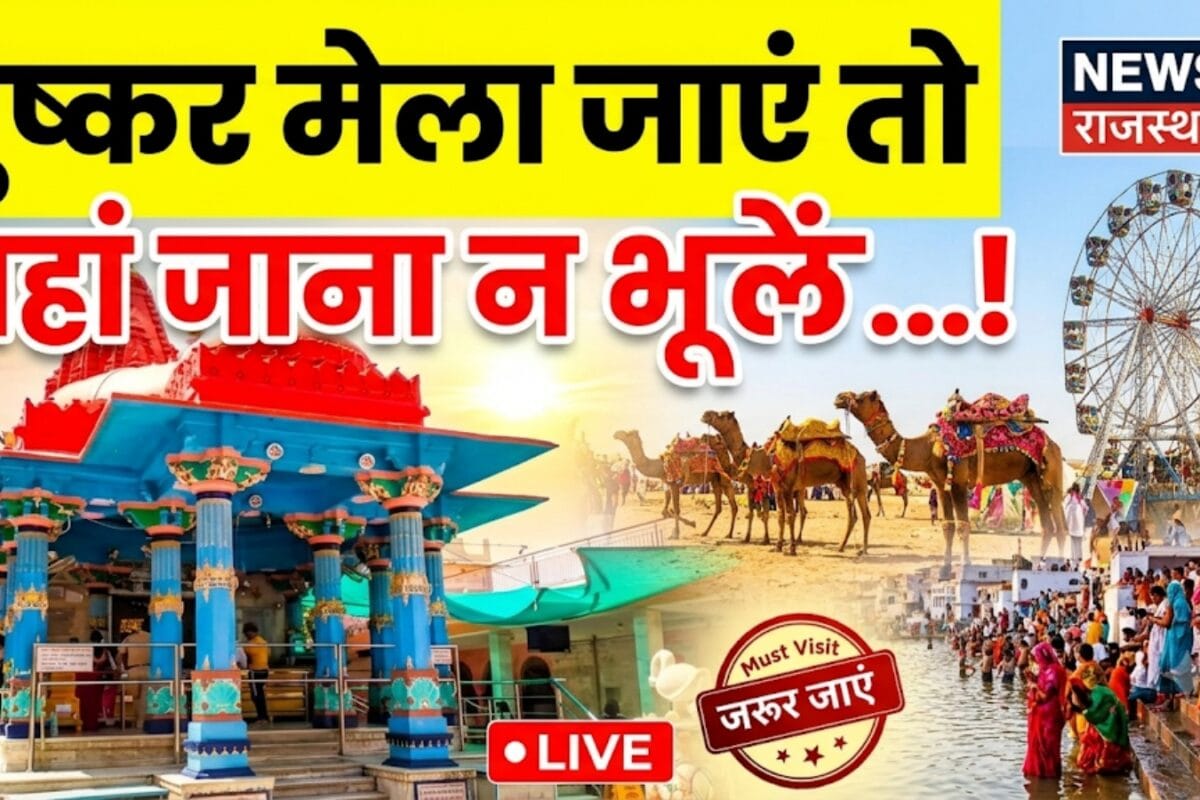
The annual gathering for the prestigious Pushkar Mela in Rajasthan has drawn thousands of devotees and tourists to the holy town, prompting heightened spiritual and cultural activities. While the focus remains largely centered on the sacred rituals, religious authorities and local guides are emphasizing that a complete pilgrimage must encompass several other historic shrines situated across the region. The town of Pushkar, steeped in mythology and ancient heritage, houses multiple sacred monuments that define the spiritual landscape of the area.
Historically, Pushkar has maintained its status as one of the most revered pilgrimage destinations in the country, attracting seekers of divine grace for centuries. At the apex of this spiritual hierarchy stands the Jagatpita Brahma Temple, dedicated to Lord Brahma, who is revered in Hindu theology as the creator of the universe. Because Lord Brahma is rarely worshipped in dedicated shrines elsewhere, this particular temple holds unmatched religious significance, drawing countless devotees from diverse corners of the nation to offer their sincere prayers.
Beyond the primary sanctuary, the geographical spread of the town encompasses numerous other architectural and spiritual marvels that witness heavy footfall during the fair season. Pilgrims traversing the holy terrain make it a point to visit the Rangji Temple, known for its distinct architectural fusion, and the revered Savitri Mata Temple situated atop the Ratnagiri hill. Additionally, the ancient Varaha Temple and the deeply spiritual Apteshwar Mahadev Temple form integral components of the traditional pilgrimage circuit followed by devout visitors.
Local stakeholders, temple priests, and community leaders have noted an overwhelming surge in participation from pilgrims arriving from distant states to partake in the fair's festivities and spiritual observances. Travel organizers and administrative coordinators have reported robust engagement across all designated sacred sites, ensuring that visitors receive adequate guidance regarding the rituals associated with each temple. The collective sentiment among community representatives highlights the deep faith embedded in these ancient structures, which continue to foster spiritual unity among attendees.
The cultural and economic spillover of the Pushkar Mela extends far beyond the immediate municipal boundaries, significantly benefiting regional commerce and transport networks connecting neighboring districts such as Kotputli-Behror. Traders, artisans, and transport operators from across Rajasthan experience a notable uplift in economic activity as thousands of travelers traverse the state highways to reach the holy town. This seasonal influx acts as a vital economic catalyst, bolstering local livelihoods and encouraging traditional trade practices.
In response to the massive influx of pilgrims during the fair, local administrative bodies and municipal authorities have deployed comprehensive crowd management and security measures. District officials coordinate closely with temple management committees to regulate visitor queues, maintain sanitation, and provide essential civic amenities across all major shrines, including the Brahma Temple, Rangji Temple, Savitri Mata Temple, Varaha Temple, and Apteshwar Mahadev Temple.
Looking ahead, community elders and tourism boards anticipate that the ongoing fair will further elevate the profile of Pushkar's sacred heritage on the national tourism map. Preparations for future infrastructural enhancements aim to preserve the architectural integrity of these ancient temples while improving accessibility for elderly and differently-abled pilgrims, ensuring that the timeless spiritual legacy of Pushkar continues to thrive for generations to come.
