
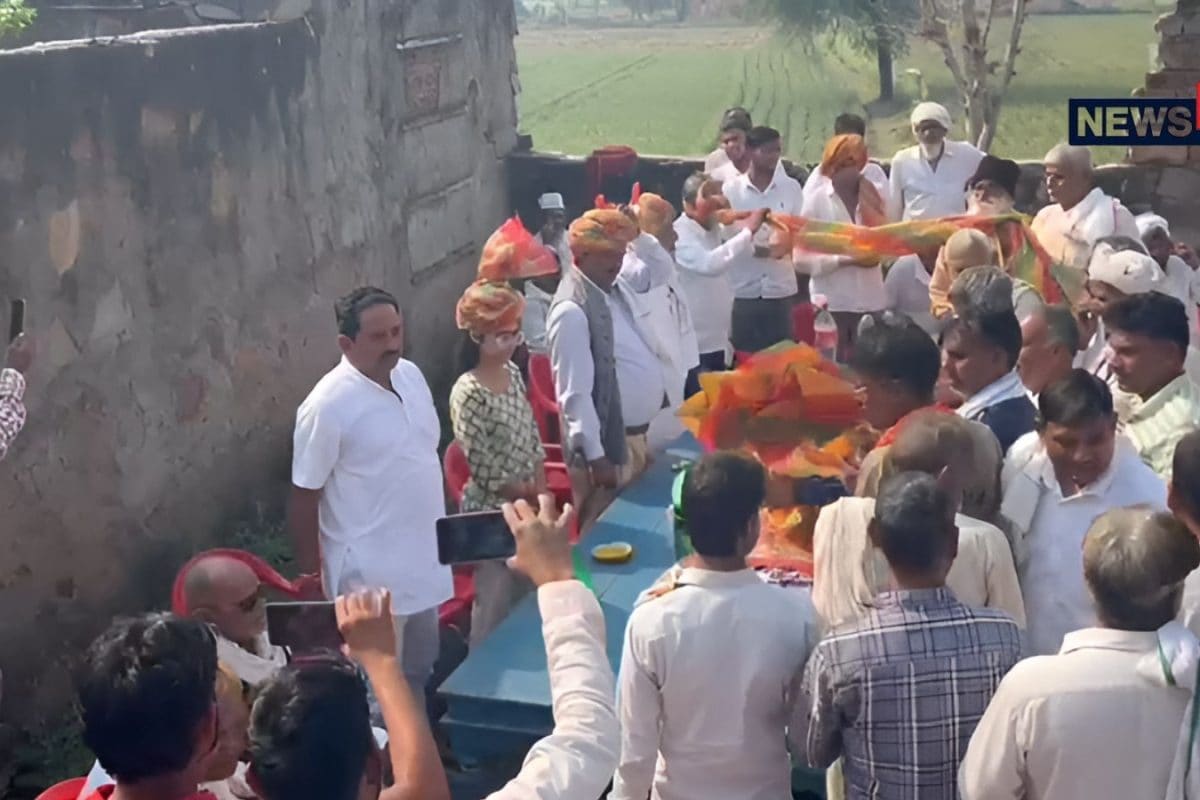
In an inspiring display of young leadership in rural governance, twenty-one-year-old Prerna Naruka has taken up the mantle of leadership as the sarpanch of Garh village, situated within the Raini Panchayat Samiti of Alwar district. Balancing the rigorous academic demands of her physiotherapy studies with the profound responsibilities of local administrative leadership, Naruka represents a fresh paradigm of educated and empathetic youth entering public service in Rajasthan.
The administrative jurisdiction of Garh village encompasses critical developmental challenges that have long awaited decisive leadership. Situated in the semi-arid landscape of Alwar district, the region has historically grappled with infrastructural deficits, particularly in educational facilities tailored for young women and economic avenues for local female populations. Naruka's ascent to the sarpanch position marks a significant demographic shift, as younger generations step forward to address systemic developmental lags through modern administrative approaches.
Central to her developmental blueprint is a meticulous focus on educational empowerment and infrastructural rehabilitation. Specifically, Naruka has prioritized the establishment of a dedicated public library within the village, explicitly designed to facilitate higher learning and competitive examination preparation for the local daughters. Furthermore, comprehensive socioeconomic upliftment plans have been formulated to integrate rural women directly into profitable employment streams and streamline access to various central and state government welfare schemes.
Engaging directly with the populace and administrative stakeholders, Naruka has articulated a clear mandate focused on infrastructural connectivity and cultural preservation. Her immediate developmental agenda includes the comprehensive repair and modernization of vital roadways connecting three neighboring villages, thereby facilitating seamless mobility, commerce, and agricultural transit. In tandem, she has emphasized the architectural and infrastructural development of the revered Salar Baba Dham, aiming to boost local cultural heritage and community pride.
The broader regional impact of Naruka's leadership extends across the wider Alwar and Kotputli-Behror administrative sectors, serving as a compelling benchmark for surrounding panchayats. By demonstrating that academic pursuits and grassroots political accountability can successfully coexist, her tenure stimulates positive competition among neighboring local bodies to enhance transparency, accelerate fund utilization, and prioritize citizen-centric governance models.
At the administrative level, local governance bodies and panchayat development officers are extending institutional cooperation to facilitate the execution of her ambitious proposals. Statutory guidelines and rural development funds allocated under various financial heads are being systematically channeled toward the realization of the infrastructure projects outlined by the panchayat, ensuring that bureaucratic hurdles are efficiently navigated through active liaison.
Looking toward the forward outlook of Garh village, Naruka remains steadfast in her commitment to altering the traditional nomenclature and psychological distance traditionally associated with rural officialdom. Expressing her profound personal philosophy, she desires that the residents of Garh do not merely view her through the formal lens of an administrative sarpanch, but rather embrace her as their own dedicated daughter committed to the collective advancement and prosperity of the entire community.
