
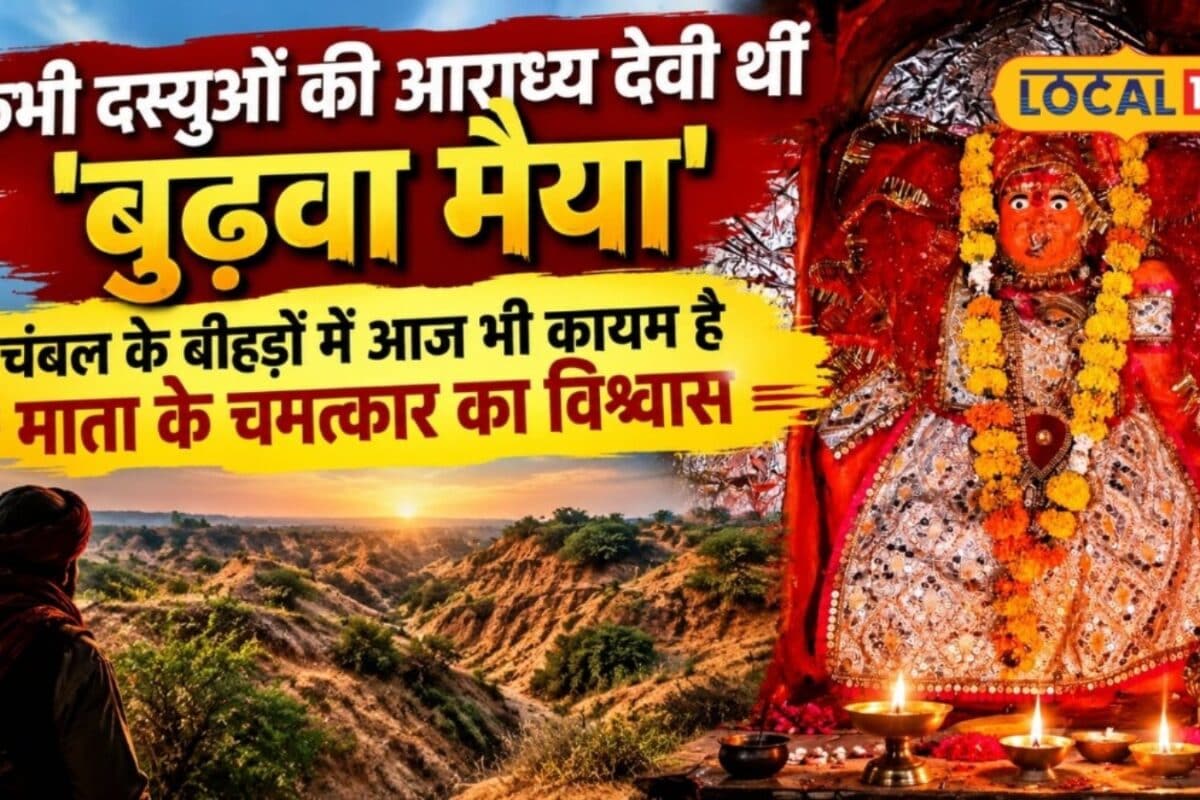
Deep within the dense and rugged ravines of the Chambal region, an intriguing historical chapter of devotion and lawlessness unfolds around the revered Dholpur Budhwa Maiya Mandir. While the geography of Chambal has globally resonated with tales of terror, police encounters, and the relentless dominance of armed outlaws, this specific sacred site maintained a deeply contrasting spiritual aura. The temple stood as an unyielding sanctuary where the otherwise fierce and uncompromising dacoits of the badlands sought divine intervention.
Historically, the vast expanses of Chambal and Dholpur were notorious for housing some of India's most dreaded outlaws who operated completely outside the purview of the state machinery. Navigating these labyrinthine ravines was considered perilous for common citizens and law enforcement alike due to the constant threat of gunfire. Yet, historical accounts and local lore consistently highlight that even the most feared criminals maintained an unwavering reverence for Budhwa Maiya, transforming the violent atmosphere into one of absolute submission before the deity.
Examining the ground reality of this unique dynamic reveals a fascinating cultural paradox within the badlands of Dholpur. While economic isolation and socio-political factors fueled the rise of rebellion and banditry in the region, spiritual institutions acted as the singular psychological anchors for these individuals. The statistics of terror that defined Chambal dramatically halted at the threshold of the Budhwa Maiya Mandir, where outlaws reportedly shed their ammunition belts to offer prayers and seek safe passage or divine protection.
Local community elders, historians, and observers note that the temple served as an equalizer in a territory governed solely by the barrel of a gun. The sacred space witnessed moments where wanted fugitives would temporarily abandon their hostility, mingling anonymously with common devotees who also traveled from far and wide to pay their respects to Budhwa Maiya. The resounding tolls of temple bells and the rhythmic clashing of brass jhalars provided an acoustic backdrop that temporarily silenced the brutal reality of the ravines.
The cultural legacy of the Dholpur Budhwa Maiya Mandir extends far beyond the immediate boundaries of the Chambal valley, influencing the sociological understanding of crime and faith in rural Rajasthan. Communities across the wider region, including areas extending toward Kotputli-Behror, view this phenomenon as a testament to the complex duality of human nature operating within extreme geographical and social environments. The deep-rooted faith in Budhwa Maiya demonstrates how traditional belief systems often penetrated the toughest criminal ecosystems.
Administrative oversight and law enforcement agencies over the decades have systematically transformed the landscape of Chambal, gradually dismantling the networks of dacoits that once terrorized the state. Police operations, infrastructural developments, and increased socio-economic integration have successfully restored the rule of law across the ravines of Dholpur. Consequently, the turbulent era defined by the terror of outlaws has given way to peaceful pilgrimage and administrative normalization.
Looking toward the future, the Dholpur Budhwa Maiya Mandir stands as a protected cultural and historical landmark, attracting contemporary pilgrims, tourists, and researchers interested in the socio-religious history of Chambal. Preserving the heritage of such sites ensures that future generations understand the complex historical transitions of the region. As development reaches the once-inaccessible corners of the badlands, the temple continues to draw devotees who come not in fear of outlaws, but in pure devotion to Budhwa Maiya.
