
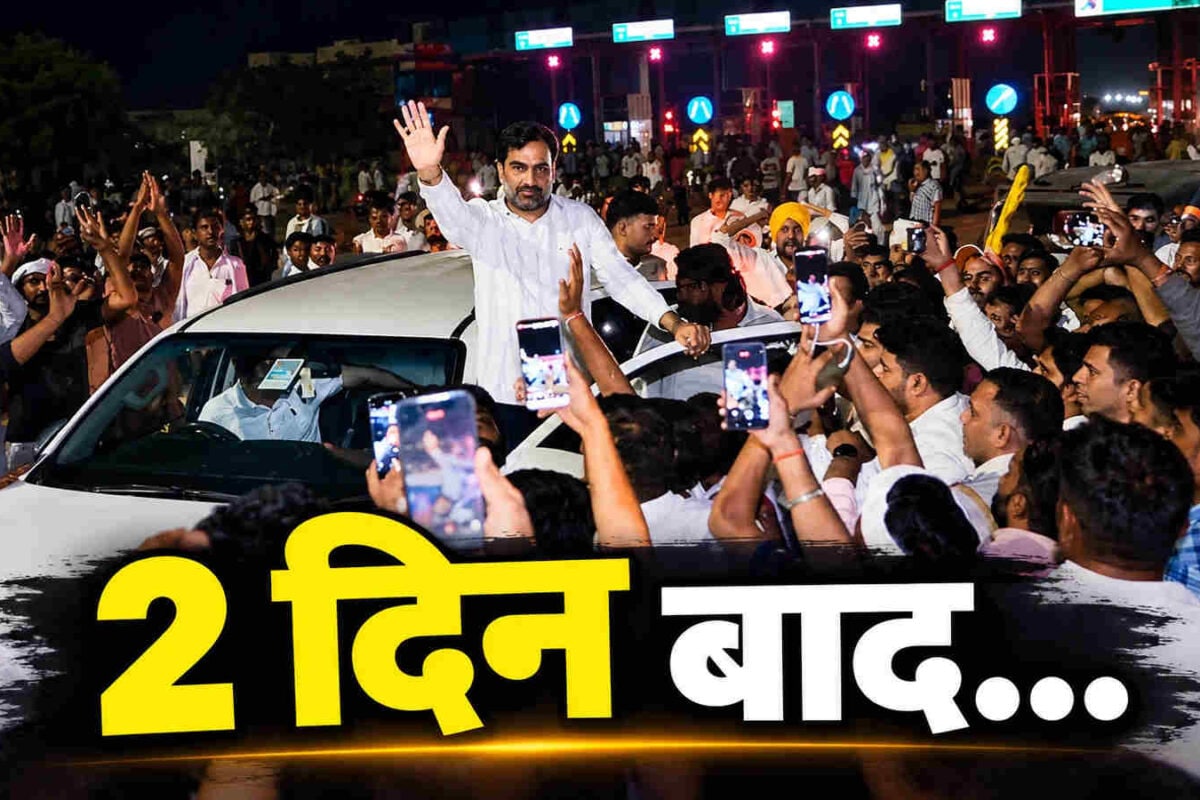
The ongoing farmer agitation in the Anupgarh-Gharsana area of Sriganganagar district has intensified significantly, pushing the situation toward a critical climax. This escalating protest movement poses a formidable challenge for the Bhajanlal government, threatening to become a persistent administrative and political predicament. Despite two consecutive days of national highway blockades orchestrated by the protesting farmers, formal settlement talks have failed to yield any tangible resolution, leaving both sides locked in a stubborn confrontation.
The roots of this intense agitation trace back to long-standing agrarian grievances and unresolved administrative issues concerning irrigation water, crop pricing, and agricultural support systems in the region. Over recent weeks, local farmers have systematically organized themselves, mobilizing rural communities to demand immediate state intervention. The failure of successive dialogue rounds between representatives of the farming community and government authorities has further eroded trust, compelling leaders to adopt an uncompromising approach toward their collective demands.
As the standoff enters a more volatile phase, the ground reality reflects mounting logistical paralysis across the affected districts. The two-day highway blockade disrupted commercial transport, passenger movement, and regional trade networks, causing substantial economic strain for local businesses and commuters alike. Farmers remain steadfast at the protest sites, utilizing collective resources to sustain their prolonged demonstration while demanding accountability from state authorities regarding their livelihood securities.
Amidst the escalating tensions, prominent political figures have stepped into the arena to amplify the voices of the agricultural community. Rashtriya Loktantrik Party (RLP) Supremo Hanuman Beniwal visited the epicentre of the protest on Sunday night to address the gathered masses. During his address, Beniwal delivered a stern warning to the administration, categorically stating that the government must concede to the legitimate demands of the farmers without further delay.
While the immediate geographical epicentre of the protest remains anchored in Sriganganagar and Anupgarh-Gharsana, the broader ripples of this agitation are being felt across neighboring administrative zones. Farming organizations throughout the wider region are closely monitoring the developments, expressing solidarity with the striking farmers. The economic interdependence of rural mandis and urban supply chains means that any prolonged disruption in northern Rajasthan inevitably impacts market sentiment and agricultural commerce in adjoining districts.
In response to the mounting pressure, local administrative bodies and state-level officials have maintained a cautious vigil, attempting behind-the-scenes channels to resume dialogue. However, official statements regarding concrete concessions remain sparse, leading to widespread frustration among the agitating populace. Law enforcement agencies have sustained a heavy deployment around key arterial routes to maintain public order and prevent any escalation of hostilities between protesters and commuters.
Looking ahead, the next forty-eight hours will prove decisive in determining the trajectory of the Gharsana Kisan Andolan. With Hanuman Beniwal explicitly warning of a renewed 'Chakka Jam' (road blockade) if the administration fails to meet their ultimatums within two days, all eyes are now fixed on Jaipur. Unless the Bhajanlal government initiates substantive compromise talks and offers tangible relief, the region faces the imminent prospect of renewed highway blockades and heightened political confrontation.
