
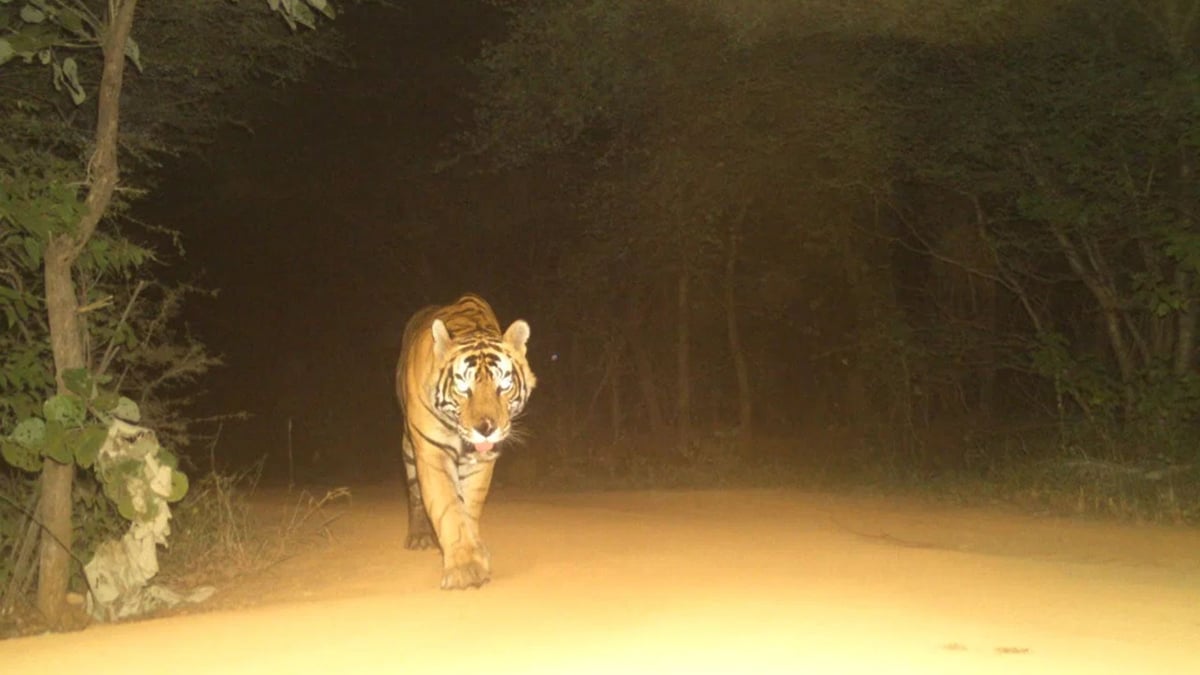
In a significant development concerning wildlife conservation, the Ranthambore Tiger Reserve has officially reported a noticeable improvement in the overall health parameters of tiger T-108, popularly referred to as Jai. The majestic big cat had recently drawn the attention of wildlife experts and forest officials after injury marks were distinctly visible near its facial region.
The conservation history of the reserve highlights the constant need for vigilance, as territorial fights and natural challenges frequently pose risks to apex predators. Tiger T-108 holds considerable significance within the protected ecosystem of the sanctuary, making every health update a matter of immense priority for researchers, naturalists, and wildlife enthusiasts alike.
Upon discovering the facial injuries, the field personnel and veterinary teams deployed by the forest department immediately initiated rigorous tracking protocols. Ground teams have been utilizing advanced monitoring techniques, including continuous physical surveillance and camera traps, to assess the mobility, feeding habits, and behavioral patterns of the injured animal.
Speaking on the ongoing monitoring efforts, concerned wildlife officials emphasized that every precaution is being taken to safeguard the well-being of tiger T-108 without causing undue disturbance to its natural routine. The priority of the department remains uncompromised observation to ensure that the injury heals naturally without requiring intensive medical intervention.
While the reserve primarily functions as a protected sanctuary in eastern Rajasthan, developments concerning iconic wildlife heavily resonate across surrounding administrative divisions, including the newly formed Kotputli-Behror district. Citizens and wildlife admirers in the wider region continuously monitor updates from Ranthambore, reflecting the deep cultural and ecological connection people share with the national animal.
Administrative measures within the reserve have been further tightened to curb unauthorized human interference and minimize potential territorial conflicts among dominant tigers. The forest department's swift response underscores the institutional commitment to maintaining a robust and healthy predator population within the sanctuary boundaries.
Looking ahead, the forest department has confirmed that surveillance over tiger T-108 will persist indefinitely until the injury marks have completely vanished and the animal regains absolute normalcy. Wildlife authorities remain optimistic about the recovery trajectory, assuring the public that all necessary protocols are firmly in place to protect the reserve's valuable biodiversity.
