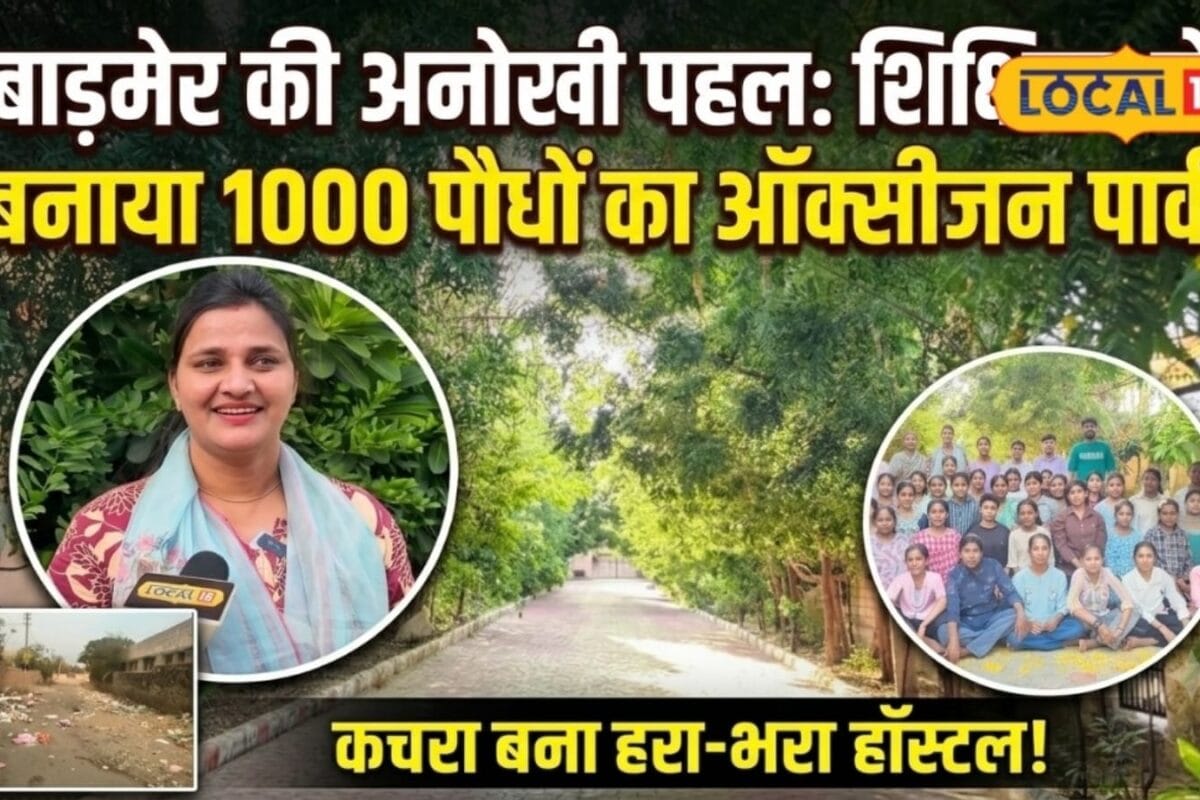
In a remarkable testament to individual dedication and environmental stewardship, an arid and neglected garbage dump in Barmer has been successfully rehabilitated into a verdant ecological sanctuary. Spearheaded by a committed educator, this inspiring transformation demonstrates how localized community efforts can overcome extreme geographical and climatic challenges to foster sustainable urban and institutional forestry. The initiative has fundamentally altered the landscape of the government institution, replacing accumulated waste with flourishing botanical life and significantly improving the immediate environmental surroundings.
Historically, the designated area within the premises served as an unmanaged dumping ground, accumulating refuse and generating persistent foul odors that plagued the residents and students nearby. The continuous degradation of the land posed severe environmental and health concerns for the inhabitants of the facility. Recognizing the urgent need for intervention, the local administration and residents witnessed a turning point when proactive steps were initiated to reclaim the degraded soil and restore ecological balance to the neglected plot of land.
At the center of this commendable environmental restoration is Seema Meena, a dedicated teacher stationed at the Government Girls Tribal Hostel in Barmer. Utilizing personal initiative and resources, she organized extensive cleanup drives to clear out accumulated garbage from the site before embarking on massive plantation efforts. Working tirelessly alongside her husband, Kartar Singh, she ensured the successful plantation of over 1,000 diverse saplings, systematically converting the once-polluted terrain into a flourishing botanical zone officially recognized as an oxygen park.
The newly established oxygen park boasts a rich variety of flora carefully selected to withstand local climatic conditions while maximizing environmental benefits. The botanical inventory includes sturdy shade-giving and ornamental species such as neem, shisham, gulmohar, and mogra, alongside a selection of valuable fruit-bearing and medicinal plants. This diverse agricultural and arboreal selection not only enhances the aesthetic appeal of the campus but also contributes actively to the purification of the ambient air and the creation of a micro-ecosystem.
A critical component of this grassroots transformation has been the active involvement of the local student community residing within the hostel facilities. Nearly 50 students enthusiastically joined hands with Seema Meena and Kartar Singh, taking personal responsibility for watering, weeding, and protecting the vulnerable saplings. This hands-on educational engagement has instilled a deep sense of environmental responsibility and civic duty among the younger generation, fostering practical knowledge regarding ecological conservation and plant husbandry.
Sustaining plant life in the harsh, high-temperature, and water-scarce environment of Barmer presents extraordinary logistical and physical challenges. However, through rigorous daily maintenance, systematic irrigation schedules, and dedicated round-the-clock supervision, the project organizers successfully defied regional climatic odds. The persistent efforts have ensured high survival rates for the flora, transforming a barren, foul-smelling hazard into a thriving green haven characterized by floral fragrances and cool shade.
Looking ahead, this successful ecological intervention serves as a replicable model for other arid institutions and municipalities across the region facing similar environmental degradation. The project underscores the profound impact that dedicated individuals can achieve through perseverance and community mobilization. As the newly planted trees continue to mature, they promise to deliver long-term ecological dividends, setting an inspiring benchmark for localized green governance and sustainable development initiatives.