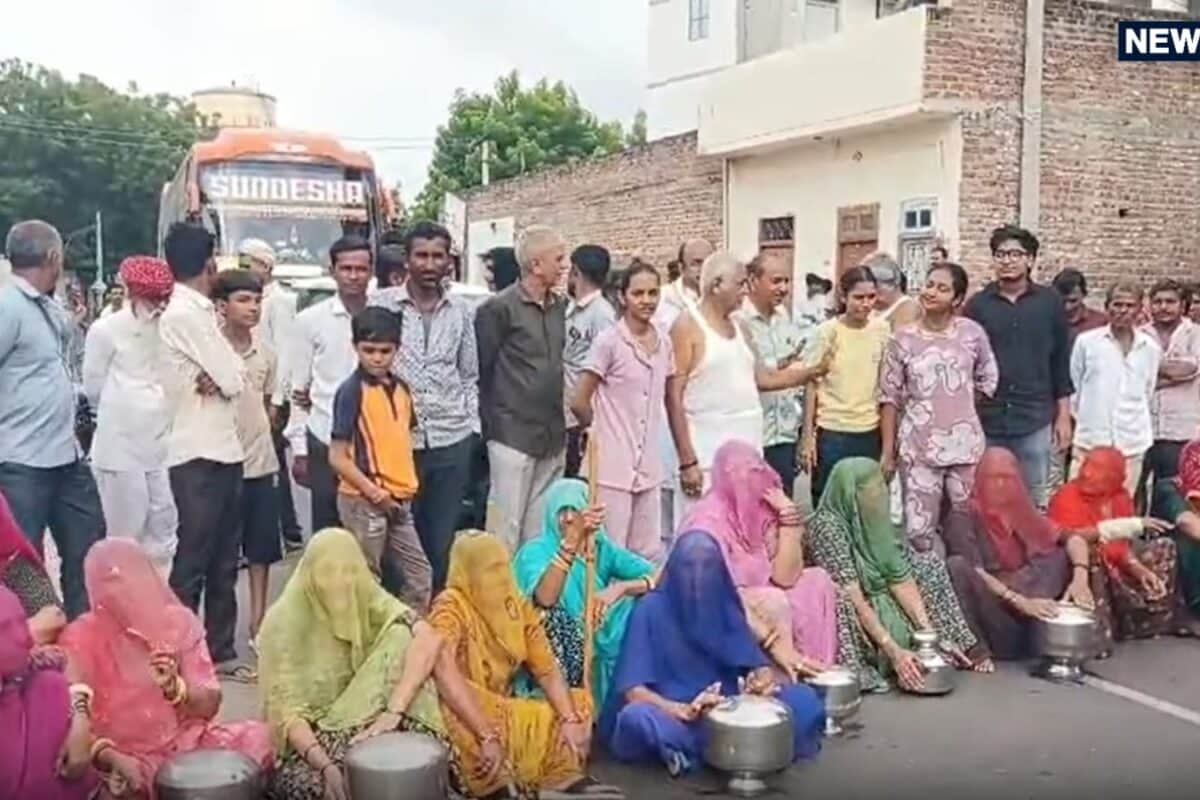
In a dramatic escalation of public discontent regarding essential infrastructure, residents and women of Otwala village in Jalore took to the streets to protest a crippling drinking water crisis. Demonstrators staged a major blockade on the heavily transited Jalore-Sayla highway, carrying empty vessels to visually underscore the severity of the shortage. The protest was triggered by a complete disruption in municipal water supply that has plagued the area for nearly fifteen consecutive days, leaving households entirely dry and communities grappling with severe hardships.
The roots of this acute water scarcity trace back to regional infrastructural vulnerabilities, compounded significantly by the disruption of Narmada canal water flowing from neighbouring Gujarat. According to official reports from the public health engineering department, the supply from the neighbouring state has remained entirely suspended for approximately ten days. This inter-state dependency issue has severely paralyzed local distribution networks, cutting off the primary lifeline that sustains daily domestic life, agricultural activities, and livestock sustenance across rural settlements in Jalore.
The financial and logistical burden on ordinary families has escalated to unsustainable levels during this prolonged dry spell. With municipal taps remaining completely dry, local residents have been forced to rely heavily on private water tankers for their daily survival. Villagers reported that they are routinely compelled to spend between six hundred and seven hundred rupees out of pocket for a single water tanker. Given the vast consumption needs of households, many families are finding themselves financially strained as they are forced to order these expensive private tankers every six to seven days just to meet basic drinking and sanitation requirements.
The mounting frustration finally boiled over, prompting women and community elders to stage an assertive sit-in protest directly on the asphalt of the Jalore-Sayla highway. Wielding empty metal and plastic containers, the protestors voiced their anguish and demanded immediate, regular water supplies from local authorities. During the demonstration, citizens openly articulated their plight, emphasizing that they are repeatedly forced to spend seven hundred rupees on purchasing essential water tankers due to systemic administrative failure and prolonged bureaucratic apathy.
While this particular protest unfolded in Jalore, the ripple effects of such severe infrastructure failures serve as a sobering reminder of systemic vulnerabilities affecting rural districts across the state, including regions like Kotputli-Behror. Communities heavily dependent on distant canal networks often face extreme vulnerability when inter-state or trans-district water sharing agreements experience disruptions. The local economy and household savings in rural sectors take a direct hit when families must divert scarce daily wages toward purchasing private water supplies rather than investing in livelihood sustenance.
Responding swiftly to the escalating traffic gridlock and the intense public outcry, senior officials from the administration and the public health engineering department rushed to the protest site. Recognizing the urgency of the situation, the authorities engaged in continuous dialogue with the aggrieved community leaders and protesting women. The administrative machinery faced immense pressure to restore public order on the vital highway corridor while simultaneously addressing the genuine grievances concerning basic civic amenities and human survival needs.
After nearly two hours of intense negotiations and constructive dialogue, the administrative officials successfully persuaded the villagers by offering concrete remedial measures. The department assured the public that an alternative water supply would be immediately operationalized utilizing the tubewell located in Kharal. Satisfied with these official assurances and the timeline provided for the restoration of civic services, the villagers finally dismantled the blockade and reopened the Jalore-Sayla highway to vehicular traffic.