
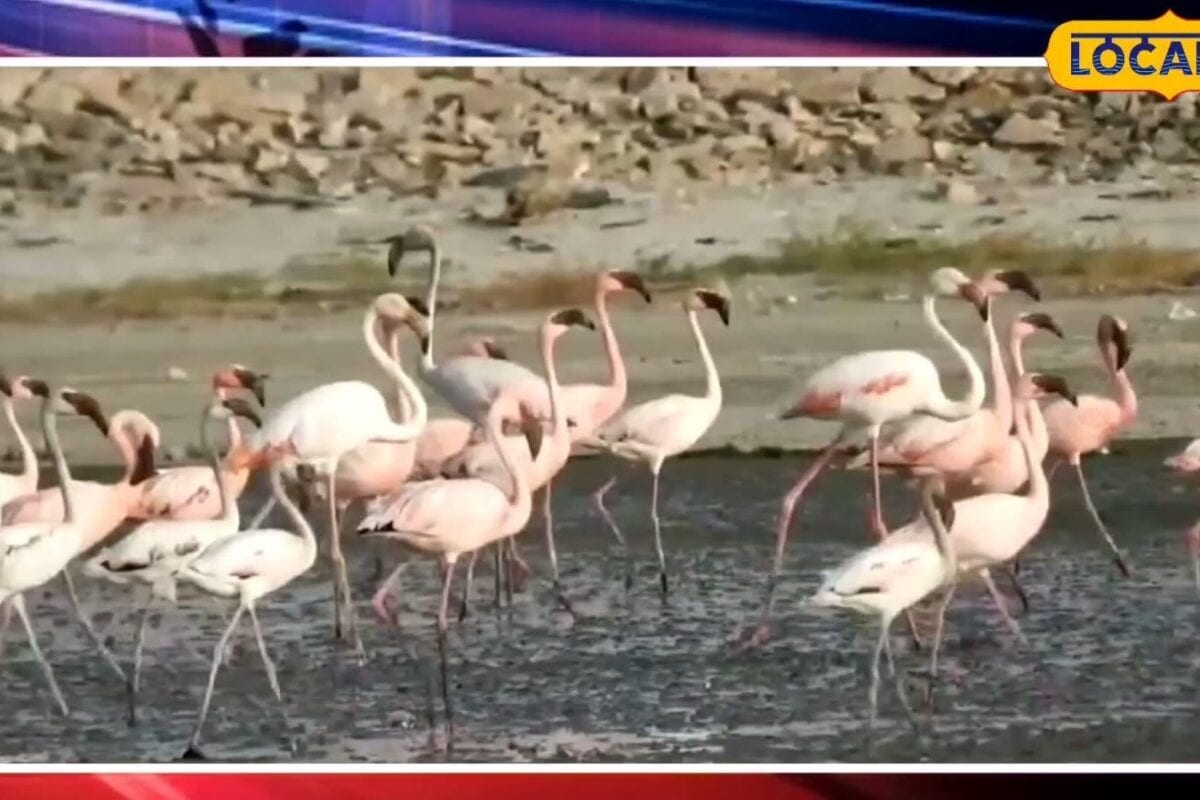
The picturesque Sambhar Lake has once again transformed into a vibrant ecological haven with the grand seasonal arrival of migratory birds. Traveling an arduous journey spanning thousands of kilometers from freezing northern regions such as Russia, Siberia, and Mongolia, countless avian species have reached this vast inland saline wetland to escape the harsh winter months. Among the myriad species arriving at the destination, the magnificent flamingos emerge as the absolute center of attention, captivating local naturalists, researchers, and visitors alike with their breathtaking presence.
Spanning an impressive expanse of approximately 240 square kilometers, Sambhar Lake serves as a crucial geographical junction overlapping the districts of Jaipur, Nagour, and Ajmer. Historically recognized as one of the most vital inland salt-water ecosystems in the region, the lake provides an exceptionally unique natural habitat that has sustained migratory bird populations for generations. The ecological composition of the wetland, characterized by vast expanses of shallow saline water and rich mineral deposits, creates an ideal wintering ground for diverse bird families making the annual transcontinental flight.
According to field observations and ecological reports, the arrival of these feathered guests gathers immense momentum starting from late October, with their grand stay extending continuously through the month of March. During this peak period, hundreds of thousands of flamingos, alongside millions of other migratory birds, descend upon the water body. The synchronized movements of these majestic birds—whether they are gracefully wading through the shallow saline waters or taking to the sky in massive flocks—create a mesmerizing visual spectacle that paints the entire horizon in vibrant shades of pink.
Wildlife experts and environmental observers note that the unique biological characteristics of the lake play a fundamental role in attracting this colossal avian population. The saline waters of Sambhar Lake naturally produce an abundance of specialized algae and micro-aquatic organisms, which serve as the primary and most reliable food source for the flamingos and other visiting species. This rich nutritional availability ensures that the birds find adequate sustenance throughout their prolonged winter sojourn without facing ecological scarcity.
Beyond the undeniable dominance of flamingos, the sprawling wetland ecosystem also plays host to a diverse array of other remarkable avian species. Environmental records from the region highlight the regular presence of pelicans, common cranes, pintails, bar-headed geese, and tufted ducks, among various other indigenous and migratory waterbirds. This rich biodiversity transforms the tri-district expanse into a thriving hub for ornithological study, wildlife photography, and nature tourism during the cooler winter months.
Local administrative bodies, conservation authorities, and wildlife protection agencies maintain active oversight to ensure the safety and ecological preservation of the migratory birds during their seasonal tenure. Measures are continuously evaluated to safeguard the natural feeding grounds from anthropogenic disturbances, illegal encroachments, and industrial pollution, thereby protecting the delicate ecological balance of the wetland. Forest and wildlife departments coordinate closely with regional stakeholders to monitor bird health and maintain the pristine conditions required for the avian sanctuary.
Looking ahead toward the remainder of the winter season, environmentalists and tourism promoters anticipate sustained public interest and robust avian activity until the departure of the birds in March. As the ecosystem continues to flourish under optimal climatic conditions, the annual gathering at Sambhar Lake reinforces its status as an irreplaceable ecological treasure. The harmonious coexistence of nature, wildlife, and local communities surrounding Jaipur, Nagour, and Ajmer remains a testament to the enduring significance of this monumental wetland.