
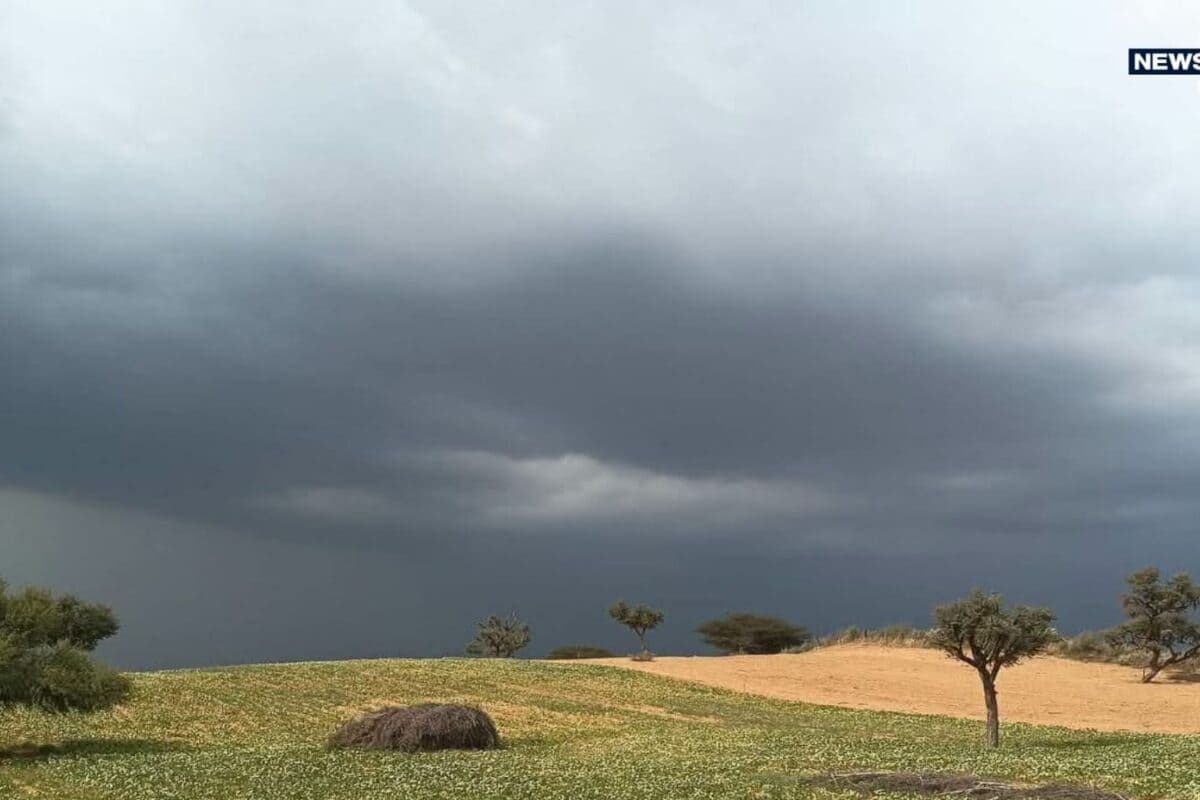
The weather dynamics across Rajasthan have entered a distinct phase starting from September 25, creating a profound meteorological divide between the eastern and western territories of the state. According to comprehensive reports issued by the Meteorological Center in Jaipur, the geographical landscape is experiencing contrasting climatic conditions, marked by intense dry heat in the western desert sectors and incoming precipitation systems in the eastern and southeastern zones. This seasonal shift highlights the complex atmospheric movements characteristic of the post-monsoon transition period in northwestern India.
Historically, the month of September in Rajasthan witnesses fluctuating weather patterns, often bringing late-monsoon showers to specific regions while leaving others arid. The current synoptic situation is governed by localized cyclonic circulations and moisture incursions originating from surrounding regions, which have set the stage for convective activity over parts of eastern Rajasthan. Concurrently, the western districts remain under the influence of persistent dry continental winds, preventing any immediate cooling relief and sustaining elevated thermal conditions well above seasonal averages.
Detailed ground observations recorded on September 24 underscore the severity of the heat in western Rajasthan, where maximum temperatures soared significantly. Jaisalmer recorded a blistering 42.9 degrees Celsius, closely followed by Barmer at 42.4 degrees Celsius and Bikaner at 41.2 degrees Celsius. These soaring numbers have created challenging conditions for outdoor laborers, agricultural workers, and local commerce. However, meteorological projections indicate that a cooling trend is on the horizon, with temperatures expected to drop by 2 to 3 degrees Celsius across western Rajasthan after the next 48 hours.
Local community members, traders, and agricultural stakeholders have voiced concerns regarding the prolonged dry spell and extreme heat in the western districts, which has strained water resources and agricultural planning. Conversely, farmers in the eastern belts are cautiously optimistic about the impending rainfall, hoping it will benefit standing crops. Regional business owners note that extreme weather fluctuations directly impact footfall in local markets, necessitating adaptive measures by the community to cope with the sudden shifts from oppressive heat to sudden gusty storms.
The regional impact of this weather variance is clearly visible in districts like Kotputli-Behror, where residents are experiencing the indirect effects of shifting wind patterns and humidity levels. The local economy, heavily reliant on a mix of agriculture and small-scale commerce, closely monitors these weather bulletins to manage daily logistics and crop protection. Community leaders emphasize the importance of public awareness campaigns to protect vulnerable populations, particularly children and the elderly, from heat-related illnesses during peak afternoon hours.
In response to the evolving weather scenario, the state administration and district disaster management authorities remain on high alert, coordinating closely with the Meteorological Center in Jaipur. Although no severe weather warnings were issued for September 25, district offices are prepared to disseminate timely advisories regarding thunderstorms, lightning, and gusty winds reaching speeds of 30 to 40 kilometers per hour. Officials have urged citizens to stay informed through official communication channels and to exercise caution during periods of reduced visibility and turbulent winds.
Looking ahead, the meteorological outlook suggests that weather activity will intensify further between September 27 and September 29, with scattered rainfall and thunderstorm likelihood spreading across the Ajmer, Jaipur, Bharatpur, and Bikaner divisions. Over the next 2 to 3 days, eastern Rajasthan will likely experience intermittent cloud cover, lightning strikes, and brisk winds. Residents across the state are advised to remain vigilant, adapt their travel and agricultural schedules according to daily forecasts, and prepare for a gradual normalization of temperatures as the week progresses.