
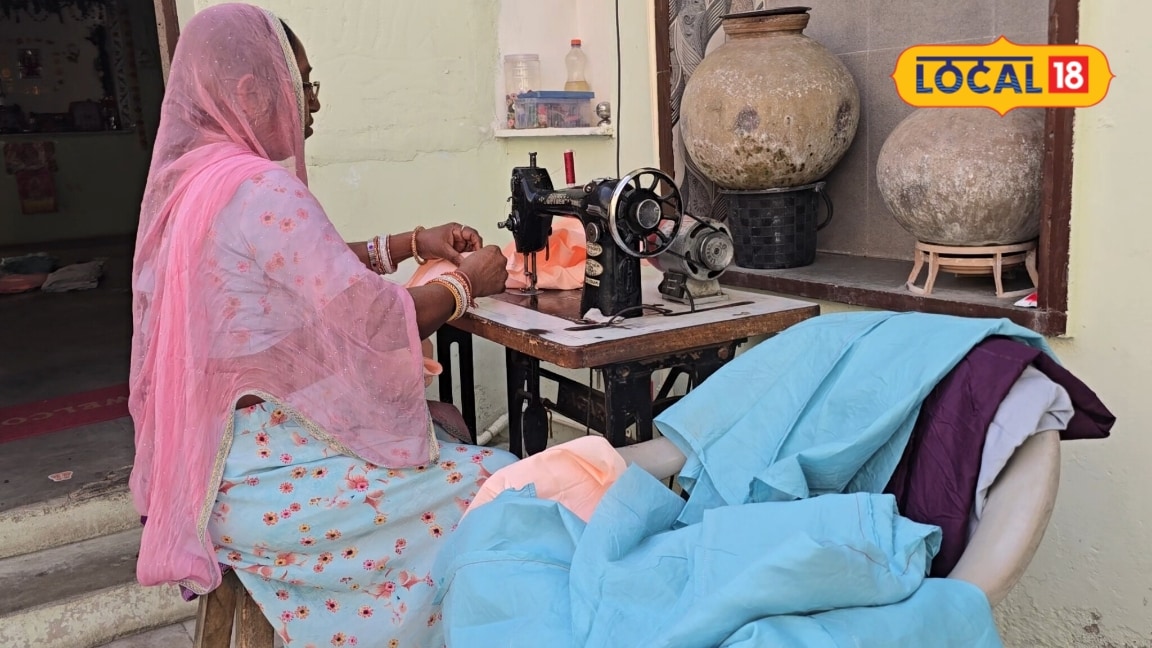
In the heart of the Pali region in Rajasthan, a profound socio-economic transformation is steadily unfolding within Jojawar village. Defying traditional barriers, a remarkable eighty percent of the women in this locality have emerged as independent earners, contributing significantly to their household incomes and altering the patriarchal dynamics of rural existence.
The foundational roots of this quiet revolution stretch back several decades, tracing an arduous path of resilience, manual labor, and domestic enterprise. For over thirty years, local artisans have sustained their families through micro-scale garment manufacturing, transforming residential spaces into industrious hubs of economic production.
At the center of this movement is Sundra Chauhan, a veteran artisan whose relentless daily struggle exemplifies the broader socio-economic reality of the village. For three decades, Sundra has navigated the complexities of manual tailoring, transforming raw materials into finished garments to ensure the survival and dignity of her household.
Operating at a grassroots level, Sundra coordinates her manufacturing efforts directly from her residence, working tirelessly alongside her four daughters. Together, this family unit handles the meticulous process of garment assembly, dividing tasks to maximize efficiency despite possessing only basic sewing equipment and minimal infrastructural support.
The supply chain logistics of their enterprise span across state borders, requiring considerable physical labor and financial calculation. Raw unprocessed cloth is systematically procured from Surat in the neighboring state of Gujarat, shipped back to the village, and subsequently converted into finished petticoats through hours of diligent stitching.
Once the garments are ready, the distribution network extends far beyond the immediate boundaries of Jojawar village. Sundra and her female peers personally travel across various surrounding villages and regional towns, hawking their handmade merchandise directly to local buyers and retail markets to secure daily wages.
Despite their steadfast work ethic and continuous economic contribution, these women encounter formidable structural barriers that severely restrict their growth potential. The most critical impediment remains the complete lack of formal financial backing, as institutional and government loans continue to remain largely inaccessible to them.
Without access to subsidized credit or formal banking assistance, the artisans are unable to purchase advanced machinery, hire additional labor, or buy raw materials in bulk. Consequently, their enterprises remain confined to subsistence levels, preventing them from scaling up operations into a more profitable commercial venture.
Local community advocates emphasize that targeted administrative intervention and simplified micro-credit schemes could exponentially multiply the income levels of these families. Providing accessible loans would not only ease the daily financial burden on veterans like Sundra but also formalize the unorganized textile micro-economy of the region.
As public discussions grow regarding rural empowerment and financial inclusion, the administrative machinery faces mounting pressure to bridge the gap between policy announcements and ground-level execution. Ensuring direct institutional credit flow to women-led micro-enterprises in Pali remains an urgent necessity for sustainable regional development.
Looking ahead, the women of Jojawar village continue their daily labor with unwavering resolve, holding onto the hope of a more supportive financial ecosystem. Their decades-long struggle serves as a powerful testament to female resilience, while underscoring the vital policy measures required to truly empower rural India.
