
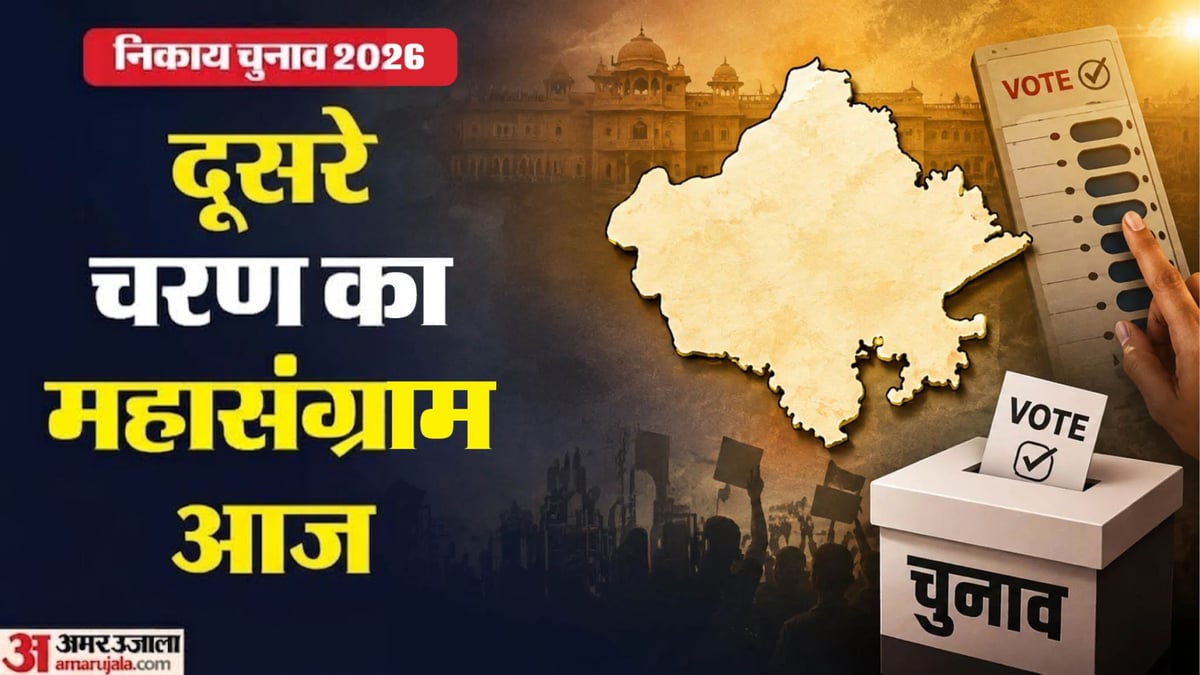
Rajasthan is currently witnessing a massive democratic exercise as the second phase of the crucial urban body elections officially commences across the state. In this expansive electoral phase, a staggering total of 8.76 million eligible voters are stepping forward to exercise their franchise and determine the political destiny of 18,266 candidates. These candidates are locked in intense electoral contests across 4,774 distinct wards situated within 147 municipal bodies across Rajasthan, making it one of the most significant local governance battles in recent times.
Historically, urban local body elections in Rajasthan have always served as a crucial barometer of public sentiment and grassroots political alignment. The administrative evolution of these municipal bodies reflects the growing urbanization and civic aspirations of the local populace. Over the decades, these elections have transitioned from mere civic administrative exercises into high-stakes political battlegrounds where both major and regional political entities test their organizational strength, administrative capabilities, and deep-rooted influence among urban voters.
Delving deeper into the operational scale of this massive electoral undertaking, the administrative statistics underscore the sheer complexity and logistical rigor required to conduct free and fair elections. Across the state, exactly 147 municipal bodies have been mobilized, encompassing 4,774 wards where 18,266 aspirants are aggressively campaigning. The electorate, standing firmly at 8.76 million voters, represents a diverse demographic mosaic ranging from traditional urban business hubs to newly developing municipal peripheries, all eagerly waiting to cast their decisive ballots.
Political analysts and local stakeholders point out that this phase holds profound implications for the state's political landscape, particularly because it features a direct and aggressive test of political dominance for major national entities like the Bharatiya Janata Party (BJP) and the Indian National Congress (Congress). Local traders, community leaders, and civic activists across various districts note that municipal elections directly impact local developmental agendas, sanitation, infrastructural expansion, and resource allocation within their respective wards.
Zooming into the regional dynamics, particularly concerning areas like Kotputli and surrounding districts, the ripple effects of these municipal elections are profoundly felt by the local economy and community life. Urban businesses, local commercial associations, and everyday citizens rely heavily on effective municipal governance to streamline civic amenities, regulate markets, and foster economic growth. Consequently, the electoral outcome in these urban centers is viewed by local residents as a direct reflection of civic accountability and responsiveness.
To ensure absolute transparency, security, and adherence to democratic protocols, the state administrative machinery has deployed comprehensive security measures and rigorous statutory oversight. Election officials, district administrators, and law enforcement agencies have coordinated extensively to establish foolproof arrangements at every polling booth. Special vigilance is being maintained across sensitive wards to preempt any electoral malpractices, ensuring that every registered voter can exercise their constitutional right without fear or hindrance.
Looking ahead, the conclusion of this extensive polling phase will trigger the eagerly anticipated counting of votes and the subsequent formation of local governing boards. As the campaign dust settles and voters finalize their choices at the ballot boxes, the political future of the 18,266 candidates hangs in the balance. The forthcoming results from the six major cities, alongside the 147 municipal bodies, will undoubtedly redefine the political narrative and local leadership structure across Rajasthan for the foreseeable future.