
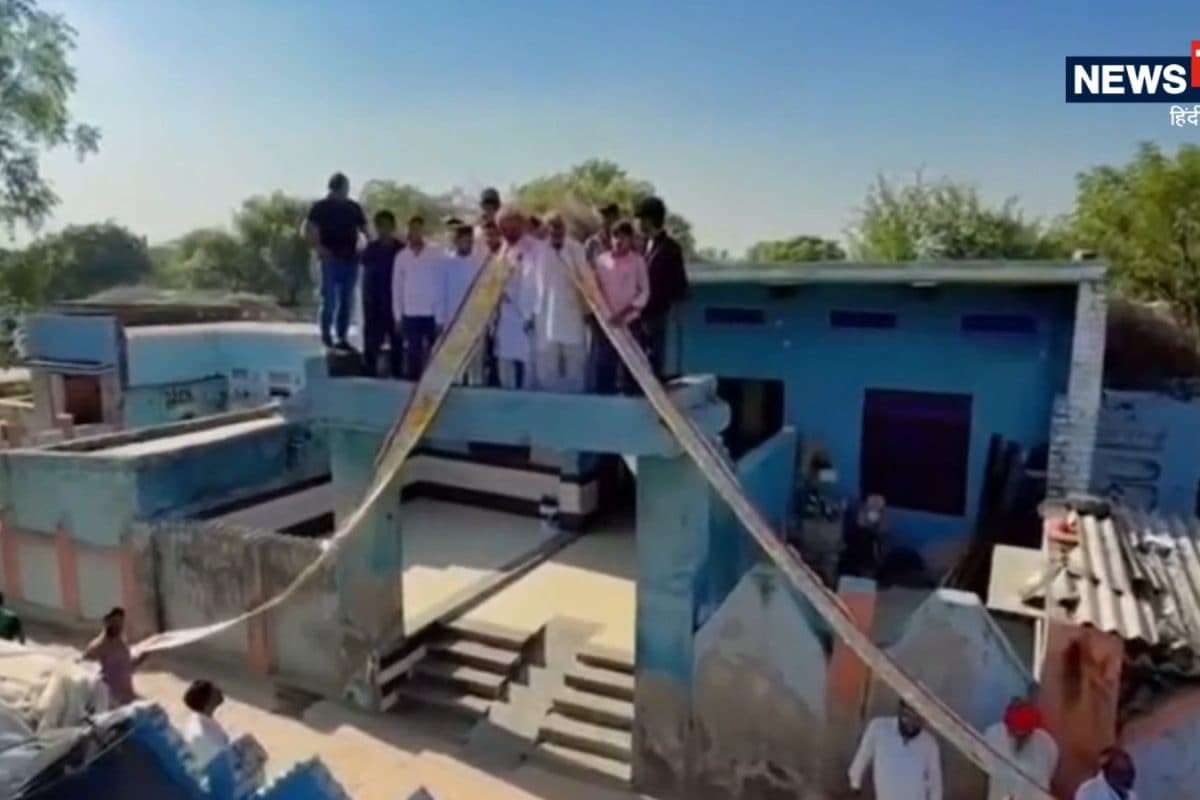
In an extraordinary display of electoral celebration that has rapidly captured public attention across the region, the rural landscape of the Alwar district witnessed a momentous occasion following the conclusion of local administrative polls. Within the culturally and historically rich Mewat region, specifically inside the jurisdiction of Gram Panchayat Tikri, supporters and community members gathered in large numbers to commemorate the decisive electoral victory of newly elected leaders. The atmosphere was charged with immense enthusiasm as residents prepared a reception that deviated entirely from conventional garland offerings, setting a distinctive precedent for political celebrations in this administrative division.
The historical backdrop of local governance in this part of Rajasthan traditionally involves community-centric displays of solidarity, yet the sheer scale of the recent festivities marked a significant departure from standard practices. Rural panchayat elections in Alwar have consistently served as vital barometers of grassroots democracy, where interpersonal relationships, community kinship, and familial alliances heavily influence political outcomes. When leaders secure electoral mandates here, supporters frequently express their jubilation through public gatherings, processions, and elaborate community feasts, reflecting the deep-rooted cultural affinity for collective participation in local governance structures.
Delving into the specifics of the physical and financial arrangements, the centerpiece of the celebration was an exceptionally colossal currency garland that measured between twenty-five and thirty feet in length. According to meticulous local estimates, this towering floral-and-currency structure incorporated approximately two thousand individual banknotes of the five hundred rupee denomination. The cumulative monetary value embedded directly within the decorative tribute stood at an impressive total of approximately ten lakh rupees, illustrating a remarkable level of financial mobilization by the local citizenry to honor their newly mandated leadership.
The logistical execution of presenting such a monumental garland required meticulous planning and physical collaboration among the supporters of the triumphant figures. The central figures of the reception, identified as sarpanch Rasheed and naswari sarpanch representative Ajaan Khan, were positioned securely upon the elevated surface of a residential rooftop to ensure visibility for the gathered multitude. Subsequently, a coordinated team consisting of eight to ten robust individuals hoisted the heavy, currency-laden structure upward, carefully maneuvering the massive length around the leaders' necks in a synchronized display of public reverence.
Examining the broader regional ramifications within the extended Kotputli-Behror district and surrounding administrative zones, such grand displays frequently stimulate intense public discourse regarding election expenditure, wealth exhibition, and community dynamics. While proponents view these celebratory practices as legitimate expressions of communal pride and affection toward chosen representatives, financial analysts and civic observers often analyze the socio-economic implications of deploying substantial liquid currency in public spectacles. These contrasting viewpoints contribute to an ongoing dialogue concerning the evolving nature of rural political campaigns and the subsequent public relations strategies employed by victorious candidates.
From an administrative perspective, local governance authorities and regulatory bodies maintain a continuous vigil over electoral conduct, expenditure reporting, and public assembly protocols within panchayat jurisdictions. Although post-election festivities fall largely within the realm of customary social behavior, statutory frameworks strictly monitor campaign financing to ensure transparency and adherence to prescribed electoral limits. Law enforcement personnel and local administrative officers remain observant of public gatherings to maintain public order, traffic management, and safety standards during such high-profile community events.
Looking forward toward the administrative tenure of Rasheed and Ajaan Khan within Gram Panchayat Tikri, the immediate focus is anticipated to shift from celebratory fervor toward developmental governance and public service delivery. The high expectations generated by such an extravagant public welcome place an additional onus on the elected leadership to address pressing infrastructure, water resource management, sanitation, and welfare distribution challenges within the village. Citizens and local stakeholders will undoubtedly evaluate their administrative efficacy against the grand scale of their initial electoral reception, setting a demanding benchmark for their upcoming term in office.
