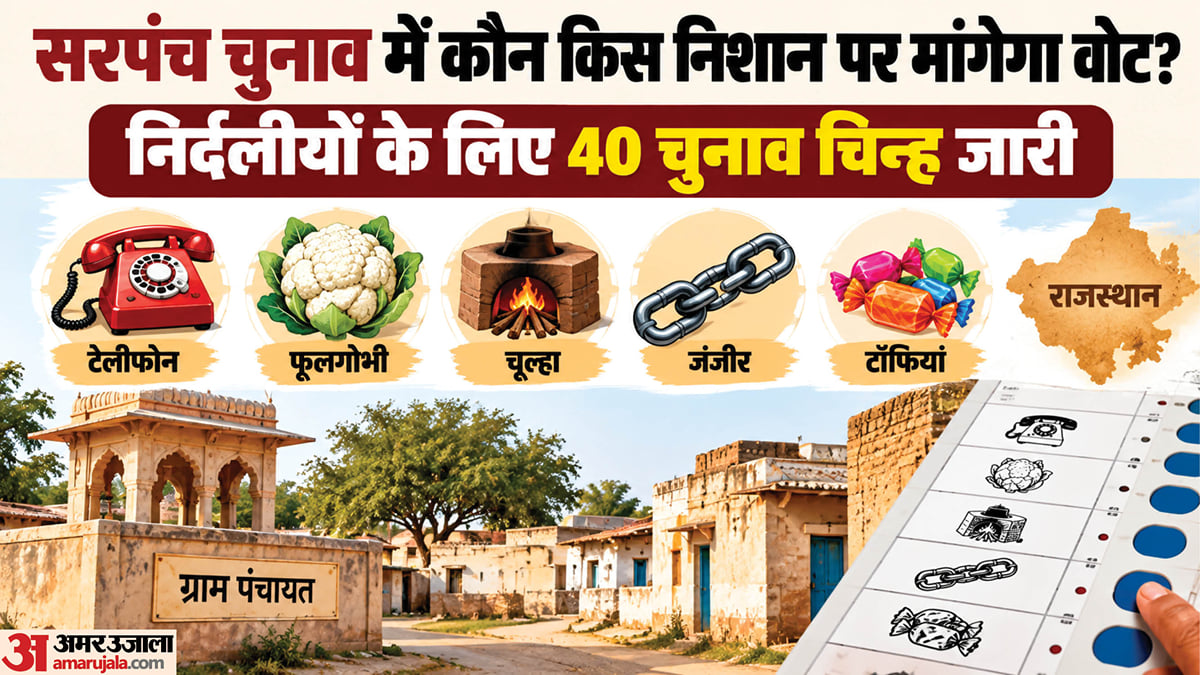
The political landscape of rural Rajasthan is currently witnessing heightened activity as preparations for the upcoming Panchayati Raj elections officially accelerate across the state. Amidst this rigorous administrative groundwork, the allocation and public revelation of free election symbols for independent candidates have rapidly emerged as a prominent subject of intense public discussion and electoral strategizing. These distinct symbols serve as the fundamental visual bedrock through which independent aspirants establish their direct identity and electoral presence among the rural electorate.
Historically, the allocation of free symbols has played a foundational role in India's grassroots democratic framework, ensuring that candidates who do not represent recognized political parties can still effectively communicate their presence on the ballot paper. In the expansive geographical expanse of Rajasthan, where rural elections carry deep socio-political significance, these symbols transcend mere administrative formality. They bridge the communication gap between candidates and voters, many of whom rely heavily on visual identification during the intensive polling process.
A closer examination of the released list reveals a fascinating array of everyday objects and familiar items designated as free symbols for the upcoming polls. Items such as telephones, cauliflowers, traditional stoves, chains, and assorted toffees have been officially earmarked by the election authorities for this purpose. These diverse symbols are meticulously assigned to candidates contesting at various tiers of the local governance structure, spanning from the pivotal post of village sarpanch up to the influential position of district council member.
Local political observers, community elders, and prospective candidates have engaged in extensive deliberations regarding the psychological and practical impact of these assigned symbols. For independent contenders, securing a symbol that is easily recognizable, culturally relatable, and simple to remember by rural households can significantly influence campaign momentum. Conversely, candidates often evaluate the administrative fairness and transparency of the symbol allotment process, viewing it as a crucial determinant of their electoral prospects at the grassroots level.
Within the specific regional contexts of districts across Rajasthan, including administrative zones such as Kotputli-Behror, the release of these symbols activates intense local mobilization. Village chaupals, local markets, and community gathering spaces transform into vibrant discussion hubs where residents analyze the newly issued list. The local economy and community interactions experience a subtle shift as election fever grips rural households, with discussions frequently centering around the newly allocated identity markers of independent hopefuls.
The administrative machinery overseeing the Panchayati Raj elections maintains strict oversight to ensure a seamless, transparent, and impartial distribution of these free symbols. District election authorities adhere meticulously to established electoral guidelines and statutory frameworks, ensuring that every independent candidate receives a valid symbol without administrative bias. This rigorous institutional oversight safeguards the democratic integrity of the electoral process at the grassroots tier of governance.
Looking ahead, as the electoral timeline progresses toward candidate nomination, final scrutiny, and the actual casting of votes, the significance of these symbols will only amplify. Candidates are preparing to incorporate their newly assigned symbols into comprehensive door-to-door campaigns, printed publicity materials, and community meetings. Ultimately, these unique identifiers will accompany voters into the polling booths, playing a decisive role in shaping the future leadership of rural Rajasthan's local governing bodies.