
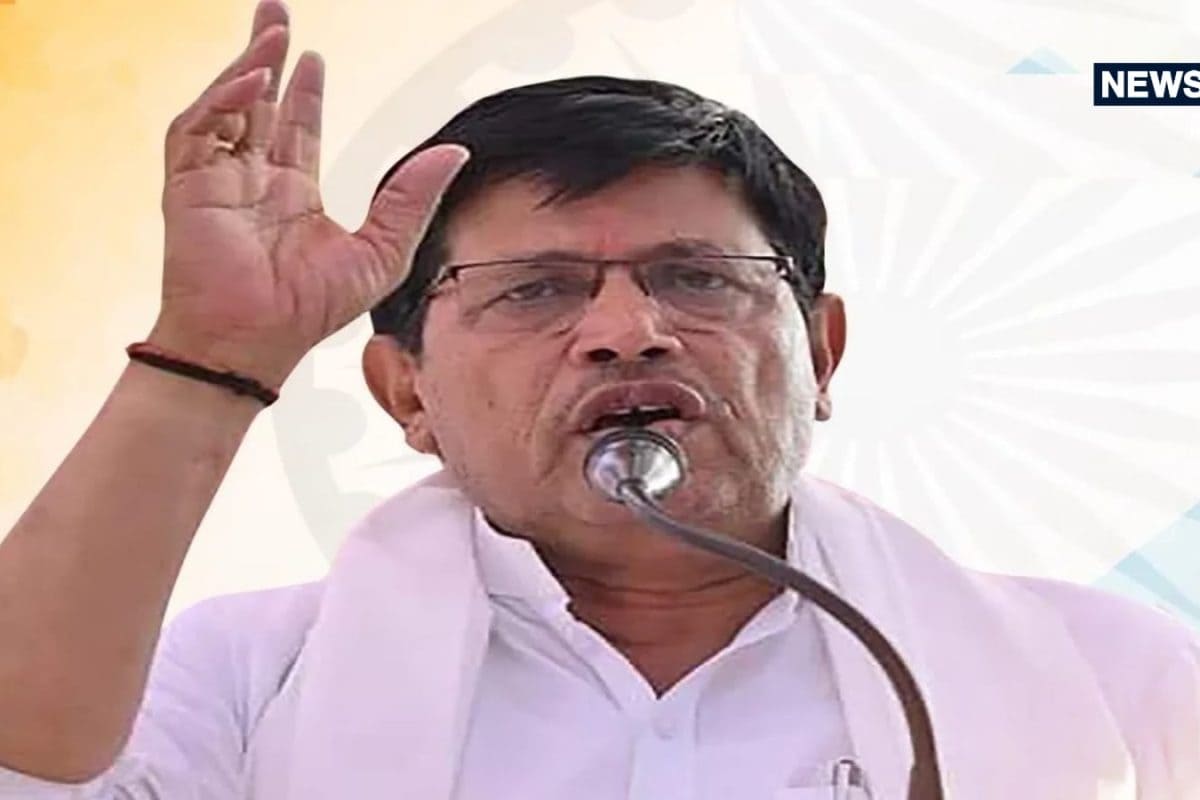
Rajasthan is currently witnessing an intense political debate concerning dynastic succession and family dominance in politics amid the ongoing panchayat elections. The political landscape was sharply divided following a controversial statement made by Congress Member of Parliament from Dausa, Murari Lal Meena, during a public election meeting in Sikrai. His remarks openly defending intergenerational occupational continuity instantly drew severe public scrutiny and animated discussions across various media platforms.
The controversy originated in Sikrai within the Dausa region, where the Congress leader attempted to rationalize professional inheritance across multiple domains. Addressing the gathering, Murari Lal Meena questioned the societal logic of questioning political offspring by drawing analogies to other traditional professions. His assertions directly touched upon the core sensitivities surrounding meritocracy versus political patronage in democratic institutions across the state.
Elaborating on his viewpoint during the public address, the Congress MP explicitly stated that if a farmer's son does not engage in farming, who will, if a politician's son does not engage in politics, who will, and why should an Indian Administrative Service officer's son not become an Indian Administrative Service officer. This unabashed endorsement of hereditary succession in governance immediately polarized political observers, ordinary citizens, and rival party functionaries throughout Rajasthan.
Reactions to the parliamentarian's statements have been deeply divided, with critics pointing out that such perspectives undermine the fundamental principles of democratic equality and fair competition. Conversely, supporters of traditional political lineages argue that practical exposure and familial mentorship are natural elements of leadership development. The discourse highlights the persistent tension between dynastic privilege and grassroots democratic aspiration in contemporary Indian politics.
While the rhetorical battle raged across the region, simultaneous panchayat election results in Dungarpur provided fascinating empirical evidence of how voters evaluate political dynasties on the ground. The election outcomes vividly illustrated the contrasting fates of established political families, proving that hereditary advantage does not automatically guarantee electoral invincibility in grassroots democracy.
A prime example of family dominance successfully persevering was witnessed in the Decha panchayat of Sagwara, where Rahul Damor, son of Sagwara MLA Shankarlal Decha, emerged victorious in the sarpanch elections. This decisive electoral win successfully maintained and fortified his family's nearly thirty-year-old political hegemony and local dominance within the constituency.
However, the narrative of absolute dynastic invincibility was challenged elsewhere in the same district, demonstrating the discerning nature of rural electorates. In Kharmar Khuniya, the home panchayat of Bharat Adivasi Party Member of Parliament Rajkumar Roat, his uncle Sohanlal suffered a stinging electoral defeat at the hands of Bhagwati Lal Kharadi by a narrow margin of just fifteen votes.
As the administrative machinery continues to tabulate panchayat results and oversee the remaining phases of the electoral calendar, public discourse remains heavily influenced by these contrasting outcomes. Political analysts across Rajasthan are closely monitoring how these localized dynamics will shape broader electoral strategies and public perception regarding political entitlement in upcoming governance cycles.
