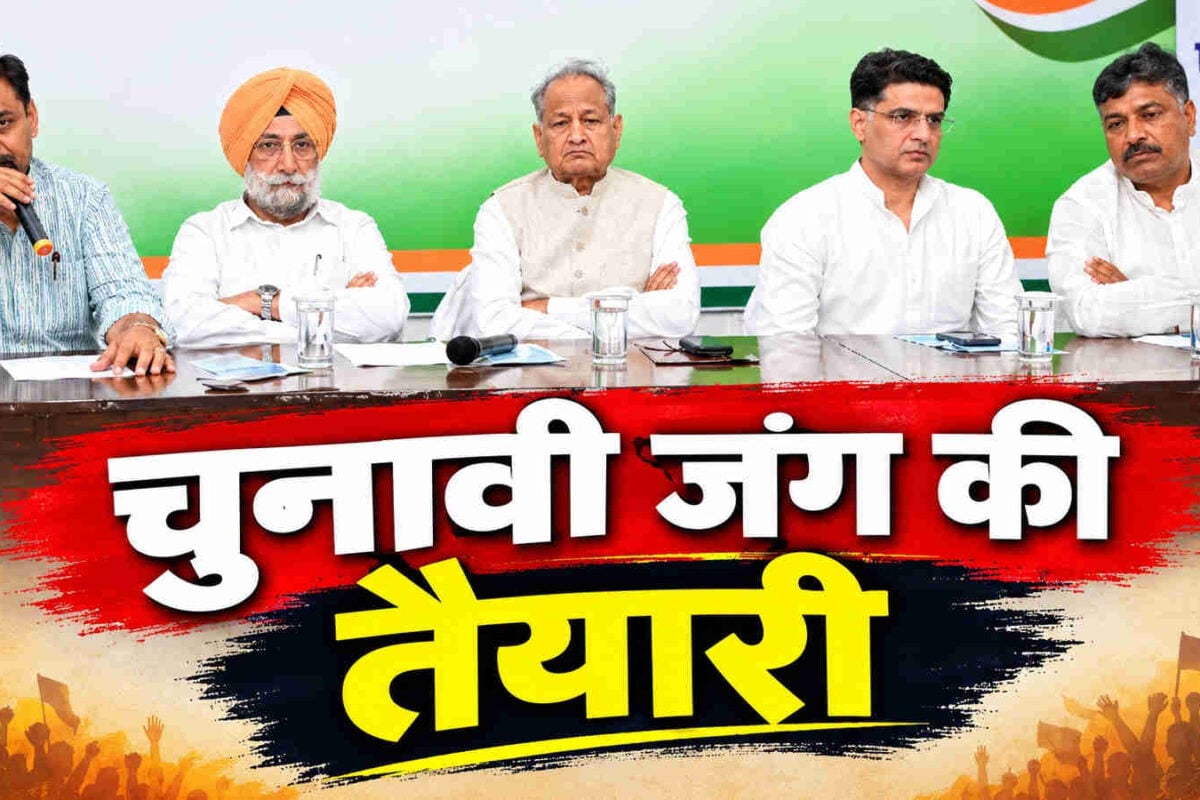
In preparation for the crucial Rajasthan Panchayat Elections 2026, the opposition Congress party has initiated a robust political campaign by organizing a high-level strategy marathon in Jaipur. The extensive meeting lasted for three and a half hours, during which senior party strategists deliberated on comprehensive measures to counter the ruling Bharatiya Janata Party administration across rural constituencies. The core objective of this strategic session is to build a formidable opposition framework that directly addresses agrarian challenges and governance concerns at the grassroots level.
The political landscape of Rajasthan has historically witnessed intense electoral battles between major political formations during rural local body elections. These upcoming polls hold immense significance for the political future of the state, serving as a litmus test for both ruling and opposition outfits prior to broader legislative developments. The party leadership recognizes that strengthening the foundational tiers of governance through panchayat representation is vital for cementing long-term political influence across rural and semi-urban communities throughout the territory.
During the exhaustive discussions, leadership figures evaluated extensive field feedback gathered from district and village organizations. A primary consensus emerged regarding the candidate selection process, which will strictly rely on grassroots feedback rather than arbitrary top-down impositions. Leaders emphasized that merit, local acceptance, and organizational dedication will form the absolute benchmarks for awarding party tickets to aspirants wishing to contest the upcoming rural body elections.
The regional impact of these strategic decisions is expected to resonate deeply within administrative zones such as the Kotputli-Behror district and surrounding rural economies. Agricultural communities in these regions have been grappling with logistical and operational hurdles, making local governance a matter of urgent daily concern. The economic stability of rural households is intricately linked to effective administrative management at the panchayat level, amplifying the stakes for local voters who demand accountability and responsive governance from their elected representatives.
Addressing the broader socio-economic grievances, the party leadership resolved to mount a fierce campaign centered on the purported administrative failures of the ruling government. Specifically, the acute shortage of agricultural fertilizers and essential farming supplies will be projected as a principal campaign issue. By highlighting these supply chain bottlenecks, the opposition aims to connect directly with farming communities whose livelihoods depend heavily on timely access to agricultural inputs during sowing and harvesting seasons.
Looking ahead, the political apparatus of the opposition is gearing up for a sustained campaign rollout across all affected districts. The strategies formulated during the Jaipur marathon will now be cascaded down to district committees, block units, and booth-level workers. As the administrative machinery prepares for the formal announcement of election schedules, both political adversaries are positioning themselves to capture the rural mandate in what promises to be a highly competitive electoral contest.