
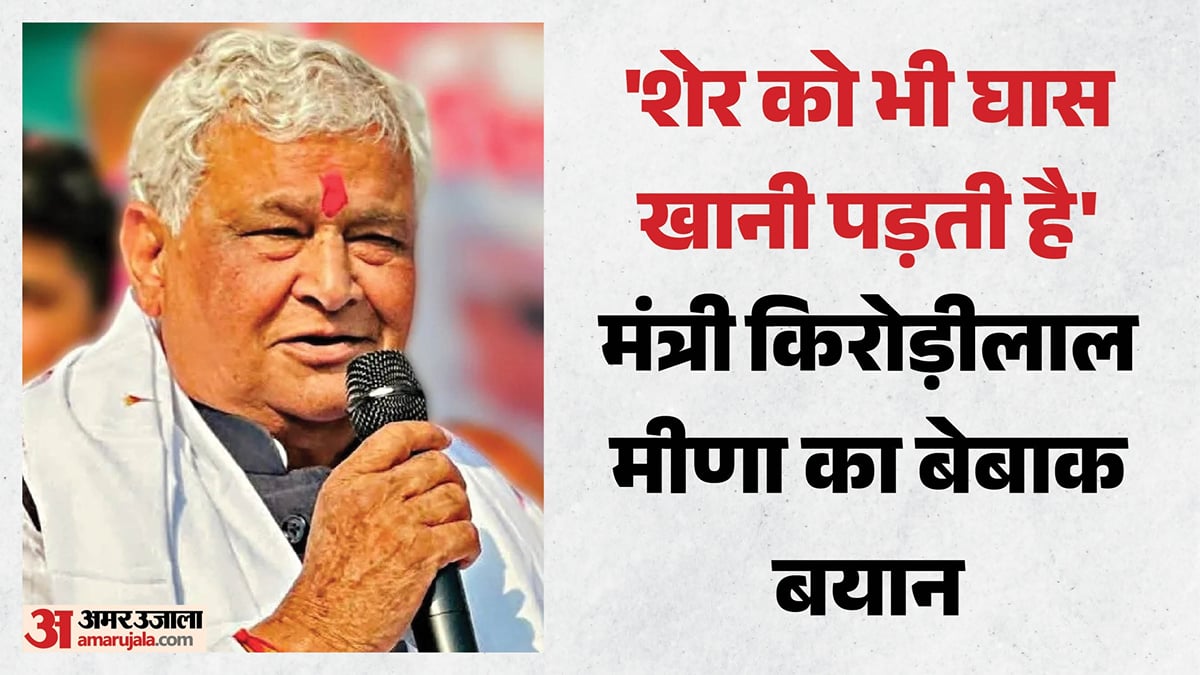
In a candid and striking political observation made in Dausa, Rajasthan, state minister Kirori Lal Meena articulated a powerful metaphor regarding the supremacy of the electorate in democratic governance. Addressing a gathering, the senior political figure remarked that without the sustained blessings and support of the general public, even those perceived as powerful leaders akin to lions are eventually compelled to navigate difficult circumstances, metaphorically suggesting they are reduced to eating grass. This poignant statement resonated deeply with observers, bringing to light the vulnerable nature of political authority when disconnected from grassroots validation.
The context of this statement traces back through the recent political dynamics and electoral trajectories within Rajasthan, where changing political tides have frequently tested the resilience of established leaders. Kirori Lal Meena, known for his vocal and unvarnished style of communication, reflected extensively on the complexities surrounding his current ministerial responsibilities and the sobering realities of electoral setbacks. Political analysts note that such reflections underline the unpredictable nature of electoral politics in the region, where public sentiment remains the ultimate arbiter of political survival and career progression.
Delving into the ground reality and political sentiment in Dausa, citizens and local political actors have been actively debating the implications of the minister's remarks. The logistics of maintaining grassroots connect and addressing the day-to-day grievances of the populace have become central themes in regional political discourse. While specific financial figures or administrative project outlays were not the primary focus of this particular discourse, the underlying stakes involve the intangible yet crucial capital of public trust and voter confidence that dictates the fortunes of political parties and individual representatives alike.
Stakeholder perspectives gathered from various quarters indicate a mixed reaction to the minister's philosophical yet blunt assessment. Local residents, community leaders, and political workers expressed diverse viewpoints, with many acknowledging the timeless truth that political power is inherently transient and entirely dependent on the goodwill of the voters. Party cadres and opposition observers alike analyzed the statement as a frank admission of the humbling experiences that electoral politics invariably delivers to leaders across the political spectrum, regardless of their historical stature or past electoral triumphs.
Examining the regional impact on the wider territory encompassing Dausa, Kotputli-Behror, and surrounding areas, such high-profile statements invariably influence local political alignments and public discourse. Community members and local traders often discuss how ministerial pronouncements reflect the internal churn within the ruling administration. The local economy and administrative focus in these districts frequently intersect with the political stability and responsiveness of elected representatives, making public accountability a matter of continuous community interest.
In terms of administrative response and official oversight, statements of this nature often prompt introspection within political organizations regarding policy implementation and public outreach. While no formal statutory oversight mechanism governs political metaphors, the administrative machinery continues its routine functions across Rajasthan, managing development projects, public welfare schemes, and infrastructural initiatives. Elected officials and administrative heads remain under the continuous scrutiny of an alert citizenry that expects transparent governance and tangible delivery of public services.
Looking toward the forward outlook, political observers in Dausa and across Rajasthan anticipate that such candid admissions will shape the strategic approach of leaders as they prepare for future electoral challenges. The timeline leading up to upcoming political milestones will test how effectively leaders translate grassroots feedback into actionable governance. Ultimately, the public expectation remains steadfast that political authority must be exercised with humility and absolute dedication to the welfare of the ordinary citizens who hold the true mandate of power.
