
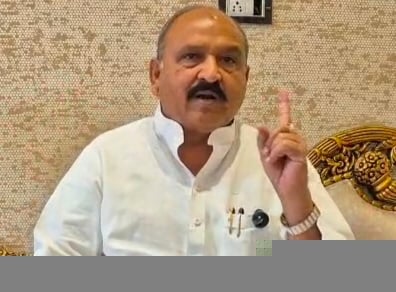
In a strong statement emanating from Kota, senior Congress leader Prahlad Gunjal has launched a scathing attack on the central government over the contentious issue of delimitation and the proposed expansion of legislative bodies. Addressing critical political and economic ramifications, the prominent leader scrutinized the administrative justification behind altering electoral boundaries and expanding the numerical strength of democratic institutions.
The debate surrounding delimitation has historically been fraught with complex demographic, regional, and constitutional challenges across the nation. As the country prepares for future administrative re-adjustments, political figures and constitutional analysts continue to debate the equilibrium between fair representation and administrative prudence. The foundational objective of delimitation is to ensure equal representation for equal segments of the population, yet the mechanics of implementation often invite intense political and public scrutiny.
Delving into the financial and logistical stakes involved in such a massive administrative overhaul, critics point out the immense expenditure required for infrastructural expansion, infrastructural scaling of legislative buildings, and the recurring maintenance of a larger legislative workforce. While supporting the inclusion of women through reservation in legislative bodies, the leadership has questioned whether simultaneously inflating the total number of seats is the most prudent fiscal approach for the nation.
Analyzing the potential regional implications for districts like Kotputli-Behror and surrounding administrative units, experts note that alterations in legislative constituencies directly impact local developmental planning, resource distribution, and administrative governance. Changes at the national and state legislative levels invariably trickle down to district administration, altering how local representatives interact with grassroots communities and manage regional developmental schemes.
While administrative bodies and central authorities maintain that periodic re-adjustment of constituencies is mandated by constitutional provisions to reflect population shifts accurately, opposition voices demand absolute transparency and fiscal responsibility. The ongoing discourse underscores the delicate balance required between empowering democratic representation and safeguarding the financial stability of the state and central treasuries.
Looking forward, as the timeline for the upcoming delimitation exercises approaches, public expectations and political debates are bound to intensify. Stakeholders across the political spectrum are expected to deliberate extensively on legislative frameworks, ensuring that administrative modernization does not compromise fiscal discipline or place undue hardships on the populace.
