
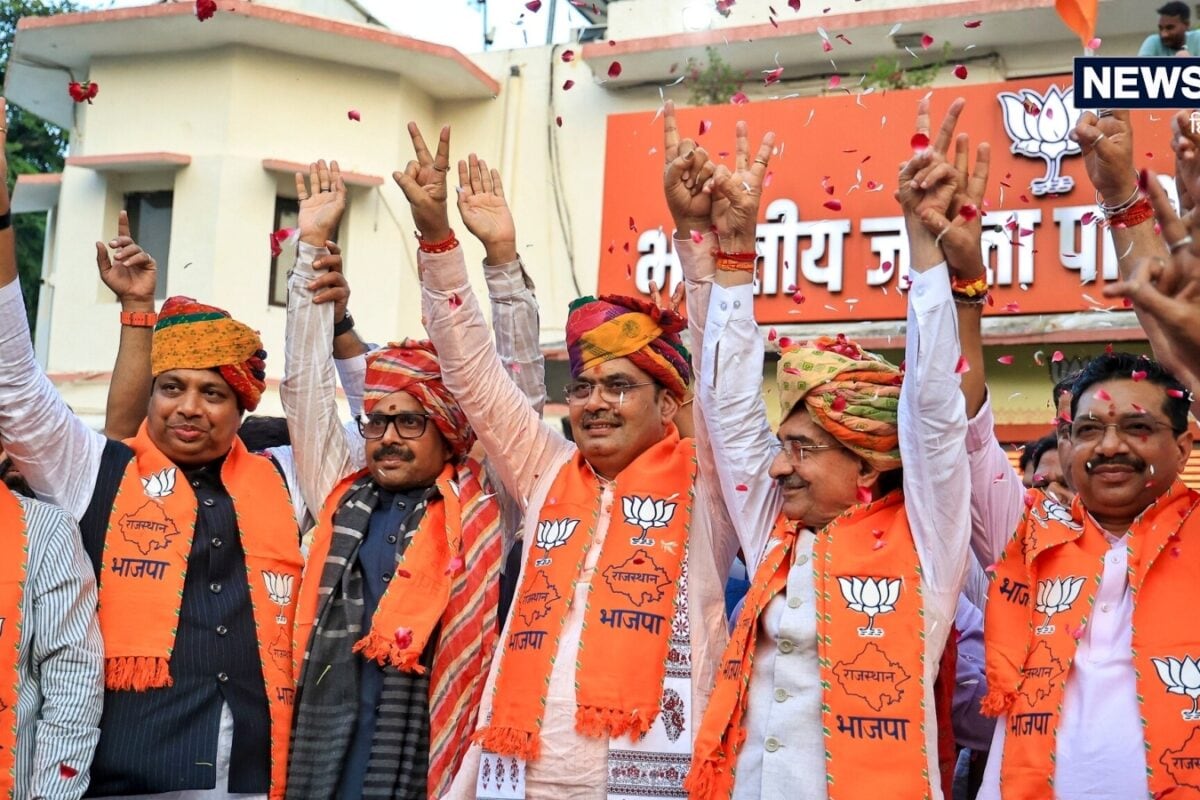
The Bharatiya Janata Party (BJP) emerged ahead of the Indian National Congress in the recently concluded Rajasthan local body elections, delivering a palpable boost to the administration of Chief Minister Bhajanlal Sharma. The vote, held across municipal corporations and panchayat councils throughout the state, saw the BJP outpacing its principal rival in a majority of the contested jurisdictions, while the Congress managed to secure victories in a handful of key districts. Independent candidates also captured a notable share of seats, underscoring the fragmented nature of the electorate.
These elections arrive at a moment of generational transition in Rajasthan’s political arena, where younger voters, often identified with the Gen‑Z demographic, have been vocal about governance, transparency and development. Historically, the state’s local body polls have oscillated between the two major parties, with the BJP consolidating power in urban centres and the Congress retaining influence in semi‑urban and rural pockets. The current contest reflects a continuation of that pattern, intensified by heightened civic activism and a demand for more accountable local administration.
On the ground, the BJP’s performance was strongest in the metropolitan hubs of Jaipur, Kota and Udaipur, where the party secured a clear majority of council seats, translating into greater control over municipal budgets, infrastructure projects and public service delivery. Conversely, the Congress achieved notable gains in the districts of Ajmer and Pali, where its candidates won a sufficient number of wards to influence local decision‑making. Independent and unaffiliated candidates also made a visible impact, especially in smaller towns, where their victories often tipped the balance in closely contested wards.
Party officials, local traders and ordinary citizens have offered varied perspectives on the outcome. A senior BJP spokesperson described the results as a “validation of the development agenda pursued by the Sharma government,” while a Congress leader cautioned that the party must address internal factionalism to rebuild its urban base. Small‑business owners in Jaipur expressed optimism that continued BJP control could expedite ongoing road‑work and sanitation projects, whereas residents of Ajmer welcomed the Congress win as an opportunity to voice community‑specific concerns more effectively.
For the Kotputli‑Behror district, the election results carry particular significance. The region, which straddles both industrial corridors and agricultural zones, witnessed a competitive race that mirrored the broader state trend. The BJP’s hold over the Kotputli municipal council is expected to streamline approvals for new industrial units, potentially boosting employment and tax revenues. At the same time, the presence of independent councilors may ensure that local agrarian issues, such as water management and market access, remain on the policy agenda.
The state election commission has pledged to oversee the formation of new municipal bodies with transparency and adherence to statutory timelines. Administrative officials have already begun the process of allocating portfolios, confirming ward‑wise winners and initiating the first sessions of the newly elected councils. In parallel, the Sharma government has announced a series of oversight mechanisms, including periodic performance audits and citizen grievance portals, aimed at enhancing accountability at the local level.
Looking ahead, the newly elected bodies are set to convene their inaugural meetings within the next fortnight, marking the start of a governance cycle that will last five years. Stakeholders anticipate that the BJP’s dominance in major cities will facilitate the swift implementation of flagship infrastructure schemes, while the Congress‑led councils in Ajmer and Pali will focus on grassroots development initiatives. Observers note that the balance of power between party‑affiliated and independent representatives will shape the policy discourse, and that the upcoming fiscal year will test the Sharma administration’s ability to translate electoral momentum into tangible public benefits.