
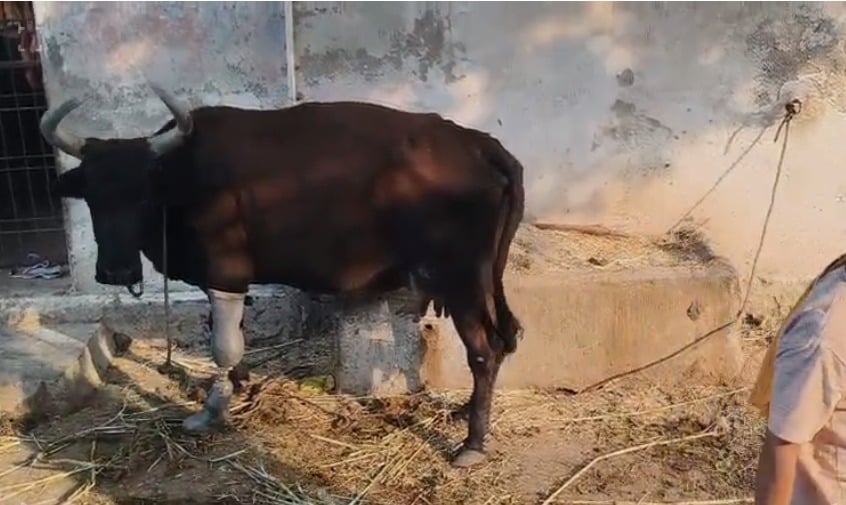
In a compassionate and remarkable development from the region of Rajasthan, an injured cow that lost its front left leg in a severe accident has been given a new lease on life. A dedicated welfare institution operating near Ghoraghati in Nathdwara successfully fitted a specially designed prosthetic limb to the animal. This critical intervention has allowed the bovine creature to stand and walk independently, overcoming a debilitating physical handicap that previously threatened its survival.
The incident highlights the ongoing vulnerabilities faced by stray and unattended cattle across various terrains in Rajasthan. Accidents involving heavy vehicular traffic and unforeseen hazards frequently lead to severe injuries among livestock, often resulting in permanent disability or fatal outcomes. The absence of immediate specialized medical care historically left such animals with very little chance of rehabilitation, making specialized institutional intervention critically necessary.
The logistics and medical precision required to fit a prosthetic limb onto a large animal demand advanced veterinary expertise and resource mobilization. While specific financial allocations and logistical figures were not formally detailed in the initial dispatch, the operational complexity of aligning a custom prosthetic to bear the massive weight of a cow demonstrates extraordinary technical dedication by the welfare organization involved in the rescue and rehabilitation process.
Local animal welfare advocates, community members, and volunteers have expressed immense appreciation for the tireless efforts undertaken by the institution near Ghoraghati. Stakeholders point out that such unprecedented initiatives redefine the standards of animal healthcare and humanitarian service within the region. Observers and citizens have lauded the pragmatic approach taken to alleviate the physical suffering of helpless creatures.
The broader regional impact of this successful procedure resonates deeply across communities within Rajasthan, fostering a heightened sense of responsibility toward injured and disabled livestock. As rural and semi-urban districts grapple with the management of stray cattle populations, successful rehabilitation case studies like this one serve as a beacon of hope and a practical model for local animal husbandry and welfare groups to emulate.
Administrative bodies and local governance structures are increasingly recognizing the importance of collaborative efforts between private welfare institutions and veterinary departments. While statutory oversight traditionally focuses on general cattle shelter management, grassroots medical breakthroughs executed by private institutions underscore the critical need for formal institutional support and resource sharing to handle complex animal trauma cases effectively.
Looking forward, the successful deployment of the prosthetic limb establishes a promising precedent for veterinary rehabilitation in Rajasthan. The welfare institution aims to monitor the long-term mobility and health adaptation of the cow, ensuring that the artificial limb functions seamlessly under daily movement requirements. Experts anticipate that this milestone will encourage further innovations in prosthetics for injured livestock across the region.
