
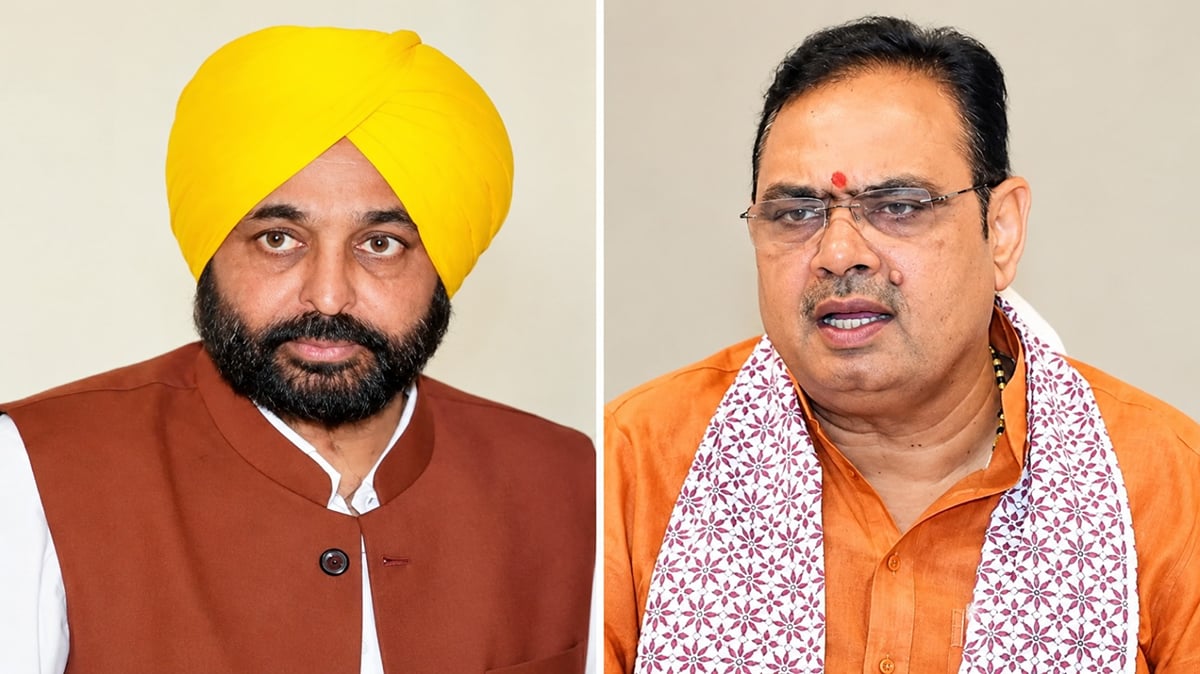
A severe inter-state water dispute has officially erupted between the neighbouring states of Rajasthan and Punjab, marking a critical escalation in long-standing resource-sharing tensions. The primary catalyst for this heightened confrontation is a formal demand raised by the Punjab government, seeking a staggering 1.44 lakh crore rupees as royalty from Rajasthan. This development brings the complex matrix of inter-state canal water distribution back to the forefront of national discourse, igniting intense debates among legal experts, policy makers, and affected citizens alike.
The roots of this profound disagreement stretch deep into historical agreements concerning water allocation, specifically referencing pacts established prior to India's independence. The Punjab government contends that these foundational accords justify the imposition of a substantial financial claim for the continuous supply of canal water across state borders over the decades. As administrative mechanisms and legal interpretations are thoroughly re-examined by respective state authorities, the historical framework governing regional hydrology faces an unprecedented stress test.
At the center of this financial standoff lies the massive valuation of 1.44 lakh crore rupees, a figure that has sent ripples through political corridors and economic forecasting circles. This enormous sum represents not merely a bureaucratic dispute over utility pricing, but a fundamental challenge to the established frameworks of inter-state commerce and resource distribution. Stakeholders across various economic sectors are attempting to calculate the potential ramifications such a financial liability could impose on state budgets and long-term infrastructure funding.
Voices representing agricultural syndicates, commercial associations, and local leadership have expressed deep concern over the escalating rhetoric between Punjab and Rajasthan. Representatives from farming communities have underscored the critical dependency on canal water for sustenance and irrigation, warning that any disruption in supply or policy instability would severely imperil regional livelihoods. Official perspectives from both state administrations emphasize the necessity of constructive dialogue, yet formal positions remain deeply entrenched regarding the legality and fairness of the royalty demand.
For regions heavily dependent on inter-state water infrastructure, including areas like Kotputli-Behror, the implications of this dispute extend directly to local agricultural productivity and domestic water security. The local economy, which relies significantly on steady water availability for farming and allied activities, watches these developments with growing apprehension. Community leaders and local traders have urged both state governments to prioritize cooperative federalism and shield local populations from the adverse consequences of prolonged bureaucratic friction.
Administrative machinery in both Rajasthan and Punjab has been galvanized into action, with legal consultants and water resource departments reviewing historical treaties and statutory provisions to formulate their respective legal strategies. Oversight committees are evaluating the constitutional validity of the royalty claim under existing federal laws and inter-state water dispute resolution mechanisms. Government officials have indicated that formal consultations at higher administrative tiers may soon be convened to de-escalate the worsening diplomatic atmosphere.
Looking forward, the trajectory of this dispute will likely depend on judicial intervention, high-level political negotiations, or mediation through central governmental bodies. As the timeline for potential formal talks remains unconfirmed, public expectations are centered on achieving a pragmatic, equitable resolution that preserves inter-state harmony while safeguarding essential resource supplies. The unfolding situation promises to remain a defining issue in regional politics and water jurisprudence for the foreseeable future.
