
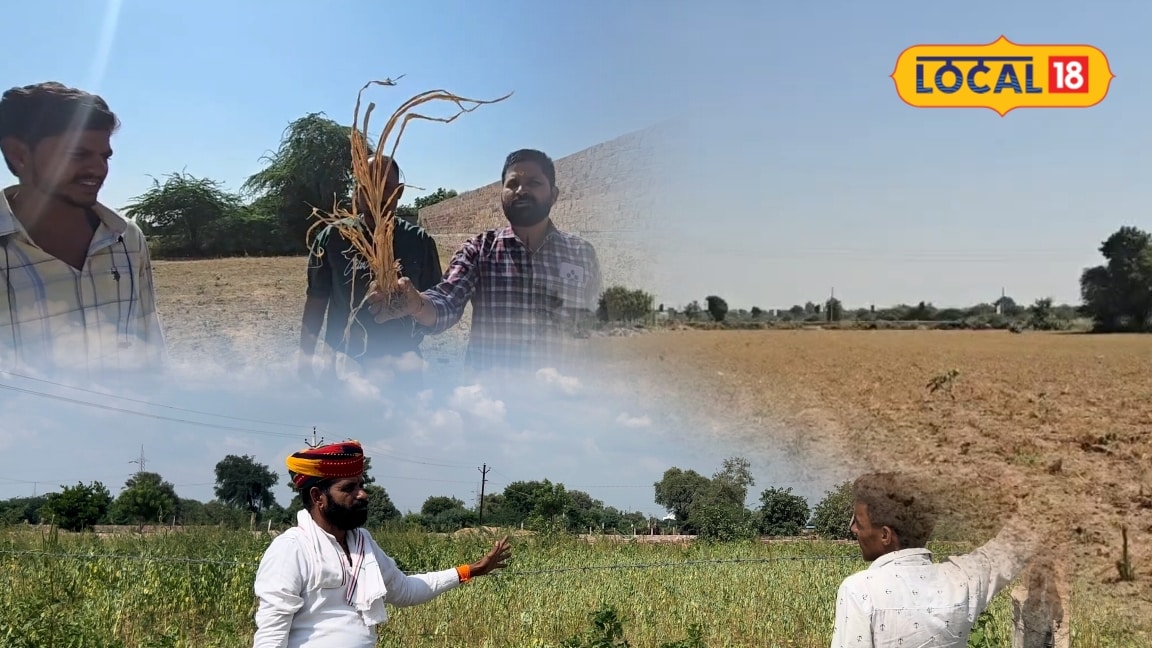
In a decisive and urgent administrative move, the Rajasthan Government has officially declared 53 tehsils spread across 13 districts as drought-hit. This critical decision comes in the wake of an erratic and deficient monsoon season coupled with a continuous, alarming decline in regional groundwater levels. The declaration aims to provide immediate financial relief, crop insurance claims, and agricultural input subsidies to the distressed farming communities who have suffered monumental losses during the crucial kharif harvesting season.
Providing historical context to the unfolding agrarian crisis, meteorological observations indicate that western Rajasthan and the wider Jodhpur-Pali region recorded a meager 258 millimeters of rainfall during this specific monsoon season. When compared against the long-term historical average of approximately 350 to 400 millimeters, the region has suffered a staggering and distressing rainfall deficit ranging between 25 percent and 30 percent. This severe weather anomaly completely disrupted traditional agricultural cycles and left agricultural lands parched.
A closer examination of the ground realities reveals that after a brief spell of rainfall in the early days of August, the entire remaining month remained completely dry and devoid of precipitation. This prolonged dry spell caused soil moisture levels to drop drastically, leaving no residual hydration for staple kharif crops such as moong, pearl millet, and guar. Agronomists and local revenue officials report that the resultant crop failure is extensive, plunging rural households into deep financial vulnerability and threatening their primary livelihood sources.
Voicing deep concern over the unfolding scenario, farming unions, village representatives, and rural stakeholders have pointed out that the loss of Kharif crops has shattered the rural economy. Local traders and agricultural community leaders note that without timely administrative intervention, debt burdens on farming families will multiply exponentially. Farmers across the affected tehsils are anxiously awaiting the formal disbursement of relief packages and streamlined processing of their insurance claims to survive this monumental natural calamity.
While the immediate drought notification covers specific zones, the cascading economic impact is being closely monitored across neighboring rural economies, including areas near Kotputli-Behror. The regional interdependency of agricultural markets means that diminished purchasing power among farmers in drought-hit tehsils indirectly affects local commerce, rural trade, and agrarian employment. Economic analysts emphasize that restoring normalcy in these regions requires immediate cash injections through structured governmental relief schemes.
In response to the crisis, the district administration and state agricultural departments have initiated comprehensive ground assessments to evaluate the exact extent of agricultural damage. Statutory guidelines are being enforced to ensure that eligible farmers receive transparent compensation under disaster management protocols. District revenue officials have been directed to set up dedicated grievance redressal desks to facilitate smooth documentation and verification for crop insurance claims.
Looking forward, the administrative timeline dictates that relief distribution and insurance claim settlements will accelerate over the coming weeks as final damage assessments are compiled. Public expectations remain high for transparent, corruption-free, and swift financial assistance. State authorities have assured the farming community that all necessary administrative mechanisms are being deployed to alleviate their hardships and prepare the soil and irrigation infrastructure for the upcoming rabi sowing season.
