
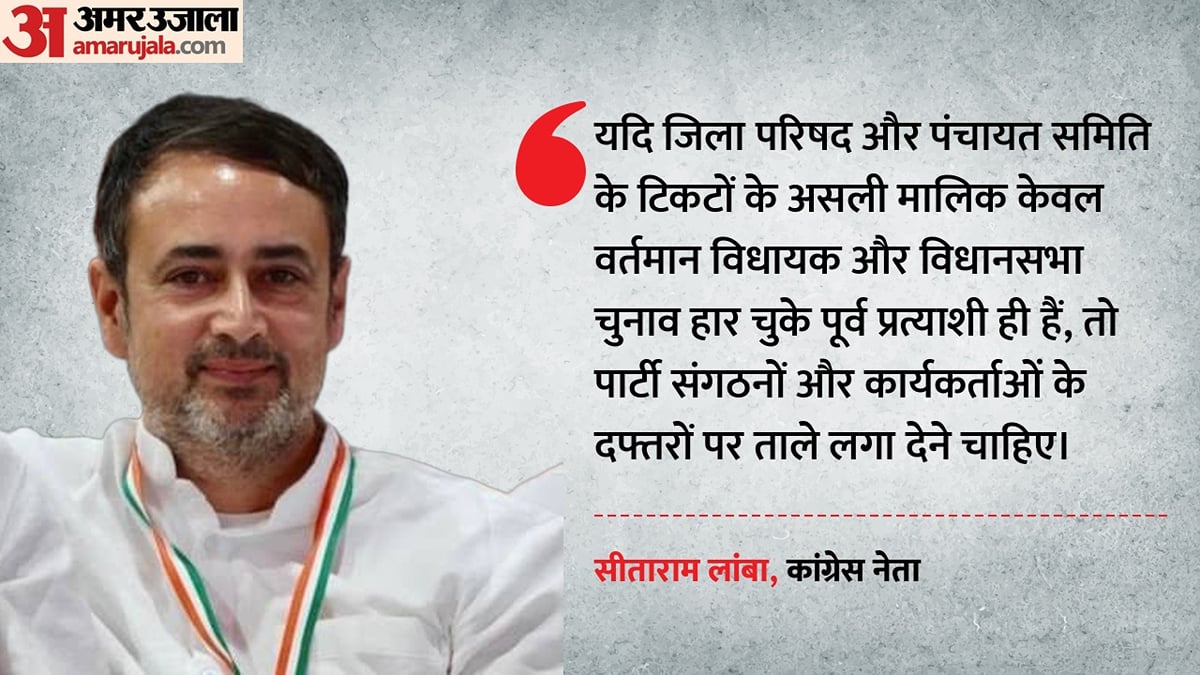
The political landscape of Rajasthan has been shaken by a fresh wave of internal discord within the Congress party as preparations and candidate selection processes for the crucial Panchayati Raj elections unfold across the state. Ticket distribution has historically been a sensitive and contentious issue within political organizations, but the current escalation has brought deep-seated organizational grievances directly into the public domain. The friction primarily revolves around the allocation of electoral mandates, pitting established party elites and incumbent figures against grassroots members who demand greater autonomy and recognition for their sustained fieldwork.
As the election machinery gears up for grassroots polling, the discontent within the Congress camp has transcended behind-closed-doors negotiations and erupted onto public communication channels. The core of the controversy touches upon the fundamental power dynamics within the state unit, where party office-bearers and loyalists feel systematically marginalized during crucial decision-making phases. Observers note that such pre-election friction often weakens the cohesive force required during high-stakes local body contests, potentially impacting voter mobilization and internal party discipline across various administrative zones.
The simmering tensions reached a boiling point when prominent All India Congress Committee (AICC) member Sitaram Lamba took to digital platforms to articulate the mounting frustration felt by numerous party workers. Expressing profound dismay over the prevailing state of affairs, Lamba raised critical questions regarding the overarching influence wielded by sitting members of the legislative assembly and former electoral candidates in finalizing candidate lists. His commentary underscored the widening chasm between organizational functionaries who build the party from the ground up and those who hold legislative or institutional power.
The repercussions of this ongoing ticket distribution dispute extend well beyond metropolitan headquarters, directly touching regional administrative units and local communities throughout Rajasthan, including developmental zones like Kotputli-Behror. Local political structures rely heavily on the enthusiasm and active participation of dedicated workers during rural and semi-urban elections. When internal disagreements cripple grassroots morale, the resulting administrative and electoral outreach suffers significantly, creating challenges for community-level mobilization and civic participation.
As discussions and internal reviews continue within the party apparatus, senior leadership faces mounting pressure to address the grievances voiced by figures like Sitaram Lamba before the electoral process advances further. Reconciling the competing interests of sitting legislators, former candidates, and loyal organization workers remains a delicate balancing act for the party high command. Transparent dialogue and inclusive decision-making frameworks are seen by many insiders as essential prerequisites to restore organizational harmony and ensure a unified front in the upcoming elections.
Looking ahead, the resolution of this internal crisis will heavily influence the electoral trajectory of the Congress party in the ongoing Panchayati Raj polls and set a precedent for future candidate selections in Rajasthan. Party strategists must navigate these turbulent waters carefully, addressing structural inequities while maintaining organizational discipline. The ultimate test will lie in whether the leadership can successfully bridge the gap between institutional power brokers and dedicated grassroots workers to present a cohesive and formidable challenge at the ballot box.
