
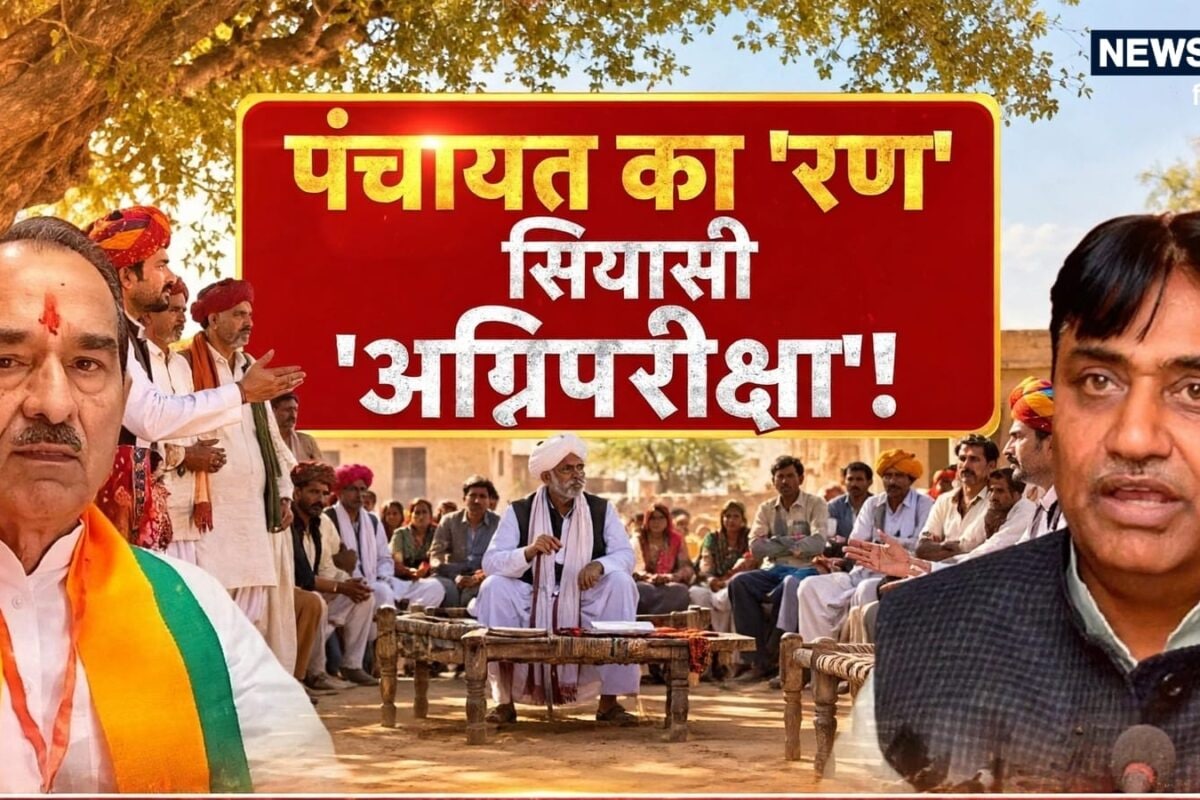
The political landscape of Rajasthan witnessed a significant development today as the first phase of the much-anticipated panchayat elections officially commenced. Voters across designated rural constituencies stepped out to cast their ballots, setting into motion a comprehensive electoral exercise designed to elect local governance representatives. This multi-tiered democratic exercise has immediately captured public attention, not merely due to the scale of local participation, but because of the intense strategic maneuvers reportedly being planned by major political organizations across the state.
As polling progresses in this initial phase, widespread discussions have surfaced regarding the likelihood of intensive party confinement, commonly referred to as badebandi, by the Bharatiya Janata Party (BJP) and the Indian National Congress. Historically, such strategic isolation tactics are deployed by political parties to prevent poaching, secure voting majorities, and maintain absolute internal unity among newly elected or prospective representatives ahead of crucial leadership votes. The current political atmosphere suggests that both prominent factions are preparing contingency measures to safeguard their candidates from external political influences immediately following the conclusion of voting.
The administrative magnitude of these elections is reflected in the extensive ground statistics released for the ongoing polls. The current electoral schedule encompasses voting across 16 district councils and 104 panchayat committees in this primary phase. Official data highlights a fiercely competitive electoral arena, featuring a total of 1,693 candidates contesting 586 seats within the district councils, alongside 5,233 candidates vying for 1,806 seats across various panchayat committees. These figures underscore the high stakes involved for grassroots political workers and major parties alike as they seek to establish rural dominance.
Local stakeholders, political analysts, and community members have expressed diverse viewpoints regarding the logistical strategies adopted by political parties. While party strategists view confinement measures as an indispensable tool for electoral survival and discipline, local citizens and families of candidates voice concerns over the personal disruptions caused by prolonged isolation. The prospect of candidates remaining confined to designated hotels or safehouses until the final results are declared creates an atmosphere of anxiety for families accustomed to celebrating community festivals together.
The regional impact of this extended electoral schedule extends deeply into community life, commercial activities, and familial traditions throughout the state. Rural districts are currently experiencing heightened political engagement, shifting local commerce dynamics and altering daily social interactions. Local business owners and community leaders note that the absorption of community attention into the electoral process temporarily overshadows routine economic activities, focusing public discourse entirely on the political maneuvering unfolding behind closed doors.
Administrative authorities and election watchdogs have maintained strict oversight to ensure that the polling process remains transparent, peaceful, and compliant with statutory guidelines. District administrations have deployed adequate security personnel across polling booths to manage crowds and prevent any untoward incidents during the voting hours. Officials emphasize that while political parties independently determine their internal management strategies, the electoral machinery remains strictly focused on delivering a fair and impartial voting experience for all eligible citizens.
Looking ahead, the comprehensive electoral process is scheduled to unfold across four distinct phases, culminating on November 14. Following the conclusion of polling across all designated phases, political attention will pivot entirely toward the strongrooms where ballot boxes will remain secured until the official counting day on November 20. Until then, the political fraternity remains on high alert, awaiting official confirmations regarding confinement arrangements while candidates navigate a tense waiting period that may redefine rural political equations in Rajasthan.
