
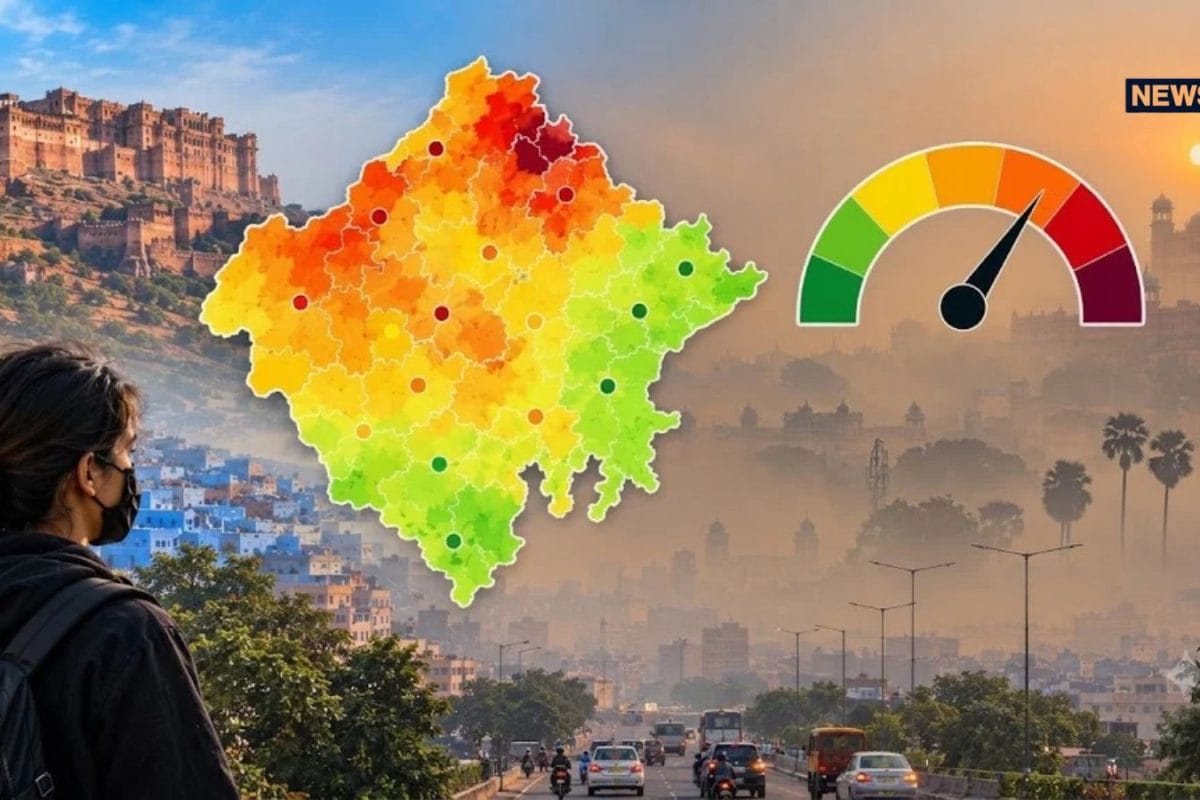
On the morning of 25 October 2026, citizens across various divisions and industrial centers of Rajasthan woke up to varying atmospheric conditions as the Central Pollution Control Board released its latest comprehensive air quality evaluation. The continuous monitoring of ambient air parameters reveals that most divisional headquarters maintained air quality indices fluctuating between satisfactory and moderate brackets. However, localized meteorological anomalies and particulate concentration spikes in specific northern pockets disrupted the otherwise stable statewide environmental profile, sparking immediate concern among public health advocates.
The evaluation of air pollution trends across Rajasthan requires a thorough examination of geographical and seasonal variables that typically influence particulate dispersion during this time of the year. Historically, the transition phase between post-monsoon and early winter introduces thermal inversions and stagnant wind patterns, which trap suspended particulate matter closer to the earth's surface. These persistent atmospheric conditions routinely challenge environmental management frameworks, making industrial towns and arid territorial nodes particularly susceptible to sudden deteriorations in ambient air quality parameters.
Delving into the specific empirical metrics recorded on 25 October 2026, numerical data compiled by the Central Pollution Control Board outlines a stark contrast between urban centers. In the state capital, Jaipur, the air quality index hovered steadily between 99 and 108, placing it in the moderate category. Conversely, Bikaner breached the critical threshold, registering a severe air quality index value of 201, which falls strictly under the poor category, primarily driven by elevated concentrations of particulate matter 10, commonly referred to as PM10.
Public health experts, municipal authorities, and medical practitioners have closely monitored these statistical fluctuations, emphasizing the disproportionate vulnerability of specific demographic groups. In response to the heightened pollution metrics observed in Bikaner and the elevated industrial smog enveloping Bhiwadi, regional medical officers have issued targeted advisories. Elderly citizens, young children, and individuals with pre-existing respiratory or cardiovascular ailments have been formally advised to wear protective masks and strictly restrict outdoor physical activities during peak pollution hours.
Examining the broader regional footprint across the state, cities such as Ajmer, Bharatpur, and Alwar demonstrated significantly better environmental conditions, maintaining cleaner air profiles that offered relief to local inhabitants. These districts recorded commendable atmospheric stability, contrasting sharply with the particulate density plaguing the western desert corridor of Bikaner and the intense industrial manufacturing operations concentrated within the Bhiwadi manufacturing zone, where continuous oversight remains an absolute necessity.
In light of these findings, administrative bodies and statutory environmental monitoring committees have intensified their surveillance mechanisms across all critical districts. Local civic administrations in the affected zones are reviewing municipal action plans to curb dust emission sources, regulate vehicular congestion, and enforce compliance guidelines within industrial corridors. Officials reiterate that sustained inter-agency coordination is paramount to mitigating the adverse health consequences associated with seasonal particulate surges.
Looking toward the forward outlook, environmental planners and regulatory authorities anticipate that atmospheric stabilization measures and potential shifts in wind velocity will dictate the trajectory of air quality in the coming weeks. Public awareness campaigns remain active across Rajasthan, ensuring that communities stay informed regarding daily pollution fluctuations. Authorities continue to urge residents to adopt eco-friendly commuting habits and comply with precautionary advisories to safeguard public health throughout the ongoing winter transition.
