
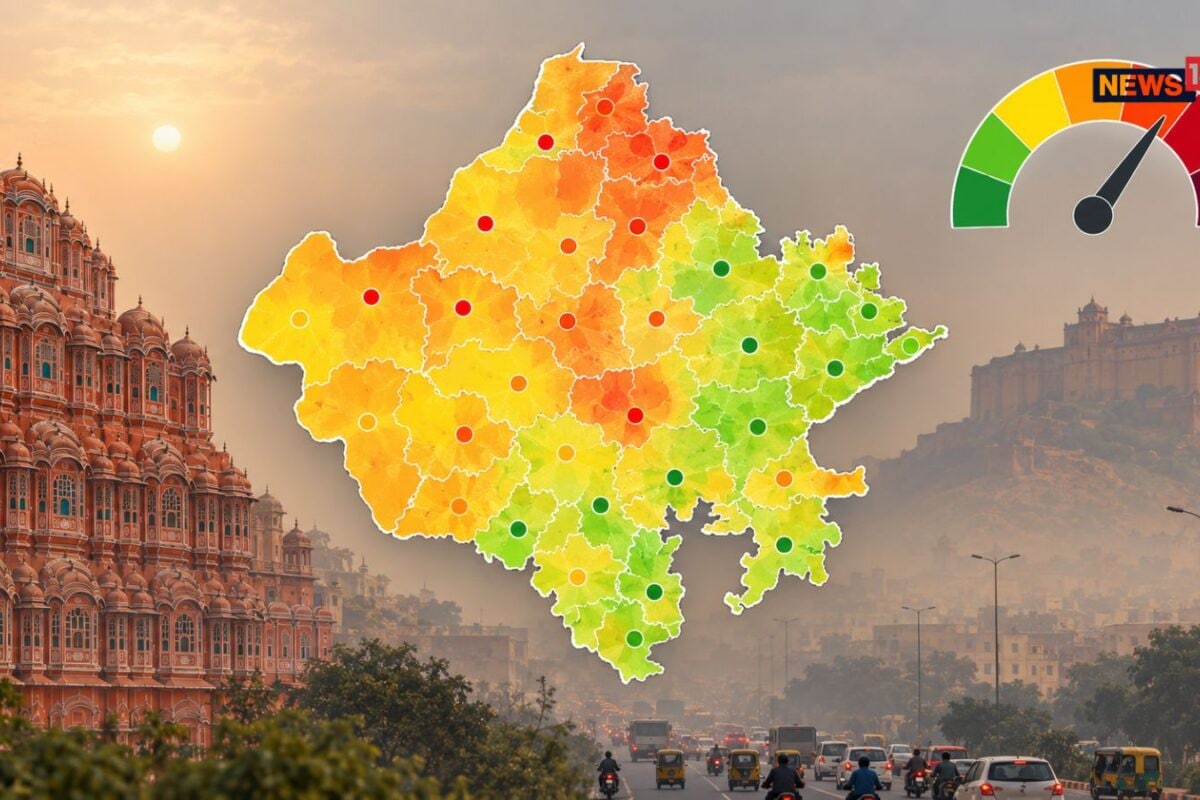
Air quality across the various division headquarters and major industrial towns of Rajasthan presented a mixed environmental scenario on the morning of 27 October 2026. According to the latest readings, the overall air quality index primarily hovered within the moderate category, causing noticeable atmospheric changes across urban centers. Environmental monitors and administrative agencies have been closely observing these fluctuations as seasonal transitions begin to influence regional weather patterns and pollutant dispersion mechanisms.
The evaluation of air pollution in the state relies extensively on systematic scientific monitoring conducted by statutory bodies. Historical environmental assessments indicate that urban settlements and industrial corridors in Rajasthan frequently experience particulate accumulation during specific periods of the year. Meteorological factors, combined with vehicular emissions and industrial activities, typically dictate the concentration levels of pollutants suspended in the lower atmosphere across different administrative divisions.
As per the official data released by the Central Pollution Control Board, the capital city of Jaipur registered an air quality index of 109. Environmental analysts noted that the primary pollutant responsible for this reading in Jaipur was particulate matter PM-10. This specific category of particulate matter largely originates from road dust, construction activities, and vehicular movement, which continuously contribute to the suspended particulate load in densely populated urban environments.
In stark contrast to the state capital, the industrial hub of Bhiwadi recorded the highest air quality index in Rajasthan, touching the 184 mark. Stakeholders, industrial operators, and local residents have expressed concern over the persistent elevated pollution levels in Bhiwadi, given its heavy concentration of manufacturing units and industrial infrastructure. The geographical location and intense industrial operations in this zone frequently place it at the upper echelon of pollution severity charts within the state.
The regional impact of these varying air quality measurements extends directly across nearby districts, including Kotputli-Behror, affecting the broader local economy and community well-being. Agricultural activities, daily commuting, and outdoor commerce face intermittent challenges when atmospheric conditions deteriorate. Local administration and public health advocates continuously monitor these regional metrics to assess potential vulnerabilities among sensitive population segments, such as children and elderly residents.
Administrative response and statutory oversight by environmental protection agencies remain vital in managing industrial emissions and urban dust. Regulatory authorities enforce compliance guidelines across industrial zones, particularly in high-pollution clusters like Bhiwadi, to curb unregulated particulate dispersion. Periodic reviews and continuous data collection by the Central Pollution Control Board serve as the primary foundational framework for formulating targeted environmental interventions.
Looking ahead, public expectations and upcoming administrative procedures focus on stringent emission controls and enhanced urban greening initiatives. The timeline for subsequent environmental reviews will depend heavily on meteorological shifts anticipated in the coming weeks. Authorities remain committed to sustaining observational protocols to ensure transparency and timely public advisories regarding air quality fluctuations across all administrative divisions of Rajasthan.
