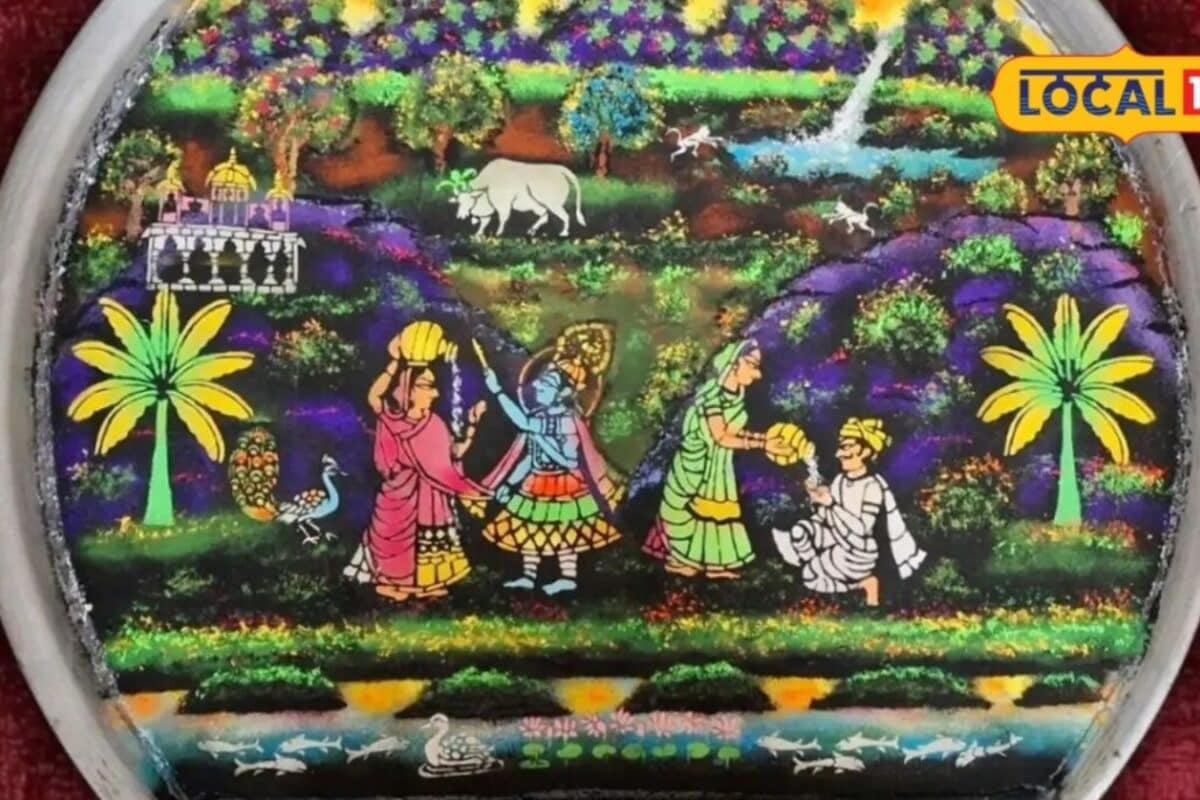
In the culturally rich landscape of Udaipur, Rajasthan, a unique and mesmerizing traditional art form known as Jal Sanjhi continues to captivate art connoisseurs and spiritual devotees alike. Unlike conventional paintings that rely on paper, canvas, or dry surfaces using vibrant colors, Jal Sanjhi is meticulously crafted directly on the surface of water. This ancient practice portrays divine narratives associated with Lord Krishna, merging exceptional artistic skill with profound spiritual devotion that has defined the region for centuries.
Tracing its historical roots deep into the cultural matrix of Mewar, Jal Sanjhi represents an invaluable facet of Rajasthan's intangible heritage. Historically patronized by local rulers and practiced meticulously during festive periods such as Janmashtami, this art form requires immense precision, immense patience, and specialized mastery. The intricate designs composed of dry colored powders are delicately floated on water, creating breathtaking visual illusions that symbolize the transient yet eternal nature of creation.
Despite its profound historical and cultural significance, contemporary practitioners and cultural experts note that this rare art form is facing severe existential threats. In today's fast-paced era, as modernization sweeps across traditional crafts, numerous heritage skills are steadily vanishing from the public consciousness. The preservation of Jal Sanjhi has thus transformed from a mere artistic pursuit into an urgent cultural imperative, requiring dedicated efforts to shield it from fading into absolute obscurity.
Prominent cultural voice and artisan Rajesh Vaishnav emphasizes that safeguarding traditions like Jal Sanjhi is vital for maintaining the continuity of indigenous heritage. According to Vaishnav, in the modern contemporary epoch, when countless traditional art forms are quietly disappearing, conscious intervention and active patronage are indispensable to keep such rare practices alive for future generations of artists and historians.
Furthermore, experts point out that Jal Sanjhi transcends the boundaries of ordinary visual art; it operates as a vibrant living tradition intrinsically tied to the worship of Lord Krishna and the time-honored customs of Mewar. The intricate motifs crafted upon water not only display exceptional craftsmanship but also serve as a medium of spiritual storytelling that connects contemporary audiences with the historical ethos of Rajasthan.
As awareness regarding the vulnerability of indigenous arts grows, local cultural organizations, traditional practitioners, and heritage enthusiasts are calling for structured institutional support. Safeguarding Jal Sanjhi necessitates dedicated training workshops, financial backing, and widespread public exhibitions across cultural centers in Udaipur, Mewar, and the wider regions of Rajasthan to educate the younger generation.
Looking toward the future, the survival of Jal Sanjhi relies heavily on collaborative measures between master artisans, cultural ministries, and heritage preservation societies. By documenting authentic techniques, encouraging young apprentices, and creating dedicated platforms for public display, the timeless legacy of Jal Sanjhi can be successfully protected, ensuring that Lord Krishna's aquatic stories continue to inspire awe and devotion for generations to come.