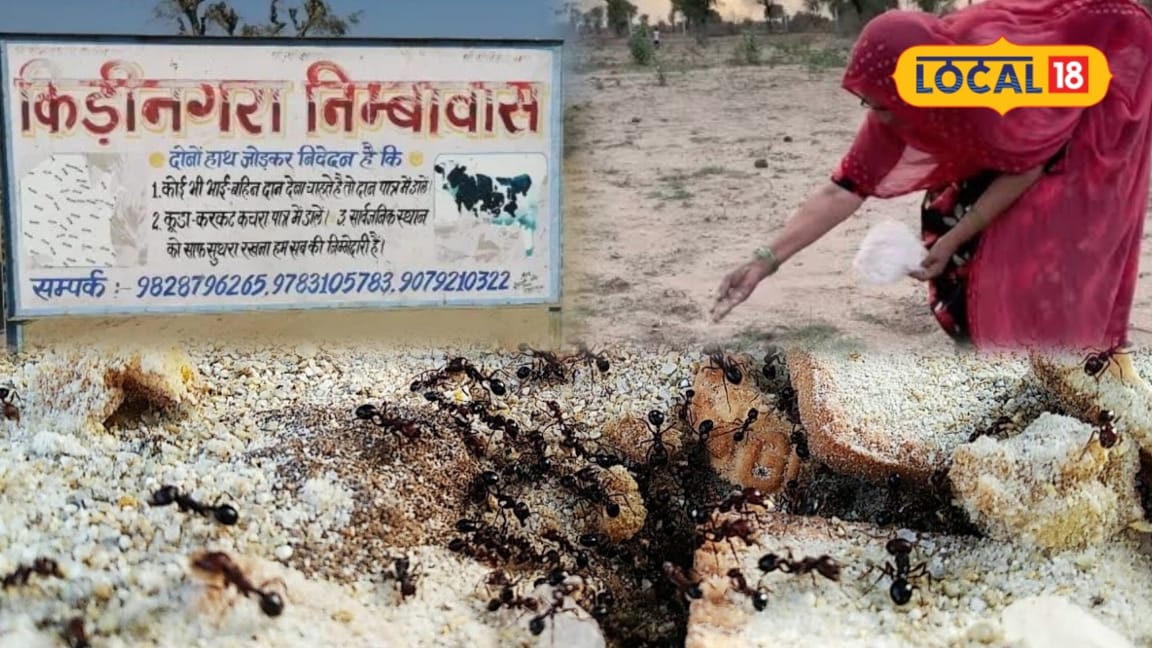
As the auspicious period of Pitru Paksha unfolds, various culturally rich regions of Rajasthan bear witness to the observance of distinctive ancestral rites. Among these deeply ingrained local customs, the practice of 'Keedi-Nagra' holds a prominent place in community life. This specific tradition requires families and individuals to provide food, grains, and sustenance directly to ants, anchoring spiritual devotion firmly within daily acts of kindness.
The historical and cultural roots of feeding ants during the fortnight of ancestral veneration stretch deep into regional folklore. Generations of communities across Rajasthan have passed down the belief that nourishing living creatures during Pitru Paksha acts as a spiritual bridge to the departed souls. This tradition is viewed not merely as a ritual obligation, but as an essential philosophical teaching that connects human existence with the broader ecological web.
Examining the ground reality of this observance reveals a meticulous daily routine observed by households across the region. Participants gather appropriate grains, flour, and natural food items, systematically placing them near ant hills and known paths throughout residential and rural areas. While large financial outlays or commercial logistics are absent from this practice, the social commitment and collective adherence to the custom remain remarkably robust across generations.
Community elders, cultural custodians, and local participants consistently emphasize the profound spiritual and moral dimensions of the Keedi-Nagra practice. According to local perspectives, offering sustenance to the smallest creatures embodies the ultimate form of selflessness and humility. Citizens note that these traditional observances successfully reinforce communal harmony while keeping ancient ancestral memories alive through active, compassionate participation.
The regional impact of this tradition across districts in Rajasthan, including areas like Kotputli-Behror, manifests through a visible strengthening of social and cultural bonds. Neighborhoods actively engage in these acts of compassion, fostering an environment of collective mindfulness towards local wildlife and insects. The local economy experiences subtle shifts in the demand for specific grains and traditional food offerings as households prepare for these daily rituals.
While traditional practices of this nature primarily rely on voluntary community participation rather than formal state regulation, local administrative bodies often acknowledge their cultural value. Civic discussions during this period frequently touch upon the preservation of indigenous traditions that promote environmental harmony and animal welfare. Such traditional frameworks naturally encourage public cooperation without requiring heavy-handed bureaucratic intervention.
Looking ahead, community leaders and cultural organizations expect the Keedi-Nagra tradition to continue thriving with undiminished vigor in the coming years. As younger generations observe and participate in these time-tested rituals during Pitru Paksha, the transmission of ancestral values remains secure. The enduring nature of this custom guarantees that the profound message of compassion for all living beings will persist through future observances.